
By: Therese Vega
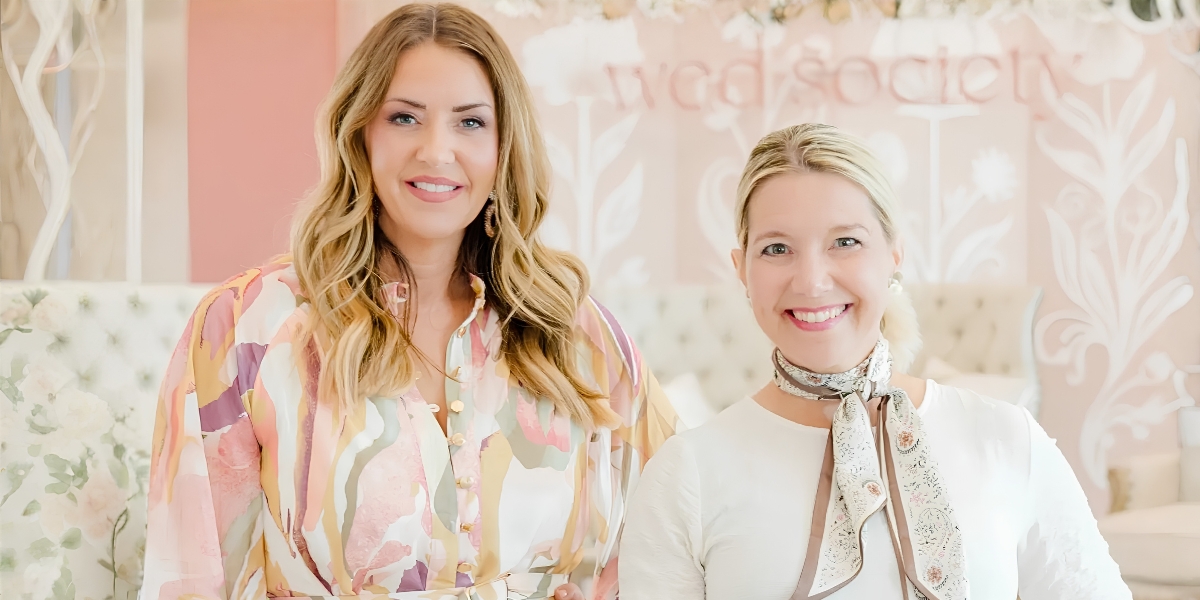
The wedding industry is built on high emotion, high expectations, and expensive decisions. Couples are asked to choose photographers, planners, florists, and venues for one of the most public days of their lives, often with limited information about who can truly deliver in their own city. That gap helped shape Wed Society, the wedding media company founded by Kami Huddleston and Ashley Bowen-Murphy, who built the brand around a local-first model in a business increasingly dominated by large digital platforms and broad national visibility.
Their premise was straightforward. Wedding inspiration works differently when it is tied to a place. Rather than offering a generic stream of images, Wed Society focused on real weddings, local vendors, and market-specific publishing meant to connect engaged couples with vetted businesses in their own communities. The model gave the company a distinct identity and, over time, helped turn a regional concept into a growing national brand.
A Business Born From Experience
The company began with the founders’ own wedding planning experiences. Huddleston and Murphy were married two weeks apart, and both encountered frustrations that exposed what they saw as a weakness in the market. Huddleston described one disappointment in especially personal terms, saying, “I don’t have a wedding picture from my wedding day, just to hammer that one home.” The remark helps explain why the company’s early focus was not just on style but also on dependability.
Murphy described a similar concern from the customer side. “People spend a lot of money investing in that day, but there really wasn’t anything that showcased what these vendors could do,” she said. She added that she and Huddleston “made some mistakes of our own along the way in planning, just because there really wasn’t a great local resource in the marketplace.” That frustration became the basis for a business built around editorial curation and local vendor discovery.
Why Local Mattered
When Wed Society launched in 2007, the current wedding media ecosystem looked very different. Social media was not yet central to the planning process, and the founders moved early into blogging and local publishing. Huddleston recalled, “We started blogging before blogging was a thing,” a line that captures how early the company entered a space that would later become crowded and highly visual.
From the start, the company framed itself as a local guide. It featured weddings in specific markets, highlighted vendors working in those places, and later continued that approach through online publishing and its annual “Book of Weddings” in local territories. According to company materials cited in reporting, Wed Society also vets vendors through a “Fit Test” that reviews factors such as client feedback, social presence, services, talent, professionalism, and branding. That process reflects the company’s effort to position itself as a curated resource rather than a broad listing platform.
Growth and Its Pressure Points
Wed Society later expanded through franchising, which began in late 2023. The company’s reporting describes a growth strategy that aimed to preserve local market identity while extending the brand into new territories. In that sense, the company’s expansion has depended on maintaining the same idea that launched it: that engaged couples want inspiration grounded in their own city, and wedding professionals want customer visibility where they actually work.
That growth also creates a challenge familiar to many expanding brands. The wider the footprint becomes, the harder it can be to preserve the local judgment and market specificity that first made the concept valuable. As Wed Society expands to dozens of markets nationwide, the founders’ central idea remains clear in the available reporting. Huddleston and Murphy built Wed Society on the belief that weddings can be widely shared online but are still planned locally. That conviction has defined the company from the start, and it helps explain why its model continues to resonate in a wedding industry that often balances national reach with local trust.