
By: Jake Smiths
There is a moment in every industry when one person sees something others do not, acts on it before the consensus forms, and looks either foolish or visionary depending on how things play out. For Omri Hurwitz, that moment came when he decided to start buying media assets while running an established PR firm.
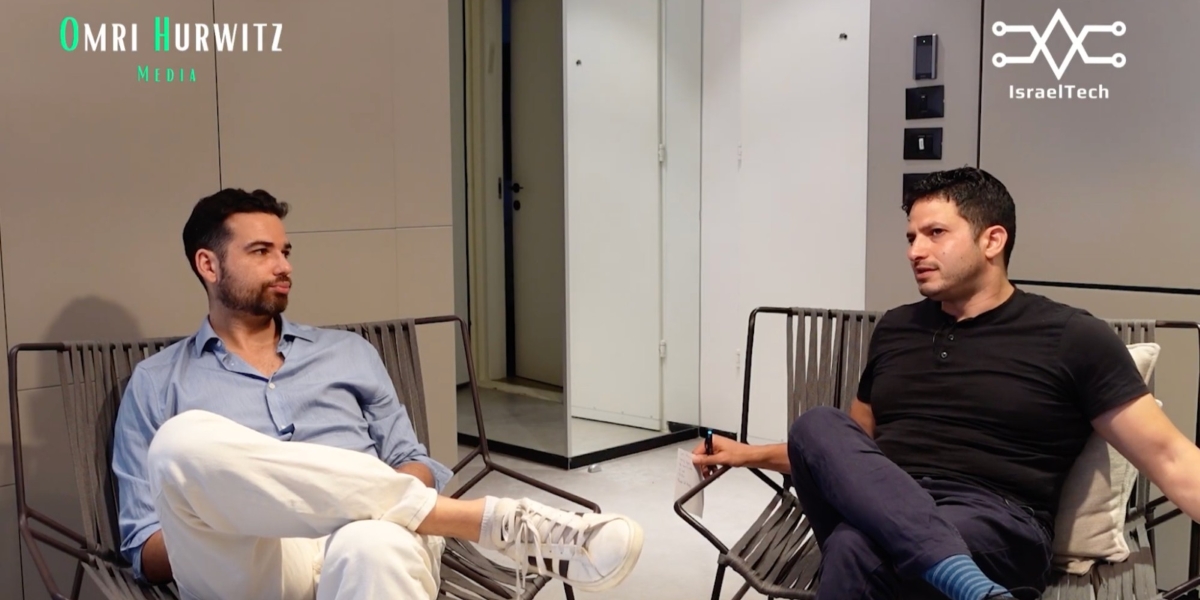
In a conversation with Yoel Israel, Hurwitz explained the thinking behind a move that his peers in the industry did not take seriously at the time. The full discussion is available on YouTube and covers the broader evolution of PR, media, and distribution in ways that are relevant well beyond the PR industry.
His firm, Omri Hurwitz Media, had reached the kind of operational stability where Hurwitz could think well beyond the day-to-day. He chose to put money into owning media outlets rather than simply placing clients in them. The reaction from others in the space was skepticism.
“People were laughing at me,” he said. “Why media assets? Just invest in influencers.”
He was not persuaded. The logic he was following was the same logic that drives vertical integration in any industry. If you own the pipeline, you stop negotiating for access to it. You stop competing with other customers of the same supplier. You stop waiting. Hurwitz pointed to Elon Musk’s approach at Tesla as the clearest large-scale example of the same principle: manufacture your own parts, own your own distribution, remove the dependencies that slow everyone else down.
“I was just getting so tired of convincing reporters,” he said. “I was like, let me just own this.”
What followed was a deliberate, staged process of acquiring smaller outlets, building them up, and using those gains to move toward larger ones. It was not a quick play. Hurwitz acknowledged that building this kind of asset base takes years and requires a stable business foundation behind it. That is precisely why competitors have struggled to replicate it. It is not a strategy that can be executed from a weak operational position.
The ownership model also changed the leverage dynamics in ways that went beyond simple placement. When Hurwitz Media owns a significant portion of the outlets relevant to a client’s coverage, the firm does not just place stories. It controls distribution on one side of the ledger and uses that position to negotiate more effectively with outlets it does not own on the other. Israel captured the dynamic cleanly: “If you don’t, I’ll put them here.” Hurwitz confirmed that is exactly how it works.
What neither of them fully anticipated was the second-order effect that made the asset strategy even more valuable than originally intended. When large language models began training on internet content, every mention of a company or individual on a credible media outlet became a data point that shaped how AI systems understood and described that entity. PR, which had been under pressure as a discipline, suddenly had a new and powerful argument for its value.
“Every mention of you on the internet is PR,” Hurwitz said. “And now think about my firm’s assets and distribution. Who’s better positioned?”
The answer, by the structure he had been building for years before AI became a mainstream topic, was his firm. The asset acquisition strategy that drew laughter from competitors turned out to be exactly the right infrastructure for a media environment reshaped by AI. Hurwitz did not predict that specific outcome. He built something durable, and durability turned out to be the right bet.
For anyone in media, marketing, or communications thinking about where value accrues in an AI-driven content environment, the strategy Hurwitz describes in this conversation is worth understanding in full.