
By: Lennard James
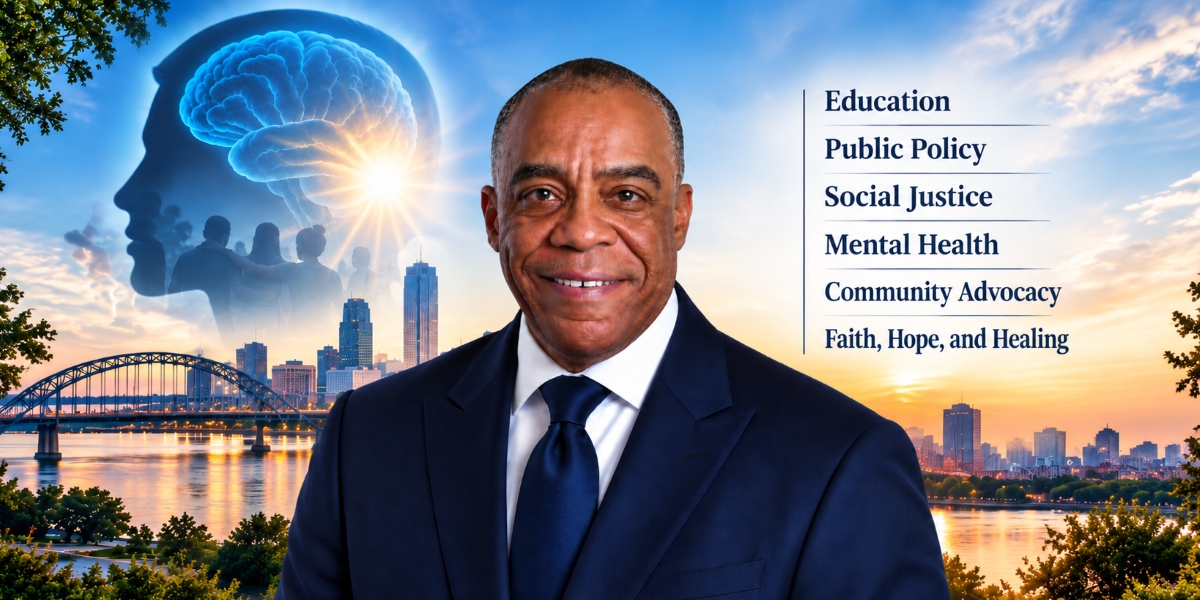
Dr. Thurston Smith continues to distinguish himself as a respected leader whose professional work bridges social advocacy, research, faith, juvenile justice, and service to veterans. Through national lectures, government research, educational conferences, and community engagement, his work reflects an increasingly important approach to addressing some of the most complex challenges affecting communities across the country.
On October 14, 2026, Dr. Smith is scheduled to deliver a national lecture addressing “Complexities of PTSD and Co-Occurring Mental Illness Within the Black Veteran Population.” This talk will call attention to several key issues impacting Black veterans and inspire thoughtful discussions among both the mental health profession and veterans’ communities.
Post-traumatic stress disorder can present significant challenges on its own, yet when PTSD exists alongside other mental health conditions and stressors, treatment can become considerably more complicated. Dr. Smith’s lecture will examine these complexities through the experiences of Black veterans, bringing together issues involving military service, behavioral health, culture, and lack of access to appropriate care. This talk places further emphasis on the prevalence of PTSD, race-based trauma, discrimination, and other challenges impacting Black veterans.
This lecture represents the type of professional leadership Dr. Smith has demonstrated throughout his career: tackling difficult subjects while encouraging professionals and institutions to utilize more practical care approaches rather than simplistic diagnostic, linear treatment interventions.
His expertise has also been recently recognized within the judicial community. In August 2026, Dr. Smith served as an invited faculty member and guest lecturer at the annual Florida Courts Personnel Institute, in Orlando, Florida, where he spoke on a variety of issues pertaining to juvenile justice.
“Working effectively with young people entering the justice system requires an understanding of far more than their legal circumstances”, Smith said. “Trauma, family instability, systemic social challenges, and even environmental factors can influence adolescent behavior.” Dr. Smith’s contributions in this venue provided an opportunity to bring behavioral health perspectives into meaningful conversations with courts, law enforcement personnel, and juvenile justice professionals. Dr. Smith was recently tapped to serve on a statewide coalition examining the new models of reform for Florida’s juvenile justice system.
As in prior years, he still maintains an active presence at the federal level as well.
Dr. Thurston Smith intermittently serves as a social science researcher for the U.S. Department of Health and Human Services, serving on a variety of special projects involving children and adolescents, housing and homelessness, drug courts, and behavioral health programs across the United States. This work reflects another dimension of his leadership: the ability to work in tandem with and alongside various service providers, federal and state agencies, policymakers, community-based initiatives, and direct funding environments that can determine which programs have the resources necessary to serve vulnerable populations he advocates for.
For Dr. Smith, leadership also involves connecting institutions that have historically approached mental health from different perspectives.
That commitment is evident in his work within the faith community.
Recently, Dr. Smith moderated “Virtual Conversations on Faith, Mental Health, and the Black Church,” a panel that brought seasoned ministers and clinical practitioners together for a candid discussion on the role and relationship between the church and the communities it serves. Such conversations are important because churches have long served as trusted institutions within the Black community. Faith leaders are frequently among the first people individuals approach when experiencing grief, family crises, substance-use problems, or emotional distress.
By bringing clergy and clinicians into the same conversation, Dr. Smith is helping create a stronger bridge between the faith-oriented ecumenical community and the behavioral health profession. This is his ministry.
Several months ago, Dr. Smith served as a workshop leader at the Tampa Faith Leader’s Gathering, where he facilitated a very similar discussion on the impact of faith in addressing complex mental health challenges. His participation demonstrates his ability to communicate across clinical and academic settings, translating behavioral health expertise into practical information that community leaders can apply in their work with families and congregations.
His leadership within the faith and behavioral health communities was further demonstrated on August 30, 2026, when he was invited to lead morning worship services during the NAADAC annual conference in Kansas City, Missouri. NAADAC serves professionals working in addiction prevention, treatment, recovery support, and related healthcare disciplines. Being invited to provide spiritual leadership within a professional environment further reflects the distinctive space Dr. Smith occupies between his faith and clinical practice.
His public service has extended into civic settings as well. On August 8, he delivered the invocation at the Hillsborough County Democratic Party Kennedy-King Gala, an annual event focused on grooming, supporting, and electing qualified democratic leaders. While distinct from his clinical and research responsibilities, this appearance in this space reflects his continuing presence within the public policy arena.
What makes Dr. Smith’s professional leadership particularly notable is the range of communities his work touches.
One day, the conversation may involve health research and government programs and another day may place him before court administrators discussing juvenile justice. Despite these differing environments, a consistent theme connects them: people facing behavioral health challenges often require support from multiple systems at the same time.
A veteran may need treatment for trauma and homelessness and culturally responsive care and a young person in the juvenile justice system may simultaneously require educational support, family counseling, and spiritual intervention.
Dr. Thurston Smith’s work recognizes those intersections.
Rather than addressing health, faith, research, and justice within isolated conversations, his leadership fosters collaboration across professional disciplines and the institutions responsible for addressing these problems.
As behavioral healthcare continues to command greater national attention, leaders capable of communicating across these professional sectors remain essential.
Dr. Smith’s growing body of work demonstrates that leadership in behavioral health is not confined to the counselor’s office, university classroom, government boardroom, or church sanctuary. It requires a willingness to enter all those spaces, listen to different perspectives, and help build connections between them.
With his upcoming national presentation on Black veterans, continuing federal research, juvenile justice involvement, and involvement in faith-based initiatives and public advocacy, Dr. Smith is helping to advance broader conversations on how America can and should respond to trauma and how professionals, institutions, and communities can work together to better serve those who need them most.
Dr. Thurston Smith is a retired executive-career field civil servant of the U.S. Veterans Health Administration, a minister, healthcare practitioner, and former professor with over 30 years of experience in the health and human services industry. Having a distinguished professional career, Dr. Smith has a rich history of humanitarian service, replete with numerous honors and public service appointments.