
By: Nicholas Stone
This book matters because it does not let the reader hide behind the tired idea that good medicine is enough. It makes a strong case that healthcare today may need more than clinical skill alone. That alone makes it stand out. It is aimed at people who have walked hospital corridors, seen the burnout, and felt the gap between care at the bedside and decisions in the boardroom.
Reading it felt like opening a door into a room where someone is rearranging the familiar furniture. I felt both exposed and relieved. Exposed because the book questions the small choices clinicians make every day and asks whether they are really leading or simply doing the job. Relieved because it gives language to the frustration of watching systems bend under pressure while clinicians are still expected to hold much of the weight. There is a pulse in the prose that is not shiny or polished. It feels like a mentor telling the reader what he believes, not what a textbook demands.
The book pushes several ideas that reach beyond medicine. One is that trust matters more than job title. Another is that clarity beats cleverness. A third is that caring for people includes caring for the people who care for patients. Those themes are not limited to hospitals. They matter in any place where expertise and human connection need to work together. The central message is that leadership is not a badge. It is a deliberate choice to be present, accountable, and connected.
What makes the voice work is that it stays grounded. The structure is more like a series of conversations than a lecture. Chapters are anchored in real problems and real moments. The author does not build complicated frameworks. Instead, he offers plain talk and the kind of concrete examples that feel familiar. The writing often lands on small details rather than broad claims. That makes the whole feel more honest. When he talks about the cost of vague communication or the value of simple rituals, the point feels credible because he does not bury it in jargon.
The book is also not afraid of tension. It says clearly that being kind does not mean being weak. It says clearly that clinicians may need to learn how to carry systems as well as patients. That is not always comforting, but it is necessary. The author is not soft on medicine. He is realistic about the mistakes and also direct about the courage it can take to do something about them. The tone is direct, and it is the right tone for a field where too much advice can feel watered down.
The effect of reading this goes beyond the intellectual. It also felt emotional in a low intensity way. It made me think about the people who are trying to lead and the people who are affected by poor leadership. I found myself nodding at the sections that focused on the everyday moments of leadership, the ones that often get lost behind strategy and policy. The book offers useful tools, but it also gives a frame for thinking about leadership as a practice that is both human and technical.
At the end, the lasting impression is that this book is not a set of easy fixes. It is a call to take leadership seriously, not as a promotion but as a responsibility. It suggests that stronger care environments may be possible when clinicians are encouraged to lead with honesty, humility, and a sense of purpose. For anyone who works in healthcare and wants to move from doing good work to helping shape the system that supports it, this is a book worth reading. It is not perfect, and that is why it feels real.
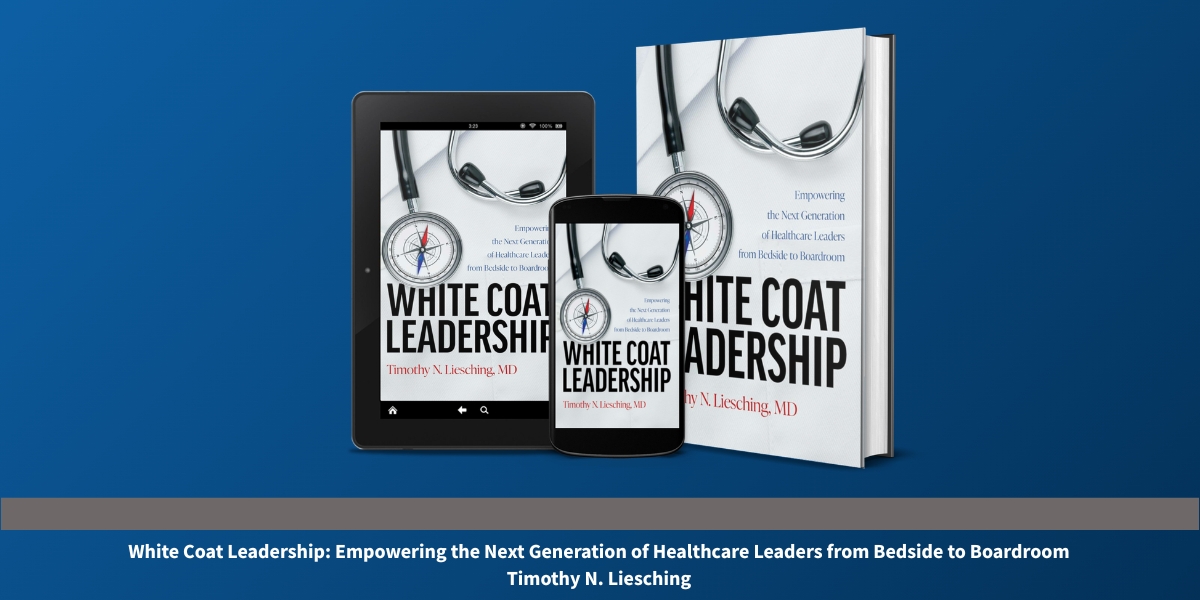
Get your copy of White Coat Leadership: Empowering the Next Generation of Healthcare Leaders from Bedside to Boardroom on Amazon.