
By: Digital Networking Agency
What if Healthcare Worked Like Magic?
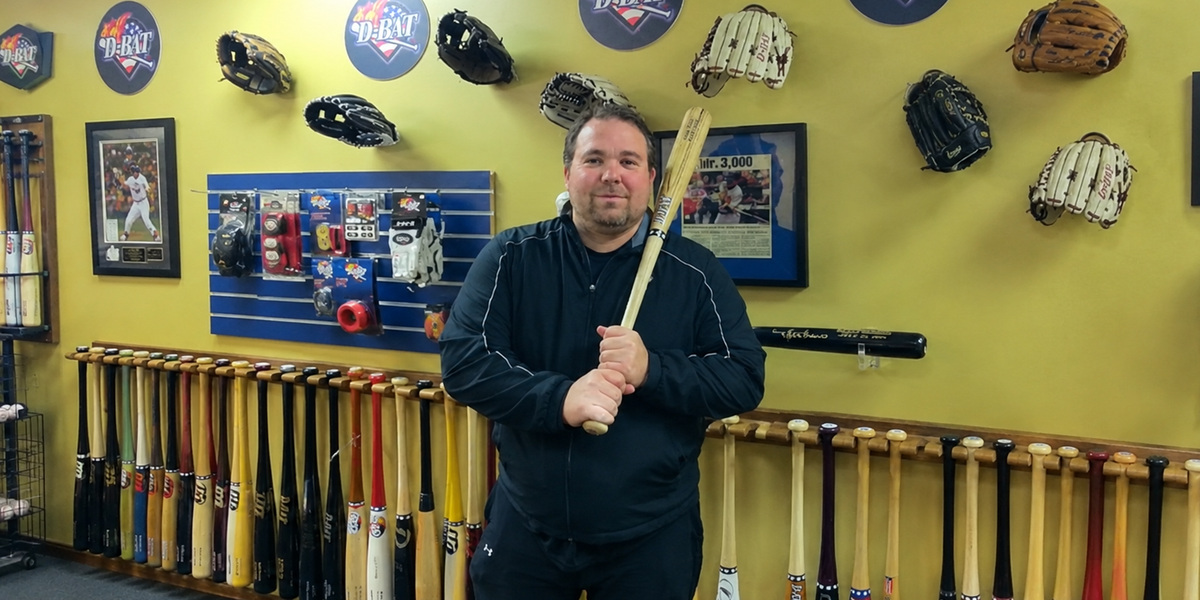
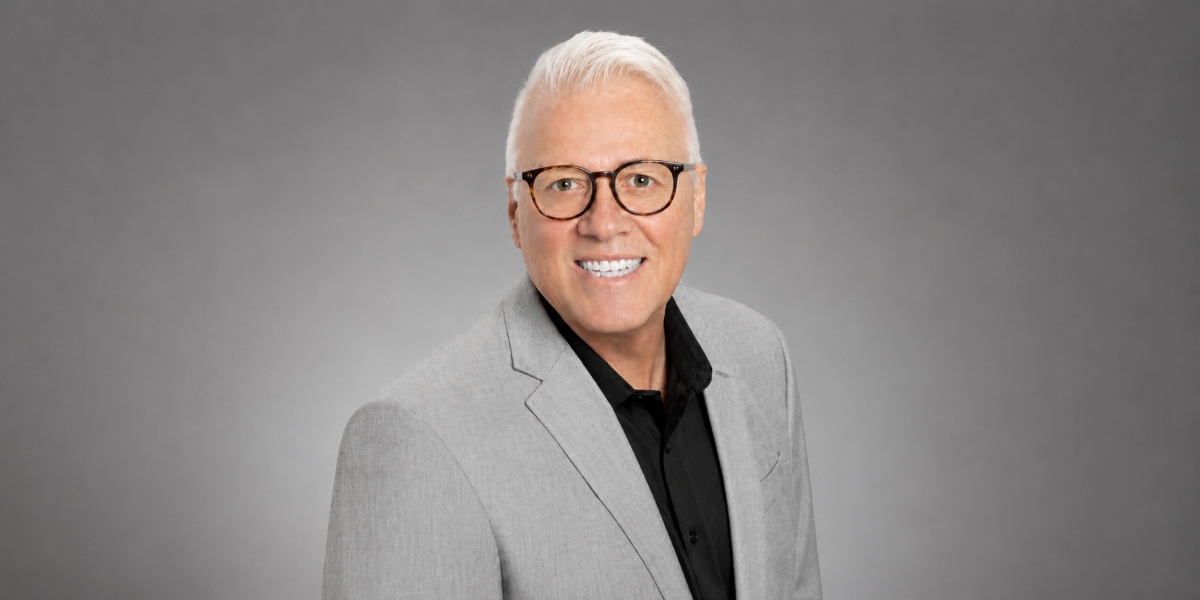
Christopher Grant spent a career in theater, magic, and healthcare operations learning one idea from three different directions. Now it all lives inside a single eye-screening kiosk.
She almost didn’t stop.
The kiosk sat near the check-in desk, between a hand sanitizer dispenser and a rack of pamphlets nobody reads. She knew the drill in a waiting room: fill out the form, find a seat, wait to be called. The kiosk wasn’t part of the drill.
She glanced at the screen. Something about a retinal screening. Something about a gap in her preventive care record. She registered it the way you register a notification you mean to deal with later, and kept walking.
She was asymptomatic. She felt fine. There was no reason to stop.
This is the moment Christopher Grant thinks about more than any other. Not the breakthrough. Not the contract. Not the data. This one, the two seconds between a person and a decision, when nothing about the interaction works the way it should, and someone walks past the thing that might have changed everything.
He has watched it more times than he can count, and he knows why it happens. The answer sounds nothing like what you’d expect from a healthcare executive. But then, neither does Christopher Grant.
A Career Built in Layers
Grant’s first career out of college had nothing to do with healthcare. He spent years in professional theater as a lighting and set designer and production manager, learning how a room full of people can be moved by a moment an artist created.
He never really left that world. Alongside a long career running healthcare operations, he kept up a second, quieter life as a serious student of magic, with 800-plus books on conjuring and theatrical psychology on his shelves, close-up and stage shows in his own hands, and a stint as President of the Board of the Academy of Magical Arts, whose clubhouse is Hollywood’s Magic Castle.
Decades in and out of healthcare boardrooms taught him the operational side: how systems get built, how incentives get misaligned, how something that looks like progress on a slide can still fail the person it was meant to help. By the time EyeCheq came calling, he wasn’t testing a new idea. He was refining what he already knew.
“A magician never starts with ‘what trick do I know?’ The question is always ‘what do I want the audience to experience?’ The technique or the method comes last. It exists to serve the effect, nothing else.”
He calls it effect-first thinking. His own speaker bio calls him something blunter: a Relentless Innovator. Grant seems almost embarrassed by the label, then owns it anyway. “Magicians were the original UX designers,” he says. Guiding attention, building trust, shaping what a room feels, none of that is new. It just didn’t have a name before software needed one.
The kiosk he ended up selling became the clearest place he has ever had to prove it.
The Phone Call That Changed His Mind
Grant wasn’t job-hunting when two physicians who’d founded EyeCheq first reached out. He had just stepped away from a long healthcare career, and he let their first messages sit.
What eventually got him on a plane to Miami wasn’t a sales pitch. It was the story. The founders had watched patients lose their sight to diabetic retinopathy, a disease that gives no warning and that, caught early enough, can usually be treated. Patients feel nothing and suspect nothing, and by the time they appear in the exam chair, the window to intervene has often closed. The cause, every time: a missed annual screening. They had built a company around stopping that outcome, not around equipment looking for a use.
“The solution has an absolute effect on patients. The founders were solving a problem they had lived. I don’t have a background in eye care, but I know how to move an innovation to the next level.”
He signed on. Today his fingerprints are on almost every part of how EyeCheq reaches patients, and the machine runs on exactly two ideas, built to produce one effect.
The Fatal Assumption
Grant has a harsher name for most of what passes for innovation in healthcare right now. Walk into nearly any health system’s AI roadmap, he says, and buried on page one is the same quiet assumption: that the workflow underneath the technology is basically sound and just needs a smarter layer on top.
“They’re not. Bolt a chatbot onto a broken intake process, or a predictive dashboard onto a process built for a different era, and you haven’t transformed anything. You’ve dressed up the same dysfunction in nicer clothes. That’s not innovation. That’s automation theater.”
Real innovation, in Grant’s telling, starts earlier than the methods. Before AI, before enterprise software, before any automated solution. Start with the impact you want the patient to feel, believe, and do. That is the order the EyeCheq kiosk was built in.
Two Ideas, One Effect
The first idea is standardization. Traditional eye screening depends on a trained technician, a dedicated clinical room, and a scheduled appointment, which means the quality of a scan depends on who happens to be working that day. Every EyeCheq kiosk runs the same hardware and the same clinical protocol, in a Midwest lab or a clinic in the South.
Grant calls this his “stacked deck” principle, borrowed from card magic. Every card’s position is fixed before the trick starts, which removes the chance of a wrong move. “If a move looks like a move, the magic fails,” he says. Onstage, a fumbled shuffle exposes the trick. In a clinic, a login loop or a form asking twice for the same information does that to a patient’s trust. His rule is blunt: “The only grid we should snap to is the customer.”
The second idea is invisibility. The kiosk talks a person through it, with voice-guided positioning, automatic image checks, a real doctor reading the results, and sensors monitoring the machine around the clock. None of that is visible to the person in the chair, which is the point. Every session runs without a staff member stepping in.
“We automate the method so we can focus on the effect,” is how Grant puts it. If a clinician has to think hard about the software in front of them, they can’t be present with the person sitting across from them. Cognitive load kills empathy, in his phrase.
None of this is unique to eye care. The best fixes for healthcare’s worst experiences usually come from somewhere else: an airline’s boarding process, a coffee chain’s supply line, a car rental counter’s check-in. Grant’s instinct is to find an industry that already solved the friction, then bring the solution home.
Standardization and invisibility aren’t the goal, though. In the keynote Grant built around all this, he calls the result “the effect, not the input,” what is left once you’ve engineered out the reasons a person has to disengage. At EyeCheq, that leftover has a name: curiosity.
The Part That Healthcare Gets Backward
None of this is really about eyes, Grant says. Most healthcare communication is aimed at the wrong part of the brain.
There’s a well-documented split in how people make decisions. One part of the brain is deliberate and rational. It reads a reminder letter, agrees it matters, and means to act. The other runs on habit and whatever takes the least effort right now. Reminder calls, mailers, and portal alerts are built for the rational side. Almost all health behavior happens in the habit side. That’s why a patient can believe a screening matters and still not do it for two years running.
Research on point-of-care screening points the same direction, Grant says. When the scan happens during a visit the patient is already attending, participation tends to improve, with no new reminders and no new incentives, just one less decision between intention and action. Fear of losing your eyesight is powerful too, he adds, but only if there’s something to do about it right there in the room.
EyeCheq learned that the hard way.
From Compliance to Curiosity
When EyeCheq’s kiosks first went out, the pitch leaned on the kind of messaging research says doesn’t work: this matters, it’s covered, go get scanned. It’s the message health plans wanted, tied to closing gaps in Medicare Advantage screening measures. It worked, some. It didn’t work enough.
So Grant’s team watched people use the machine. What they saw was a mismatch, an obligation pitch landing on people who felt completely fine and therefore didn’t feel remotely obligated. They scrapped it and asked something else.
“Have you ever seen your eye? Get a selfie of your own retina, something you’ve never actually looked at before.”
Same scan. Same machine. A completely different invitation. Compliance closes a gap on a spreadsheet, as Grant puts it. Curiosity gets someone to stop and receive care.
Where It Falls Apart
Grant is candid that his philosophy doesn’t always win. Picture a scene he says he has watched more than once. Someone proposes a few extra steps before a patient can start a screening, more paperwork here, another check-in there. Each sounds like basic caution on its own. Stack them together, and you’ve built a front door most people would rather walk past.
“You can watch a room agree, step by step, that each barrier makes sense, and still end up with a front door nobody wants to walk through.”
He says he has lost that argument more often than won it. The urge to eliminate risk for the organization is hard to argue with. When he has won, it wasn’t because he out-argued anyone. It was because he brought data on what patients said they wanted, and let their answers set the scope of the program instead of a company’s caution.
“This is not easy work. And I have heard it said sarcastically on more than one occasion by decision makers in organizations that healthcare would be so much easier if we didn’t have patients. I get it. But that is the business we are in. Not creating solutions to make my job in healthcare easier or convenient. It’s to make the life of my members, my patients, their families better because of the experience we provided.”
The Empty Chair
Grant studied years ago under the management thinker Peter Drucker, who opened every class the same blunt way: “Please accept the fact that you know nothing.” Grant thought it was arrogance the first time he heard it. Now he lives by a version of it.
“We carry so many preconceived ideas for innovation into our conference rooms. We think we know more than we do. However, there is one chair that is never filled in the conference room, where the patient should sit.”
It is the instinct that carried him from a theater to a magician’s stage to the boardrooms where healthcare decisions get made. Pay attention to who isn’t in the room before deciding what’s best for them.
Coming Back to Look
Go back to that waiting room, where a woman glances at a kiosk, sees a message about an overdue screening, and keeps walking. It’s an easy moment to miss. It’s also the moment that decides everything.
Say she comes back a few weeks later, and the machine doesn’t ask her to check a box. It asks whether she has ever seen her own eye. Curiosity, not obligation, gets her to stop. She never has to know why she said yes this time. She just knows she looked.
That is the empty chair Grant keeps talking about, the one reserved, in every meeting about policy and workflow and risk, for the person none of it means anything to unless she is sitting in it. He has spent a career, on a stage and off one, learning how to fill it.