
By Jax Smith
Reading this book feels like finally having the conversation you didn’t know you needed. Not the polished, conference-stage version of that conversation, where everything is framed as an opportunity and the case studies only go well, but the real one, where someone who has been through the confusion and the failed implementations and the vendor disappointments sits down and tells you what they actually learned. Brian V. Anderson has a gift for taking ideas that could easily drift into abstraction and anchoring them in the specific, unglamorous detail of how things actually work inside real businesses. That quality runs through every chapter and it makes this book feel like something you’d recommend to a colleague rather than just leave on a shelf.
The opening sets the register for everything that follows. Anderson’s claim that the personalization industry has been selling brands a lie isn’t positioned as a provocation for its own sake. It’s the honest clearing of ground that the rest of the book needs in order to build something real. By establishing upfront that most website visitors are anonymous, that privacy regulation has fundamentally altered what tracking is even possible, and that the content demands of genuine one-to-one personalization exceed what most brands can realistically sustain, he earns the right to offer a different path forward. You trust the solution more because he didn’t minimize the problem to get there.
The framework he introduces from that foundation is sequenced in a way that reflects how customer relationships actually develop in the real world rather than in a marketing deck. You don’t learn everything about someone at once. Information and trust accumulate gradually, and your ability to personalize should grow in proportion to what customers have actually chosen to share with you. That respect for the natural pace of a developing relationship, and for the customer’s reasonable expectation of privacy, gives the whole book a kind of integrity that sets it apart from the purely tactical playbooks that crowd this category.
What Anderson does particularly well is resist the temptation to make the Three-Stage Framework feel like a magic system. He’s clear that it requires real work, real patience with the sequence, and real willingness to measure the right things rather than the convenient ones. His focus on conversion rate, average order value, and customer lifetime value as the metrics that actually matter is grounded and refreshingly unflashy. And his guidance on evaluating AI solutions without getting swept away by vendor enthusiasm is the kind of practical wisdom that usually only comes from having been burned a few times.
There is something quietly generous about this book. Anderson is sharing the kind of hard-won, specific understanding that most people in his position would monetize through consulting rather than put into a widely accessible format. The result is a resource that treats you like an intelligent professional navigating a genuinely complicated landscape rather than a prospect to be impressed. In a category that too often mistakes complexity for depth and confidence for credibility, that distinction matters more than it might seem.
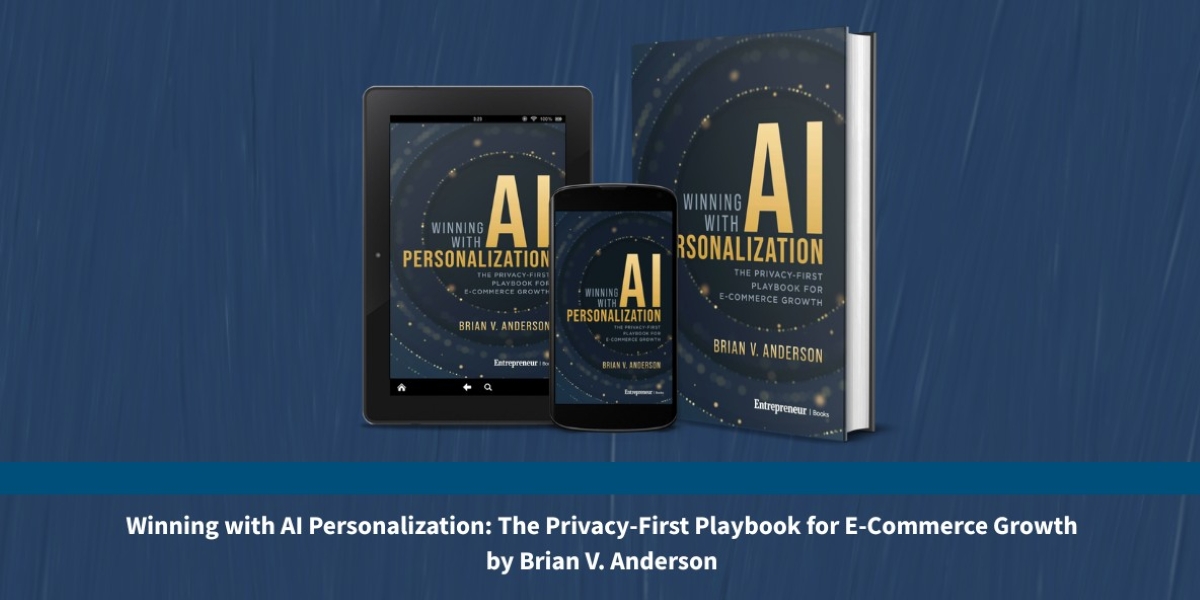
Winning with AI Personalization: The Privacy-First Playbook for E-Commerce Growth is available on Amazon.