
By: Haywood Spangler
I have a joke I tell at the start of most engagements. “Who has ever heard of a consulting philosopher? A consulting psychologist, yes. A consulting philosopher, not so much.” The executives in the room laugh, and then we get to work.
I’ve spent more than a decade as a thought partner and coach for senior leaders at financial firms, biotech companies, military intelligence units, manufacturers, and arts institutions. I came to that work the long way around: university instructor of business and biomedical ethics, and biomedical ethicist at the University of Virginia Medical Center, where I sat in on conversations between physicians and families trying to make impossible decisions. Most consultants I work alongside have backgrounds in psychology. I have a PhD in philosophy and a Master’s in divinity.
What philosophy gave me, and what psychology approaches differently, is a discipline for asking what kind of question is actually on the table.
Over the first few years of my practice, I noticed that the questions people were trained to ask did not always provide them with the answers they sought.
When a CFO came to me, uncertain about her financial planner’s retirement projection, she was focused on the credibility of the planner. When a board member was caught between two equally credentialed transit experts who had reached opposite conclusions, he asked which was more trustworthy.
These were reasonable questions. They were also the wrong questions. The right question in both cases was about the nature of the claim being made. Not “is this expert correct?” but “what kind of truth is this expert trying to deliver, and is that the kind of truth that can actually be delivered here?”
Take the CFO. She had done her homework: regression analysis, hypothesis testing, the statistical machinery behind retirement modeling. By the time we met, she was more confident in the projection than when she had started. She should have been less confident.
Every forecast rests on a logical move philosophers call “induction”: reasoning from a sample of evidence to a general claim. Induction can be more or less disciplined, but it can never produce certainty. David Hume worked this out in 1739. My client did not need more statistical literacy. She needed someone to explain that the word “safe,” coming from her planner, was doing a kind of work it was not entitled to do.
Or take the board member. He concluded the problem was him: that he was not qualified to be on the board. He was wrong about himself, but he had identified a real problem. When two experts in the same field disagree, our instinct is to suspect one of them is partisan, paid, or wrong. More often, they are applying different standards of evidence appropriate to different aspects of the question. Truth is not a single thing.
These are not exotic insights. What is changing is that executives increasingly need them. The standard toolkit, what I call Critical Thinking 101, is built around recognizing weak arguments, spotting biases, and separating correlation from causation. All are necessary skills, but not sufficient ones. They will not help a leader vet an AI output, adjudicate between two consultants making opposite recommendations, or work through a personal dilemma that no expert can resolve.
What helps is a different set of moves. Here are four I now teach every client:
1. Ask what kind of claim you are looking at, before you ask whether it is correct. Is the expert telling you something that corresponds to a verifiable fact? Something internally consistent with a body of knowledge? Something that works for a particular purpose? Each demands a different kind of verification.
2. Treat “safe,” “proven,” “guaranteed,” and “data-driven” as yellow flags, not green ones. When an expert delivers a forecast in the language of certainty, they have either misunderstood their own methods or are counting on you to. Ask what would have to be true for the projection to be wrong. If they cannot answer cleanly, you have learned something important.
3. When two credible experts disagree, resist the urge to pick a winner. Map the disagreement. Different data? Different methods? Different definitions of the same term? Many expert disagreements at the executive level turn out to be definitional, not factual, and once you see that, the path forward can become clearer than either expert alone made it look.
4. Distinguish the decisions experts can make for you from the ones they cannot. Experts can tell you what is likely to happen if you take a course of action. They cannot tell you whether it aligns with your values or your obligations to the people you are responsible for. Confusing those categories is a common executive error I see.
I now lead with these moves. When a client starts to describe the data they have and the outcome they want to pursue, I invite them to reevaluate by asking, “What kind of claim is this, and what kind of confidence is it entitled to?” The conversations that follow tend to go somewhere more useful.
I still tell the joke at the start of engagements. But I have stopped being apologetic about the answer. There are not many of us, but the world has uses for a consulting philosopher, more than I knew when I started.
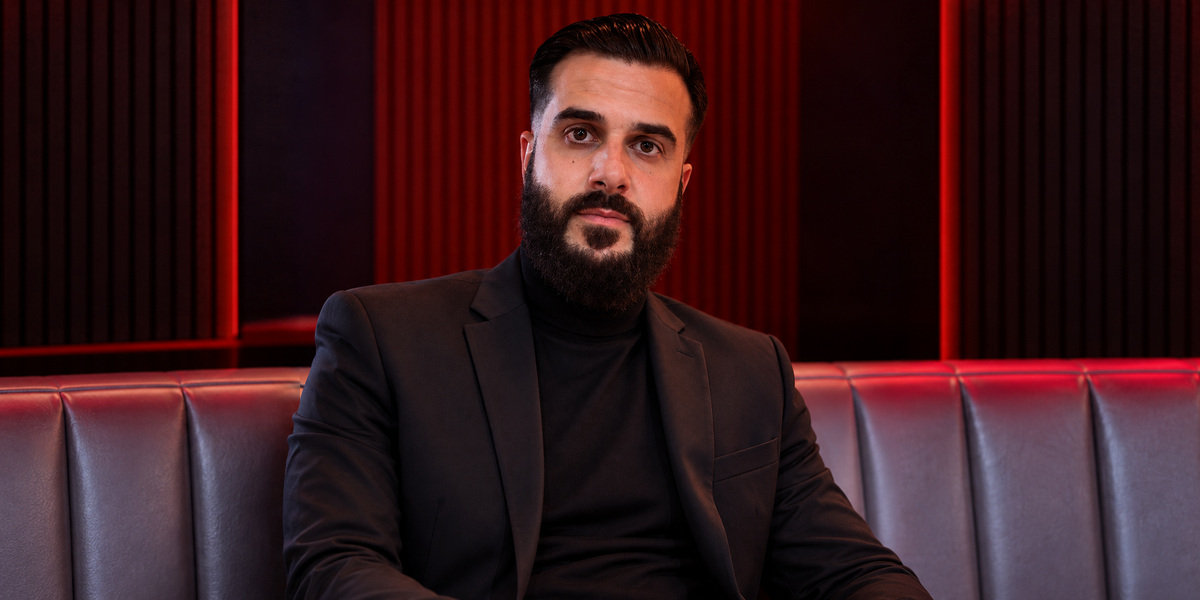
Haywood Spangler, Ph.D., M.Div., is the founder and principal of Work & Think, LLC. He helps clients make complex decisions that include a realistic understanding of uncertainty. His Spangler Ethical Reasoning Assessment® (SERA®) is used across industries and around the world, enabling individuals to combine critical thinking and values to make complex decisions. He is a keynote speaker, a corporate consultant, a researcher, and an author. His new book is Reasoning for Business: The Inquirer’s Guide to Decision Making (Routledge, 2026). Learn more at haywoodspangler.com.