
The marketing industry has a new religion, and its name is artificial intelligence (AI). Agencies are promising AI-powered everything. Founders are asking whether they even need a marketing team anymore. And somewhere in the middle of the hype cycle, the actual work of building a business is getting lost.
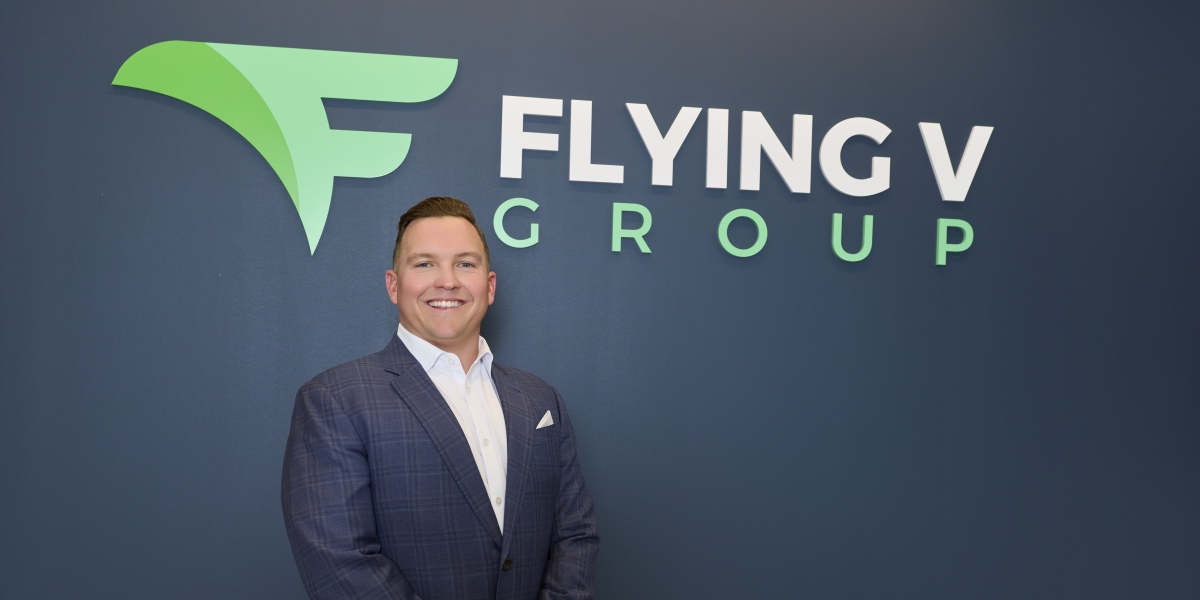
Robb Fahrion, CEO of Flying V Group (FVG), has been building and running a digital marketing agency for over a decade after founding FVG in 2016. His take on AI is neither dismissive nor evangelical, and that measured perspective might be exactly what business owners need to hear right now.
That framing matters. The conversation around AI tends to collapse into two camps: either it changes everything and humans are obsolete, or it is overhyped, and nothing really changes. Robb lands somewhere more useful. AI can dramatically compress the time it takes to go from zero to a solid first draft, whether that is copy, a content framework, a competitive analysis, or a strategy outline. But it does not close the gap between good and great on its own.
Flying V Group uses AI internally across a range of workflows. The team has built custom GPTs to repurpose strategy calls into social content. They use it to iterate on ad headlines and test more creative variables than a human team could produce manually. They lean on it for speed and efficiency in the creative process.
But Robb is specific about where it breaks down. A custom GPT that generates social content from a client call will, without human review, include sensitive client data that it was never supposed to surface. Push it to produce ten posts in a row, and by the eighth or ninth, the output starts recycling the same phrasing in different clothes. The tool does not know when it has become repetitive. The human does.
“We see it as something that can get us from zero to a strong working draft very quickly. But we still need a human to look, add creativity, and add the voice.”
There is also a creativity problem worth taking seriously. Research on AI-assisted creativity has raised concerns that repeated use of similar models, prompts, and workflows can make creative outputs feel more alike. Individually, people often bring a wider range of lived experience, instinct, and context to creative work. AI can help organize and accelerate that thinking, but it may also narrow the range of ideas when teams rely on it too heavily. If an agency or marketing team runs every brief through the same tool in the same way, the result may be content that is technically competent but harder to distinguish from what others in the category are producing.
That is the real risk. AI may not produce bad work, but it can make average work easier to produce at scale. For brands trying to stand apart, average work can make that job harder.
The businesses getting value from AI right now are the ones treating it as infrastructure, not strategy. They use it to handle the repeatable, lower-judgment tasks, such as content reformatting, data summarization, and headline generation, while keeping human expertise in the decisions that actually require it. What is the positioning? What is the message? What does this client actually need to hear?
There is also the question of what happens to trust in an environment where AI-generated content is everywhere. Robb points to a broader shift: as more marketing becomes automated, the signal value of genuine human expertise goes up. Podcast appearances, live events, and real conversations are starting to differentiate in ways that another AI-written LinkedIn carousel may not.
The founders and marketing teams that will come out ahead are not necessarily the ones who adopt AI fastest. They are the ones who figure out where human judgment is irreplaceable and protect that aggressively, while letting AI handle everything else.
That is not a warning against using the tools. It is an argument for knowing what the tools are actually for.
Disclaimer: This article is for informational and editorial purposes only. Statements about AI, marketing workflows, and business outcomes reflect the subject’s professional perspective and may vary based on company needs, tools, strategy, and implementation.