
It is the Difference Between an App People Use and One They Forget!
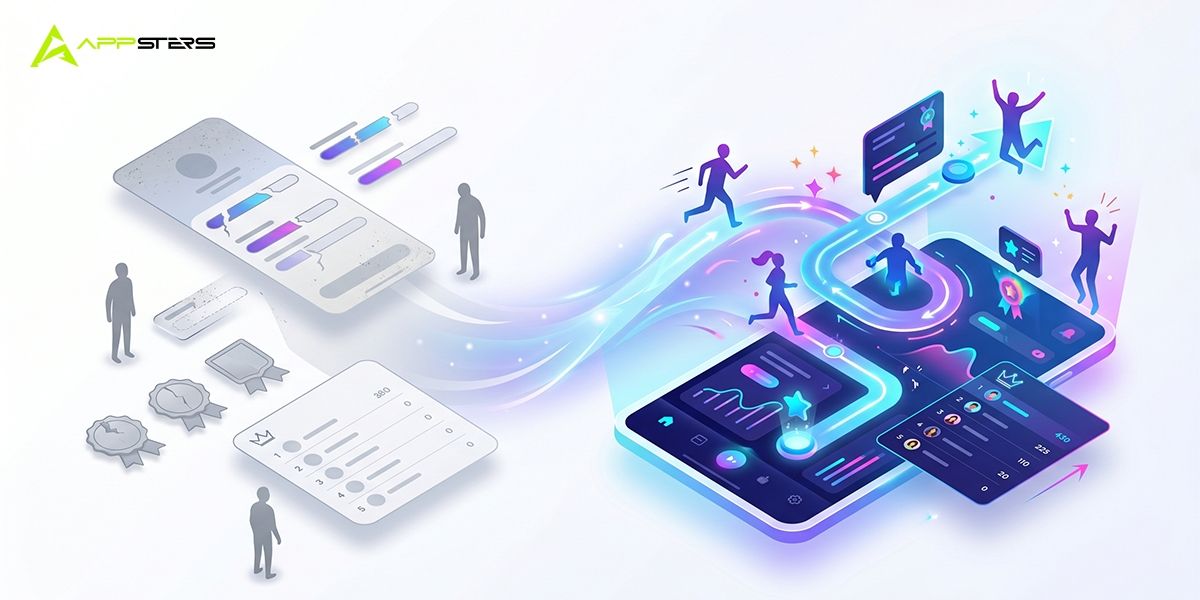
Most apps ask users to do something. The great ones make users want to. That distinction sounds simple, and yet the entire field of gamification exists because getting it right is genuinely hard. Loyalty points that nobody redeems, streaks that feel like chores, leaderboards nobody checks after the first day. Done poorly, gamification is wallpaper. Done well, it is the invisible architecture that makes an experience feel alive.
Appsters has spent years building gamification systems that land in the second category.
One of the most recent examples of this approach is now moving into active development through a strategic partnership. It is structural, behavioral, and deeply tied to what makes the specific product worth opening again tomorrow.
What Gamification Actually Does to User Behavior?
The psychology behind gamification is not a mystery. Progress mechanics trigger a sense of forward momentum. Reward systems reinforce desirable habits. Social layers introduce accountability and healthy competition. When these elements are well calibrated, they shift an app from something a user remembers to use to something they reach for instinctively.
The mobile gaming industry understood this decades before productivity or utility apps caught on. Now, the logic has moved into fitness, finance, education, fishing, and nearly every vertical imaginable. The question is no longer whether gamification belongs in a product. It is whether the team building the product understands it well enough to do it justice.
Virtual LiveWell: Where Gamification Meets Conservation and Community
Few projects demonstrate the potential of intelligent gamification better than Virtual LiveWell, now being developed in partnership with Joseph Ramirez
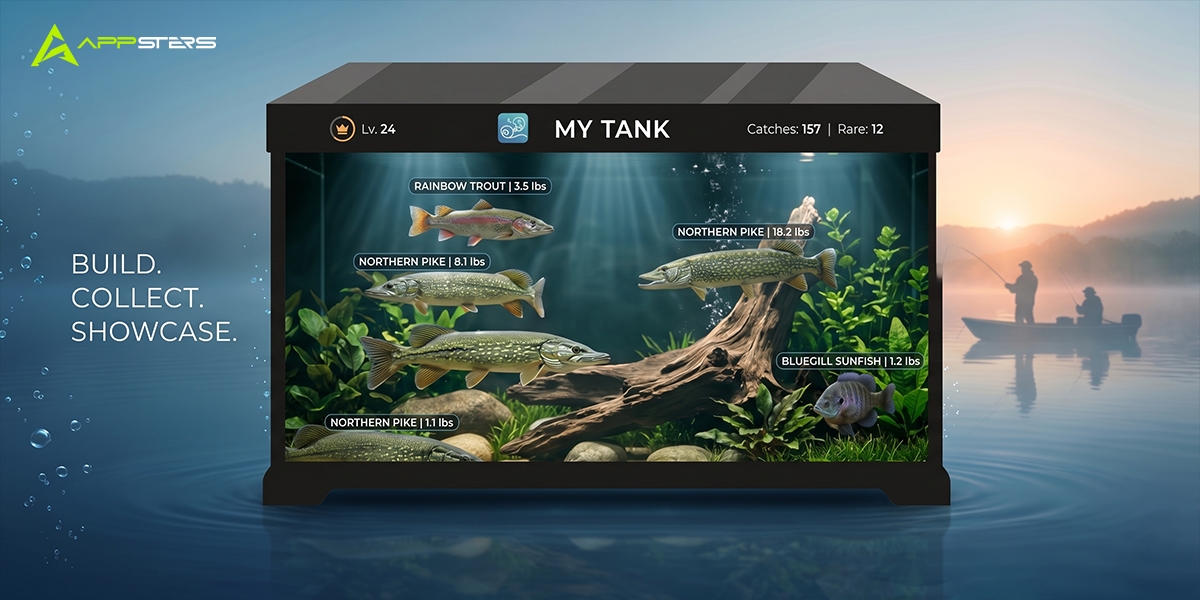
The concept is built for users and genuinely original. Anglers photograph their real-world catches, upload them to the app, and watch those fish come to life as animated, customizable versions inside a personalized virtual tank. The fish swim. The tank decorates. The collection grows.
On the surface, it sounds like a novelty. Under the hood, it is a masterclass in retention-driven design. Ali, serving as developmental head at Appsters on this project, worked through every loop with Ramirez to ensure the mechanics served the platform’s deeper goals: encouraging catch-and-release behavior, building a community of anglers, and giving users a reason to return every single day.
The gamification architecture in Virtual LiveWell operates across multiple layers simultaneously. There is the core collection loop, where users log catches to build out their tank, selecting from 33 immersively animated freshwater species at launch, with more to follow in future phases. There is a virtual feeding system that rewards users with Gold Coins for daily interactions, and consecutive feeding streaks create escalating incentives to maintain the habit. Tank cleaning mini-tasks add another lightweight engagement touchpoint, rewarding users for the kind of low-effort, high-frequency interaction that drives long-term retention numbers.
The decoration system adds a genuinely compelling progression layer. Users start with a basic tank and unlock or purchase items ranging from a simple pyramid to a Roman temple, a pirate ship, a submarine, and animated bubblers like a deep-sea diver or a volcano. The tank transforms from a basic interface into a personal expression of the user’s angling identity. That personalization is not decoration. It is a commitment mechanism. People do not abandon things they have invested in.
Development is currently focused on refining the core engagement loops and preparing the platform for scalable rollout.
The Economy Behind the Experience
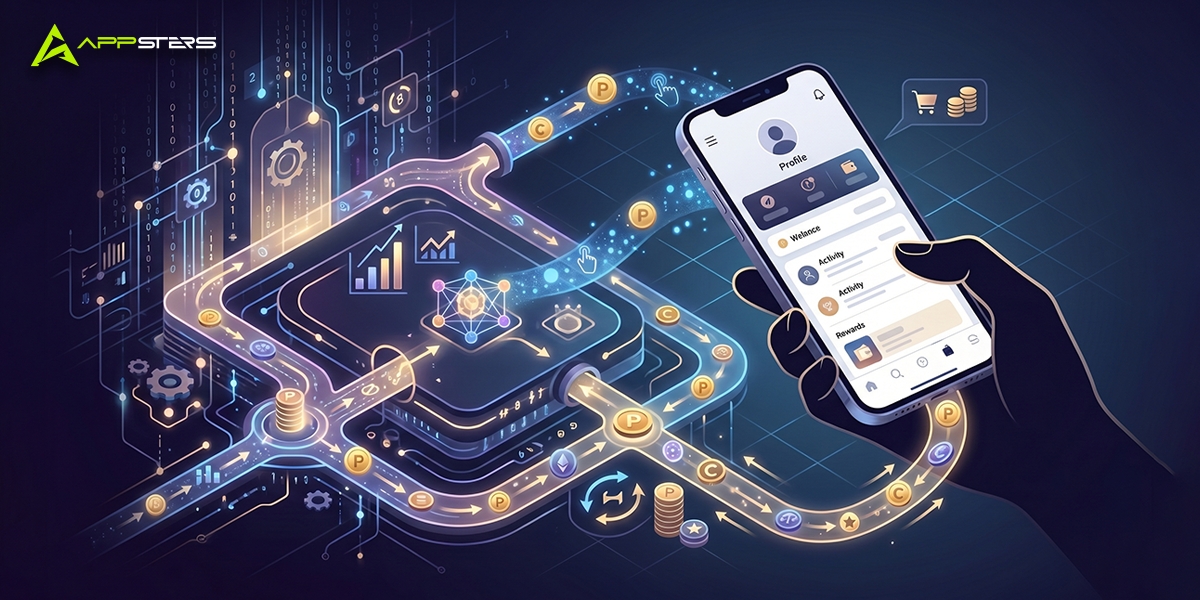
Virtual LiveWell runs on a Gold Coin economy that Appsters designed with both user experience and long-term sustainability in mind. Coins can be earned organically through daily logins, feeding routines, cleaning tasks, and watching optional ads. They can also be purchased directly. The balance matters enormously. Too generous, and the monetization collapses. Too restrictive, and users feel manipulated and leave.
Getting that equilibrium right requires understanding the audience. Anglers are patient. They are also deeply loyal to tools and communities that respect their time. The Virtual LiveWell economy was tuned accordingly, offering a genuinely rewarding free path while giving enthusiasts meaningful ways to expand and personalize their experience. The result is a model that feels fair, and fairness is the foundation of retention.
Built in Partnership With Appsters
Virtual LiveWell is now officially in development in partnership with Appsters.
What started as a strong concept has moved into structured execution, with product architecture, gamification systems, and scalability planning already underway. This is no longer a speculative idea. It is a product being actively built with a clear roadmap.
Appsters is not operating as an external vendor on this project. The team is working closely with Joseph Ramirez to shape the product at every level, from behavioral design to technical infrastructure. That level of involvement changes how decisions are made, and more importantly, how the product evolves.
The focus now is simple. Build and grow platform that delivers on its promise, scales with its users, and holds up under real-world usage.
Social Features and the Community Layer
No gamification system reaches its ceiling without a social dimension. Virtual LiveWell includes tank sharing, a friends system, and the ability to visit and browse other users’ collections. Profiles can be set to public or private, giving users control without removing the community potential. These features are not bolted on as an afterthought. They were scoped from the beginning as part of the core experience because Ramirez understood that anglers are social by nature, and the app needed to reflect that.
When a user shows a friend their tank and the friend sees a Yellowtail Snapper they have not caught yet, the motivation to go fishing becomes inseparable from the motivation to open the app. That integration of the physical and digital experience is what makes Virtual LiveWell genuinely novel in its category.
Building Gamification That Respects the User
The most important thing Appsters brings to gamification projects is restraint. Every mechanic is interrogated before it is built. Does this serve the user, or does it serve the metrics at the user’s expense? The distinction matters. Dark patterns erode trust. Respectful engagement design builds it. The apps that survive long-term are the ones users feel good about opening, not the ones that trap them into a habit they resent.
Virtual LiveWell is a product built on that philosophy, and it shows in every interaction. For any brand exploring gamification as a growth strategy, the team at Appsters offers the combination of design intelligence and technical execution to do it properly.
The Appsters Advantage: Gamification With Depth, Immersion, & Functionality
Appsters does not offer gamification as a feature toggle. It is embedded into the product strategy from the first conversation. As a sister brand of Cobweb Games, the team brings genuine game design thinking into every engagement, which means the mechanics are informed by decades of understanding what keeps players invested, not just what looks good in a product demo.
Virtual LiveWell reflects how Appsters approaches product building at its best. Not as a service, but as a partnership focused on building something that lasts. With development now underway, the goal is not just to launch. It is to create a product that users return to, invest in, and grow with over time.
For businesses ready to build an app experience users genuinely look forward to, Appsters is the team to build it with. Trusted by CTOs, valued by users, and designed for the world your product will live in tomorrow.