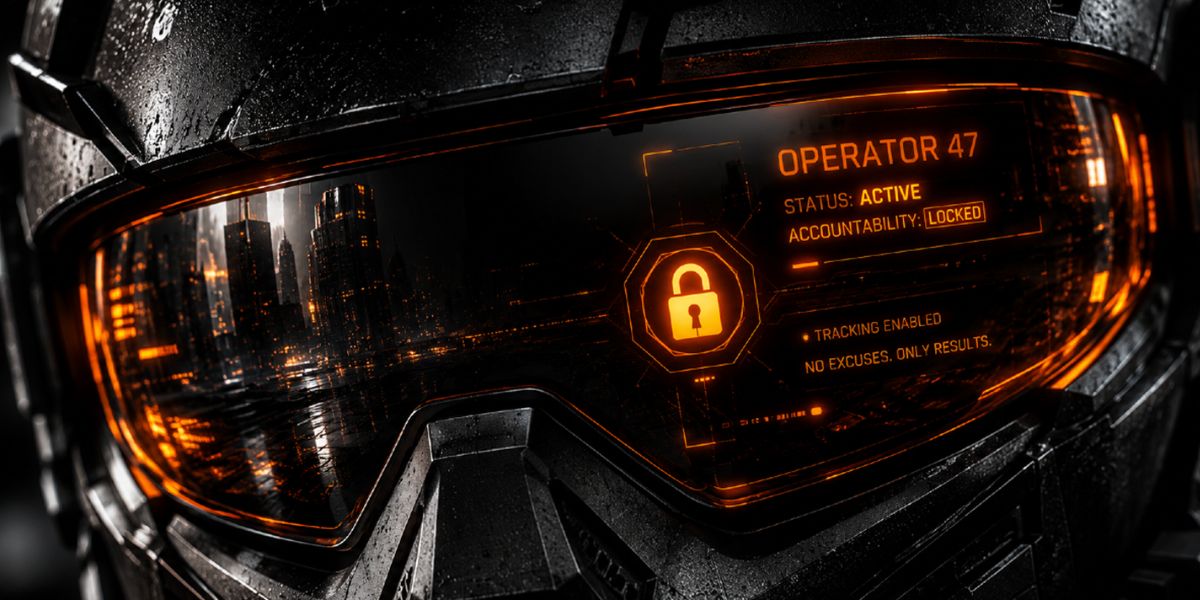

Before he was anything else, Matt Sim was a competitor. By his own account, he signed his first professional esports contract at fourteen, ranked among the top five Fortnite players in the world, and sat among the top three in a competitive Halo playlist. Years later, he tends to downplay the trophies. What stayed with him, he says, was not the winning but the operating system that competitive gaming installed in him, a way of approaching performance that he has carried into everything since.
The first thing elite esports teaches, in Sim’s telling, is that performance is measured, not described. At the professional level, there is no credit for looking busy or sounding confident. Every match produces data. Every decision, every mistake, every fraction of a second is recorded and reviewable. A player cannot hide behind effort or good intentions, because the results are public and the numbers are unforgiving. That environment, he argues, removes the comfortable ambiguity that lets people in most fields convince themselves they are doing better than they are.
The second lesson is that improvement comes from repetition and review, not from highlight reels. The clips that circulate online show the spectacular moments, but the work that produces them is unglamorous. It is hours of drilling the same mechanics, then watching the replay to find the error that cost a round. Sim describes this loop of practice and honest review as the real engine of progress. The player who studies their own failures closely improves. The one who only celebrates their best moments stalls.
There is also the matter of pressure. Competitive gaming forces performance under stress, with the outcome visible to teammates, opponents, and an audience. The scoreboard does not care whether a player is tired, anxious, or having a bad day. Sim
came to see this as clarifying rather than cruel. When feelings cannot change the result, they stop being an excuse, and attention shifts to the only thing that matters, which is execution. Learning to perform when it is uncomfortable, he says, is a skill in itself, and one that very few environments demand as directly as esports.
What makes these lessons valuable, in Sim’s view, is how cleanly they transfer. The principles that govern elite gaming, measurable results, honest feedback, relentless repetition, and accountability that cannot be dodged, are the same principles that govern high performance almost anywhere. The difference is that most professional settings allow people to obscure their results, to point to activity instead of outcomes, or to defer the reckoning. Esports does not offer those exits, which is exactly why it builds the habits it does.
Sim is careful not to romanticize the path. Competitive gaming at a high level is demanding, often isolating, and rarely as lucrative or stable as outsiders assume. But he credits it with teaching him to treat performance as a practiced system rather than a burst of talent. Skill, in that world, is something you build through structured, repeated work and then prove under pressure, again and again. That framing has shaped how he approaches every project since.
There is a team dimension to all of this that Sim returns to as well. High level esports is rarely a solo pursuit, and performing alongside others adds a layer of accountability that is harder to avoid than personal discipline alone. A player who fails to do their part lets down people who are counting on them, in real time and in full view. That shared stake, he notes, raises the standard for everyone, because no one wants to be the visible weak point. Learning to hold up his end of a team effort under pressure, and to communicate honestly when something went wrong, taught him as much about performance as any individual drill did. It also taught him that accountability felt by a group can be more powerful than accountability felt alone.
The broader takeaway he draws is that anyone serious about getting better should seek out environments that provide honest feedback, even when it is uncomfortable. The instinct for most people is to avoid situations where failure is visible. Sim argues the opposite: visible failure is information, and information is what makes improvement possible. The scoreboard that once tracked his matches taught him to want a scoreboard in everything, a clear, honest measure of whether he executed or did not. For builders and professionals chasing real progress, he suggests, that willingness to be measured honestly is closer to the heart of high performance than any amount of motivation or natural ability.