
Boards across the country are starting to confront a problem they have spent decades quietly tolerating. The CEO is performing well. The financials look healthy. The senior team is competent on paper. And yet, when directors ask the harder question, who is ready to lead this company three years from now, the answer is rarely as confident as the proxy statement suggests.
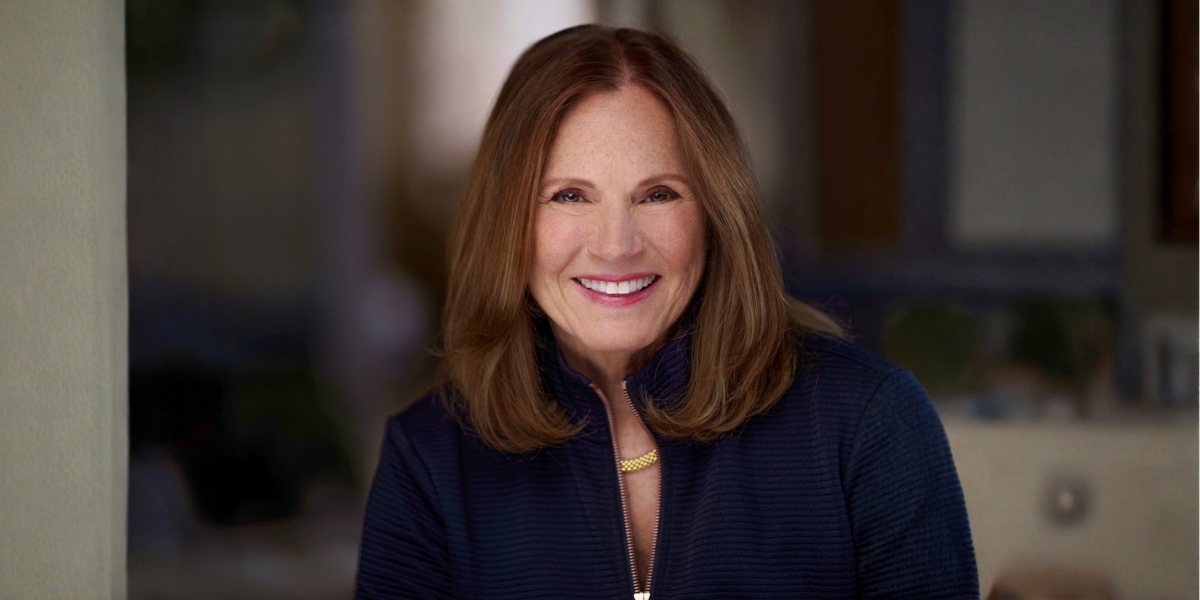
Julie Krivanek has built her career on the gap between those two answers. As founder and president of Krivanek Consulting Inc., a Denver-based firm working with global executives in public, private, and family businesses, she has spent more than two decades inside the room where executive development and succession planning either happen or quietly do not. Her practice serves CEOs, boards, and senior leaders who recognize that the work of preparing the next generation of leadership is rarely as advanced as it should be.
Why Are Companies Still Underinvesting in Executive Development?
Most organizations underinvest in senior development because they assume executives at that level are finished products. Krivanek argues the opposite. Business environments are moving faster, getting more complex, and demanding more from senior leaders than at any point in recent memory. An organization, she notes, cannot transform faster than its senior leaders can learn.
That assumption has consequences. Senior leadership pipelines are especially thin in family-owned businesses, founder-led companies, and organizations with long-tenured CEOs. Industries facing digital and AI transformation are exposed in a different way because the speed of change outpaces the speed of internal learning. Executives often stop receiving honest feedback at exactly the moment they need it most, and careers that looked unstoppable on the way up can derail without warning.
Krivanek’s approach addresses what she calls the senior-level blind spot, the comfort that settles in once a leader has reached the top of an organization. Comfort is not the same as competence. Feedback that disappears at the C-suite level needs to be reintroduced by someone outside the reporting line, with the experience and credibility to deliver it without flinching.
The Sobering Math of Succession Planning
Succession planning is the area where the data hits hardest. Industry research suggests roughly seventy percent of small businesses fail to transition successfully. Two-thirds of family businesses have no succession plan in place. Fewer than a quarter of private companies have any plan at all. And three-quarters of senior leaders say they worry their business would not survive the sudden exit of the owner.
The numbers are striking, but the cause is rarely structural. According to Krivanek, the main obstacle is the psychology of the sitting CEO. Identifying a successor requires the willingness to find someone better than yourself, and to prepare that person not to replicate who you are, but to lead the company toward what success looks like three to five years out. That mental shift is harder than it sounds, particularly for founders and long-tenured executives whose identity is fused with the business they built.
Krivanek works with boards, with executive-and-successor teams, and with individual executives whose preparation needs to happen quietly. The format depends on what the situation calls for. What does not change is the underlying view that succession is a leadership development problem before it is a governance problem, and that treating it as paperwork to be filed with the board is part of why so many transitions fail.

An Unconventional Path Into the C-Suite
Krivanek’s perspective is shaped by a career that took her into rooms most consultants only read about. Recruited out of Purdue University after earning a BS in general management, she moved from Chicago to Denver to work in oil, gas, and coal mining, taking on assignments that ran from offshore platforms in Alaska to coal operations in Eastern Kentucky. She entered roles that had historically been held exclusively by men, and she did so at a time when the energy industry was not built to make that easy.
Selected for the company’s high-potential leadership program, she was placed on a three-person mergers and acquisitions team negotiating the purchase of coal mines. The stakes were unusually personal. The division president she worked for was a candidate to become the next CEO of the parent company, and the success of the deal had a direct bearing on that outcome. Krivanek was eventually promoted to vice president, becoming the youngest person to hold that title in the company’s history.
At thirty-two, she reached what she describes as the practical ceiling for further advancement inside the corporation. Rather than wait it out, she returned to school for a Master’s in Applied Communication at the University of Denver, graduating summa cum laude, and followed a line of entrepreneurs and business owners in her family by launching her own consulting practice.
What a Generalist Brings to the Senior-Level Conversation
Krivanek describes herself as a generalist and treats the word as a compliment rather than a hedge. Generalists with genuine depth across functions and industries are harder to find than specialists, she argues, because the credential pathways for the role barely exist. Hers was built through hands-on training, executive operating experience, and exposure to a wide range of business models.
Her client work has spanned fresh food and produce, technology, construction, telecommunications, media, energy, and mining. She has advised publicly traded companies, family businesses, privately held firms, private equity portfolio companies, cooperatives, and industry trade associations. International engagements have included Costa Rica, Canada, Israel, Colombia, and Chile, in addition to her US work, with cultural sensitivity shaped in part by her first-generation Czech upbringing.
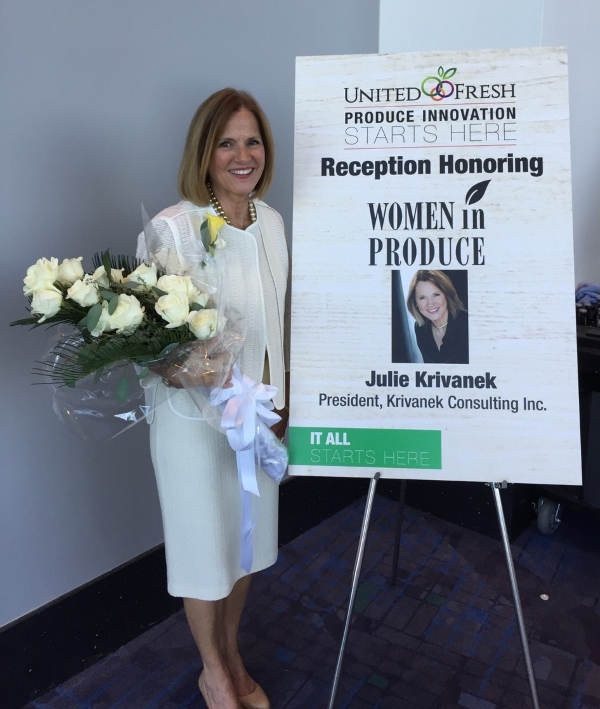
One thread runs through all of it. Krivanek serves as the leadership and management expert for the International Fresh Produce Association’s leadership program, a role she has held since 1995. The program, originally sponsored by DuPont, is celebrating its thirtieth anniversary, and Krivanek has been with it since the beginning. The continuity is unusual in a consulting career, and it is one of the reasons she was named Woman of the Year in the global fresh produce industry.
Where the Work Is Heading
The market signal Krivanek is paying attention to is the shortage of experienced consultants able to do senior-level work. Executive development at the top of the house has historically been served by coaches, search firms, and HR consultancies, each operating from a different angle. The integrated work, sitting with a board on succession, coaching the sitting CEO, preparing the successor, and aligning the executive team around what the company needs in three to five years, is harder to staff.
Krivanek’s ambition for the next phase of her firm is to bring that integrated work to more boards and executives who have been operating without it. Her framing of the executive journey, the combination of personal growth, professional capability, higher purpose, and the pursuit of profit, is the standard she uses to evaluate whether a leader is ready. The phrase she returns to with clients describes the result she is after: executives who can move mountains.
More on Krivanek Consulting Inc., including client testimonials and additional background, is available at Krivanek Consulting. Krivanek has also been profiled in Vision Magazine and appeared on The Produce Moms podcast to discuss leadership in the fresh produce sector. She is also active on LinkedIn.