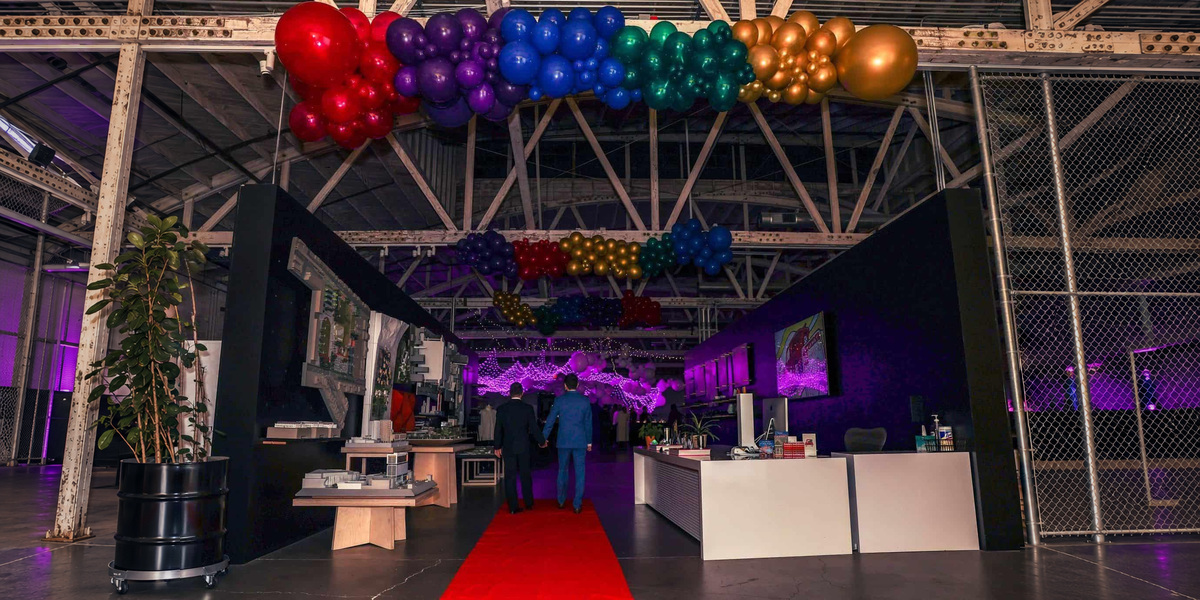

A bag of balloons picked up on the way to a party used to be the entire balloon industry, as far as most people were concerned. That version of the category still exists. It just isn’t the whole story anymore. Underneath it, a formal industry has grown up with certification programs, credentialed studios, and corporate purchasing processes behind it, a shift most people outside the category never noticed happening.
Balloon Decor Used to Mean Something Different
For most of its history, balloon decor operated the way party supplies generally do: picked up casually, assembled without much planning, and treated as a low-stakes purchase nobody scrutinized closely. A birthday party or a store window got balloons because they were easy to find, simple to buy, and forgiving of imperfect execution.
That informality wasn’t a flaw in the category. It matched what the category was actually being used for. Nobody expected a formal process behind a bag of balloons picked up on the way to a party, and nobody needed one.
What Actually Changed the Category
The balloon decor industry didn’t change because tastes shifted. It changed because the money behind it did. The global decorative balloons market was valued at $1.40 billion in 2025 and is projected to reach $1.98 billion by 2034, growth driven in real terms by corporate and commercial spending rather than birthday parties alone.
That corporate share of the category isn’t incidental. Companies spending on branded activations, product launches, and store openings don’t buy the way an individual planning a birthday party does. They want a quote, a timeline, and a process they can actually manage, and a category selling mainly to individuals has no reason to build any of that. Once corporate demand became large enough to matter, the category had to build it anyway.
Training and Credentials Replaced Trial and Error
Balloon certification didn’t exist in any meaningful way for most of the category’s history. Entry was entirely informal: watch enough tutorials, practice enough builds, and start taking jobs. Skill varied enormously, and there was no external way for a buyer to tell the difference between someone skilled and someone simply willing.
That’s changed. Formal training programs now offer a credentialing path, and the credential itself carries weight in the market. The Balloon Training Institute, one of the training bodies now active in the category, describes its Certified Balloon Professional designation as recognized and respected in the industry, the kind of standing that makes certified practitioners more sought after by event planners and businesses evaluating who to hire. A category that used to have no external signal of skill now has one.
What a Professionalized Studio Actually Looks Like
Corporate event decor is where the shift shows up most concretely, in an actual process rather than an abstract claim. The Balloon Guy Los Angeles runs on exactly that kind of process: a discovery call before any design work starts, custom builds around a brand’s actual materials, and a crew trained on venue-specific installation and teardown.
Sean Edwards, Founder of The Balloon Guy, says the shift in how the business runs has been gradual but constant. “When I started, there wasn’t really a standard way to run this kind of business. You figured it out as you went,” Edwards says. “Now there’s an actual process, from the first conversation through teardown, and clients expect that process to exist before they ever ask about it.”
That expectation is itself a marker of how far the category has moved. A process nobody used to ask about is now something businesses assume is already there.
What This Means for Companies Choosing a Decor Partner Today
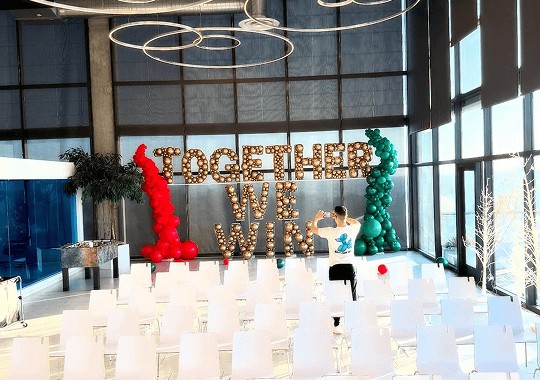
For a business evaluating a decor company today, the professionalized end of the category is easy to identify once you know what to look for. Edwards says the signals are less about portfolio and more about process. “Ask what happens before anything gets designed, and ask who’s actually on-site the day of the event,” Edwards says. “A company that can answer both of those clearly has probably already built the process the category now runs on.”
That’s a fairly simple test, and it works precisely because it used to be unnecessary. A category with no formal standards doesn’t need a test like that. A category that has professionalized does.
Why the Shift Matters
The balloon industry professionalized because both sides of it needed something more formal than what came before: businesses spending real money needed a process they could manage, and practitioners competing for that money needed a way to prove they could deliver it. Neither side got there by accident.
Edwards, who trained at the California Institute of the Arts, says that background shaped how he thinks about the category’s shift toward formal training generally. For a reader who isn’t sourcing decor at all, the existence of a certification path and a standardized studio process is itself worth noting: it’s a small, concrete sign of how much a category can change once real money starts moving through it.
A bag of balloons picked up on the way to a party is still exactly that. It just isn’t the only thing the category means anymore.