
By: Jenna Wilson
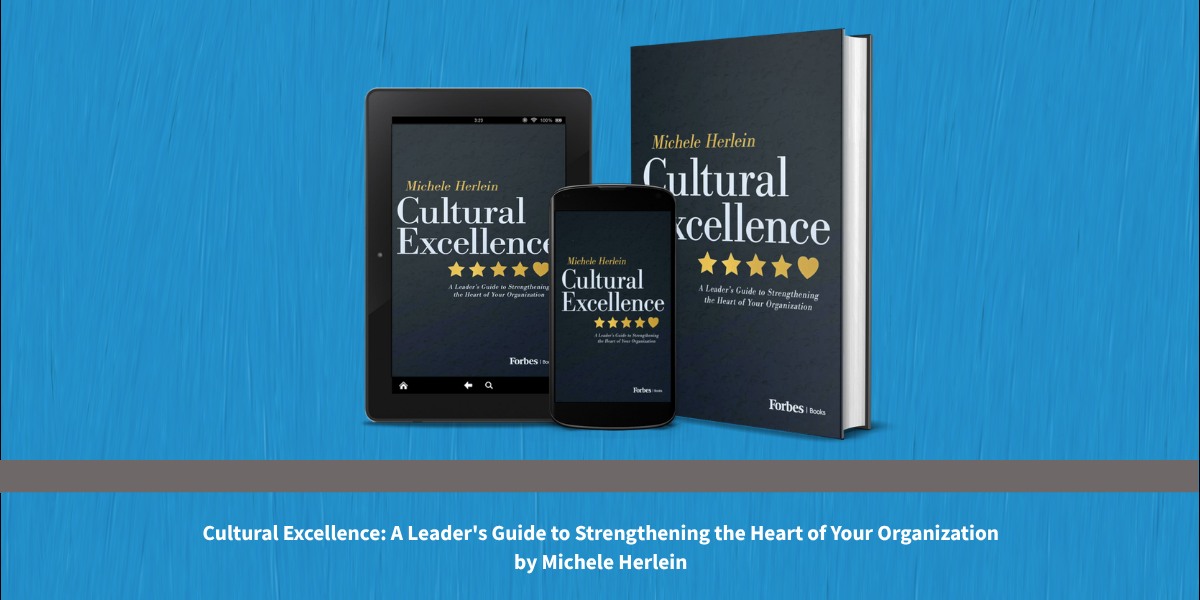
There is a question that sits uncomfortably at the center of most organizations and rarely gets asked directly: Is the culture here something we designed or something that simply happened to us? Michele Herlein has spent more than twenty years helping leaders face that question honestly, and Cultural Excellence is her most complete and practically useful answer to what comes after the honest answer arrives. This is not a book about making employees feel good or hanging better values on the wall. It is a rigorous, experience-grounded guide to building the kind of organizational culture that actually changes how people work, how long they stay, and how much the business is ultimately capable of achieving.
Reading this book produces a specific quality of productive clarity that most leadership writing fails to generate. Herlein writes with the confidence of someone who has not just theorized about culture transformation but led it inside real organizations facing real pressures, including a major cultural initiative she directed at Barge Design Solutions. That hands-on track record matters. Because the guidance is grounded in work she actually led rather than concepts she observed from a distance, the book carries a credibility that purely theoretical treatments of culture cannot match.
Culture as a Strategic Asset, Not an Accident
The framework she introduces is built around a distinction that sounds deceptively simple but reorganizes everything about how leaders approach cultural work: the difference between culture as a passive byproduct of organizational decisions and culture as an active strategic asset that can be diagnosed, aligned, and systematically strengthened. Most organizations operate in the first mode without realizing it, and the cost of that passivity shows up in disengagement, turnover, misaligned teams, and the slow erosion of whatever the organization was originally trying to build. Herlein gives leaders both the diagnostic tools to see that erosion clearly and the practical framework to reverse it, working across the horizontal and vertical dimensions of organizational alignment in ways that address root causes rather than surface symptoms.
Where Cultural Transformation Usually Breaks Down
What also comes through with real force is her understanding of where cultural transformation most commonly breaks down. It is not usually at the level of senior leadership intention. It is at the level of middle management activation, the layer of the organization where cultural values either get translated into daily behavior or quietly die between the executive announcement and the front line. Herlein addresses that dynamic with specific, actionable guidance that reflects genuine insight into how organizations actually function rather than how organizational charts suggest they should.
A Leadership Book That Earns Its Place on the Desk
Her writing style is direct and warm without ever becoming either clinical or motivational in the hollow sense. She writes like someone who has sat in enough leadership rooms, at enough critical inflection points, to have developed a clear and honest picture of what actually moves culture and what only appears to. Cultural Excellence is the kind of leadership book that earns its place on the desk rather than the shelf, the kind you return to at different stages of the work because it keeps offering something useful at every stage. For any leader who has ever suspected their organization’s culture was capable of more than it was currently delivering, this book is the most practical and credible place to start doing something about it.
Cultural Excellence is available now on Amazon for any leader ready to begin that work.