
By: Alexandra Perez
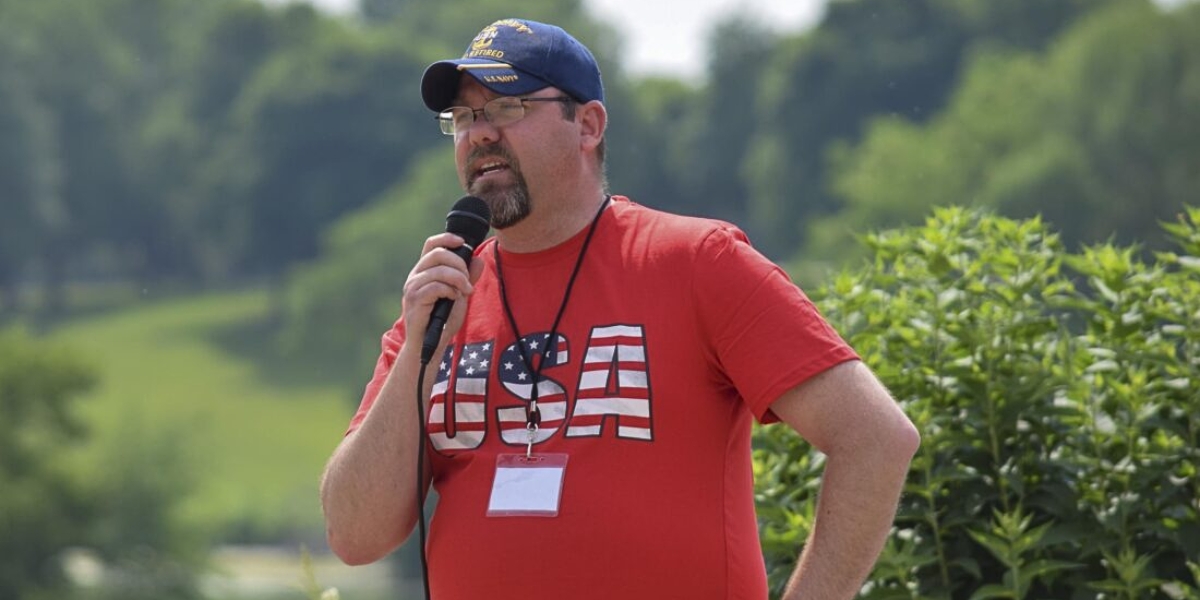
Jeremy Frisbey knows what it feels like to lose a title overnight.
For 26 years, he wore the uniform of the United States Navy. He deployed across oceans, circled the Gulf, and spent long stretches at sea, where 70% of the scenery was water. He served during Hurricane Katrina aboard the USS Bataan (LHD 5), an experience he still considers one of the most rewarding of his career because it meant helping fellow Americans instead of preparing for war. Over time, he built a life shaped by service, structure, and identity.
Then one day, he was no longer Chief Frisbey. He was simply Jeremy.
That shift, he admits, can shake even the strongest service member. “You do have an identity crisis,” Frisbey says. “You’re not chief whoever. You’re not a major, whoever. You are just Joe Schmo. I’m just Jeremy now.”
For some, that change feels like freedom. For others, it feels like stepping into open air with nothing to grab onto. Frisbey understood both sides. As he prepared for retirement, he tried sorting through the maze of benefits, resources, and programs available to veterans. The volume alone was exhausting. Phone numbers led to more phone numbers. Agencies redirected him to other agencies. Even with discipline and technical confidence, he found himself frustrated.
And that raised a bigger question: if it felt insurmountable for him, what would it feel like for a veteran in rural Iowa without the same access, support, or know-how?
That question became the seed for Veterans Group of Iowa, the nonprofit Frisbey now runs alongside his executive director, Mandy Gleisner. Together, they’ve built a simpler path through a complicated system, turning scattered information into a clear next step veterans can actually use. The concept is straightforward but deeply effective. Instead of veterans having to call dozens of numbers to find housing support, employment guidance, or mental health resources, they make one call. Frisbey likes to say they either “have a guy or a gal” who can help.
In just over a year of ramping up operations, the organization has assisted roughly twenty-five veterans. Some are newly transitioning out of service. Many have been out for years, quietly drifting from job to job, unable to name why nothing feels like the right fit. Employers misunderstand them. They face barriers to employment. The uniform may be gone, but the internal shift still has not settled.
Frisbey does not pretend to be able to hand someone a purpose. Instead, he helps them find their way back to it. At coffee-and-camaraderie gatherings across the state, he asks questions that go beyond résumés and job titles.
“What did you want to do when you were ten years old?” he asks, then keeps going. What makes you tick? What gets you up in the morning? If your kids were not your reason, what would be?
He listens like a coach and probes like a teacher, peeling back layers until something honest emerges.
That instinct to teach is no accident. By day, Frisbey works in education, teaching what he calls Adulting 101 to high school students in rural Iowa. The classroom gives him a sense of purpose that echoes what the Navy once provided. He is still serving, still pouring into others, still helping young people imagine a future beyond the limits around them.
His commitment to growth did not stop when he entered civilian life. Driven by what he describes as a chip on his shoulder, planted early by family members who believed he would never amount to much, he pursued an MBA and then set his sights higher. He is now completing a doctorate in educational leadership and a master’s in instructional design.
For Frisbey, the doctorate is not about collecting letters after his name. It is about becoming sharper, more useful, more prepared. He wanted to learn how to research effectively, understand people more deeply, and ask better questions so he could help others build the best versions of themselves. “If you’re not growing, you’re dying,” he says. “I always say if you’re not growing, you’re slowing.”
In a program where he initially battled impostor syndrome, Frisbey leaned into discomfort. Surrounded by career educators, he raised his hand and asked for clarification when unfamiliar terms flew past him. He adapted. He absorbed. He evolved. That same resilience now shapes how he mentors veterans wrestling with doubt, frustration, and the quiet fear that they no longer fit anywhere.
Veterans Group of Iowa, which connects with supporters through its Facebook page, remains fully volunteer-driven. Frisbey and his team take no salary. Fundraisers like golf tournaments and sponsorships help cover operating costs, but much of the organization’s momentum is self-funded. He admits he hates asking for money. What he values more is time.
Workshops on résumé writing, personality assessments such as Working Genius, art therapy partnerships, and financial literacy support all play a role in the nonprofit’s work. Frisbey is clear that he is not the subject matter expert on everything, and he does not try to be. His strength lies in connection, coordination, and the steady assurance that veterans need not face their next chapter alone.
The mission is ambitious: zero suicides a day and zero percent unemployment among veterans. He knows perfection is unlikely, but he also knows that aiming smaller does not move the needle.
What defines Frisbey most is not the titles he once held, but the mindset he models now. When asked what carries him through hard seasons, he returns to two beliefs that sound simple until you realize how much discipline they require. “My attitude is contagious. Is my worth catching?” he says. Then he follows with the question he offers anyone facing adversity: “Do you want to consume the challenge or do you want the challenge to consume you?”
This past year, he admits, tested him in ways that rivaled any deployment. Life interrupted academic momentum. Family responsibilities demanded attention. Progress slowed. Still, he returned to the same principle he teaches others: choose your response, then keep moving.
In helping veterans rediscover identity and direction, Frisbey is also helping a former version of himself. The sailor stepped off the train without a rank. The retiree is staring at a maze of resources. The adult learner was wondering if he belonged in a doctoral program.
He chose growth. He chose service again. He chose to make sure that when another veteran feels untethered, there is one call they can make.
And in that steady commitment to purpose, Jeremy Frisbey continues to prove that service does not end when the uniform comes off.