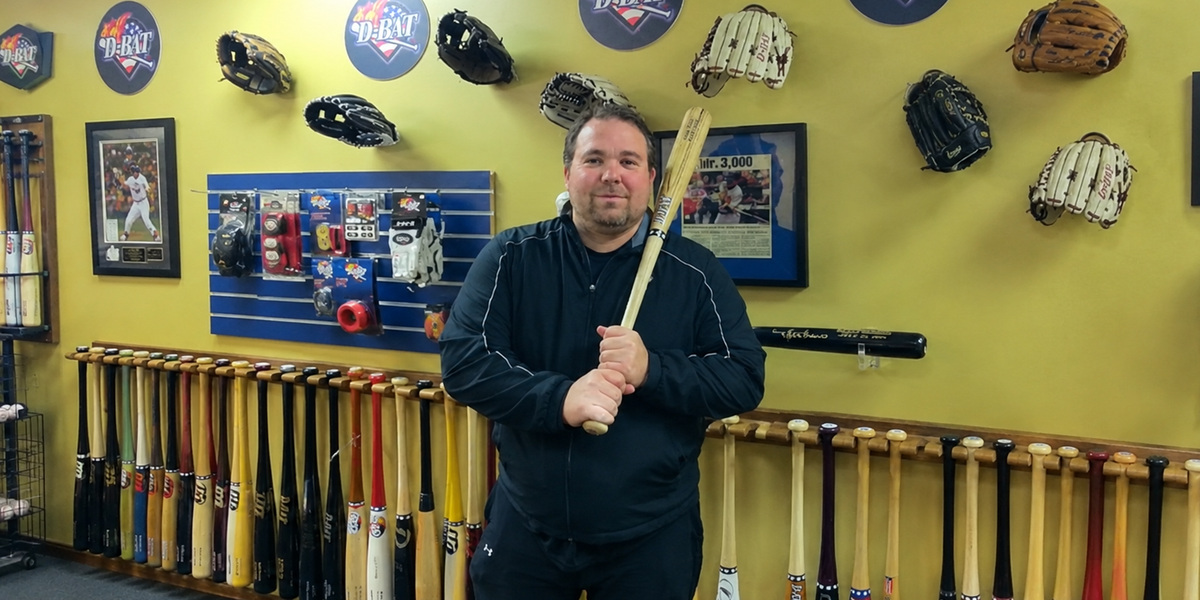

Jacob Niemeier was a junior at Purdue University when a single moment in Haiti rearranged the trajectory of his career. It was the winter of 2010 to 2011, one year after the earthquake that flattened much of the country. He watched a woman walk past carrying a jug of brown, dirt-filled water, hauling it home because it was the only source her family had. Niemeier was studying water resources engineering at the time. He already knew how to solve that exact problem. The question that stuck with him was simpler and harder: why was no one applying real, durable engineering to it? That question became Vera Aqua Vera Vita, the clean water nonprofit he founded in 2017.
From Water Resources Consultant to Founder
Niemeier earned a Bachelor of Science in Agricultural and Biological Engineering from Purdue, graduating in 2012. He took a job as a water resources consultant in Dallas, designing public water systems for municipalities, and earned his Professional Engineer license in 2016. That credential mattered. It gave him the technical footing to treat international water work as serious infrastructure rather than well-intentioned charity.
He spent five years building that foundation before launching anything. On June 13, 2017, Vera Aqua Vera Vita was officially incorporated as a nonprofit focused on clean water. The name is Latin for True Water, True Life. The organization builds sustainable clean water and sanitation infrastructure in rural communities in developing countries, and trains the people who live there to own and run those systems for the long haul. Niemeier still works as an engineer in the field. He also carries the harder work of building donor relationships and a vision durable enough to outlast any single project.
What he had seen across the sector convinced him that a different approach was needed. Plenty of generous effort was being devoted to the global water crisis. Much of it produced wells that broke down with no one trained to repair them, and systems designed without input from the people meant to use them. The fixes were short-term, and they left communities dependent rather than capable. Niemeier wanted to build the opposite.
What Sets This Clean Water Nonprofit Apart
Three things separate this clean water nonprofit from the broader field: engineering rigor, community ownership, and long-term accountability. The organization approaches each project as a licensed engineer would any public works job, starting with surveys, site assessments, technical design, and phased construction. It does not install a system and walk away. It trains the community to operate and maintain the infrastructure, maintains a local liaison, and returns to check the work.
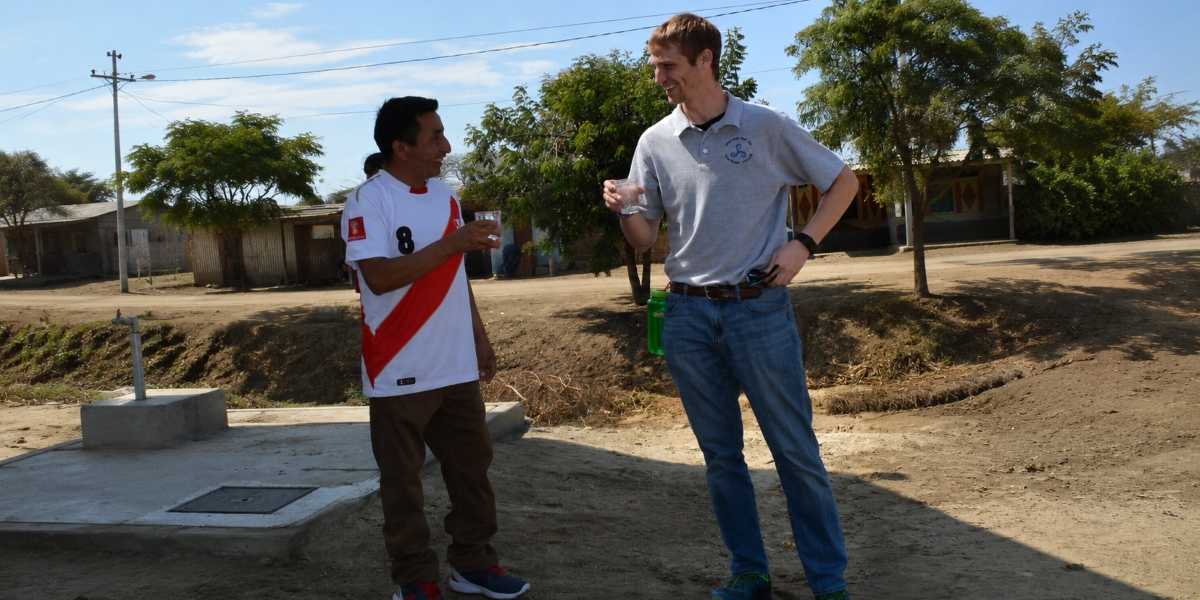
The proof is in how long the systems last. The first major project came in Monte Castillo, a community of more than 7,000 people in the Piura region of Peru. It took four years from groundbreaking to commissioning, slowed by permitting delays and the complexity of working in a remote area with deeply entrenched contamination. On August 3, 2019, the water treatment plant was commissioned. More than five years later, it is still serving the entire community.
A Model Built on Community Transformation
The numbers from Monte Castillo tend to catch the attention of results-minded donors. According to a January 2025 feature in Global Heroes, chronic water-related illness in the community fell from 84 percent of residents to 13 percent after Vera Aqua Vera Vita completed its infrastructure work and paired it with Water, Sanitation, and Hygiene education. That combination of hardware and behavior change is central to how this clean water nonprofit defines success. A pipe that works is necessary. A community that understands how to use and protect it is what makes the change permanent.
That model now drives a second generation of work. Vera Aqua Vera Vita has four active clean water projects underway in rural Peru. One of them, Las Mercedes KM11, illustrates the scale of the remaining need. More than 1,200 residents there currently walk a mile to reach their only water source, which carries 11 separate contaminants. As in Monte Castillo, the community will be involved at every stage, so the eventual system is owned and maintained locally rather than handed over and forgotten.
Faith, Engineering, and Community Transformation
Niemeier is unusual in that he can talk about his Professional Engineer license and his Catholic faith in the same sentence without either feeling out of place. The organization integrates a spiritual dimension into its work, rooted in a view of water as a symbol of dignity, life, and renewal rather than a purely physical resource. That perspective shapes how teams engage with the communities they serve and why the mission extends beyond pipes and pumps to the whole person. As a faith-based nonprofit engineering organization, it occupies a genuinely rare space, technical in its methods and mission-driven in its purpose.
That rarity tends to resonate with a specific kind of supporter. Donors who are skeptical of feel-good giving and who want to know their dollars are managed with professional accountability, find something recognizable in an engineer-led clean water nonprofit. The organization treats community transformation as something it can measure, document, and defend, not just describe.
What Comes Next for Sustainable Water Solutions
The near-term constraint is engineering bandwidth. The team is lean, and growth has to be deliberate. Vera Aqua Vera Vita is working toward a $100,000 fundraising milestone that would allow it to hire its first dedicated field engineer, a single addition that would let the organization run two to three additional clean water projects at once rather than one after another. For a clean water nonprofit built on engineering capacity, that hire is the lever that moves everything else.
Niemeier’s longer vision is to scale this clean water nonprofit into a recognized name in community-driven, engineer-led sustainable water solutions across Latin America and eventually beyond. That includes building a replicable model that other organizations can learn from, and forming the next generation of engineers with a mission-driven mindset from the start. He also wants the organization to become a trusted resource for faith communities, particularly Catholic parishes and universities, that want to serve the global poor in ways that are both spiritually meaningful and technically sound.
Niemeier often returns to the day the Monte Castillo plant came online. After four uncertain years, the valve opened, and clean water flowed into the system for the first time. People were crying. He was, too. A community elder told him that for the first time in her life, she was not afraid of the water she would give her grandchildren. That moment is the answer he carries when the work feels heavy: that a small clean water nonprofit from the Dallas suburbs really can change something as large as the global water crisis, one community at a time. More about Jacob Niemeier and the organization’s work is available through his professional profile on LinkedIn and at veraaquaveravita.org.