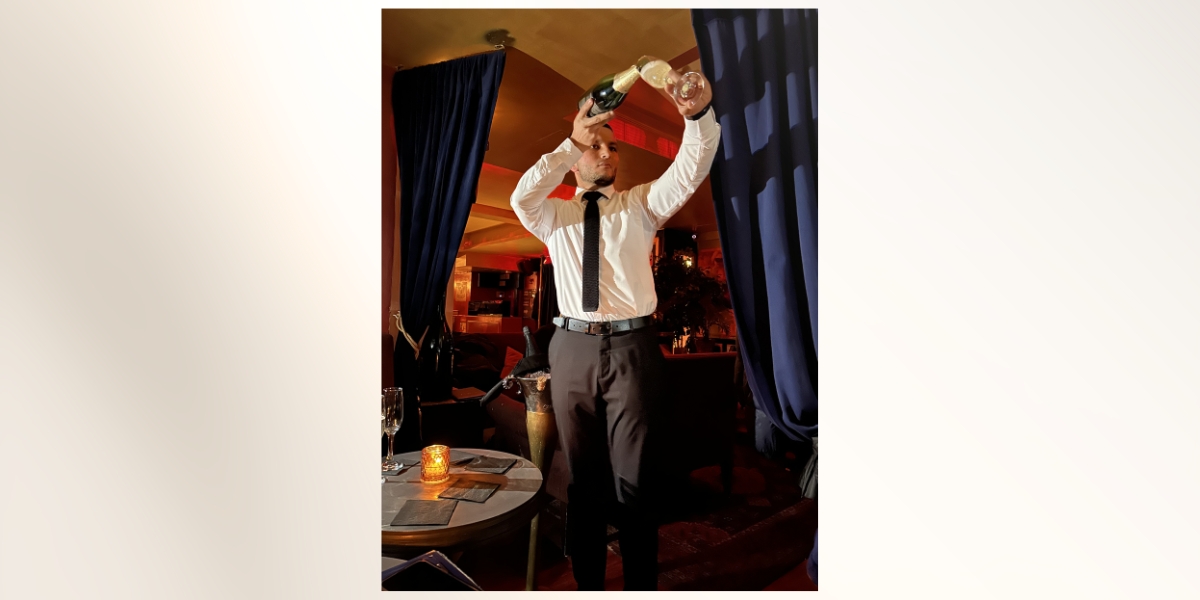

Diyorbek Turgunboev spent years working in hospitality before he started teaching it. His career moved through cruise ship fine dining and signature restaurants in Dubai. That range of experience now forms the foundation of TU Brother Academy, a hospitality training program designed for professionals who want real industry knowledge.
The Gap Between Theory and the Floor
The distance between classroom theory and floor-level reality is something Turgunboev experienced firsthand. He noticed that many professionals enter the industry with certifications but without the practical instincts needed to perform under pressure. TU Brother Academy addresses this by offering hospitality training rooted in documented, multi-context performance across international markets.
Turgunboev holds a WSET Level 2 certification earned through the Napa Valley Wine Academy. The Wine and Spirit Education Trust (WSET), headquartered in London, is a globally recognized authority in wine and spirits education. This formal credential complements his operational background. He argues that effective hospitality training should combine credentialing with field experience across different service models and countries.
From Cruise Ships to Dubai Restaurants

Turgunboev started at the entry level in cruise ship dining. Cruise ships operate as enclosed service environments. Staff manage long voyages, diverse guest expectations, and limited resources. Shifts are long. Guests rotate. The margin for error is thin when you serve the same passengers for weeks on end. According to the Cruise Lines International Association (CLIA), the cruise industry served over 31.7 million passengers in 2023. Working in that environment taught Turgunboev how to maintain service consistency over extended periods with no room for off days. He learned how to anticipate needs, manage fatigue, and deliver at a consistent standard regardless of external conditions.
He later transitioned to Dubai’s signature restaurant scene. The Dubai Department of Economy and Tourism reports consistent annual growth in the emirate’s food and beverage sector. Restaurants in this market deal with high staff turnover and intense guest expectations nightly. Turgunboev gained direct exposure to those pressures, and that exposure shaped his philosophy around hospitality training.
What TU Brother Academy Offers
TU Brother Academy (tubrothersacademy.com) delivers structured hospitality training that reflects the realities of international service environments. The program focuses on practical skills, situational awareness, and professional development for workers at various career stages.
Turgunboev designed the curriculum around problems he encountered during his own career. He observed that advice in the hospitality industry is abundant. What remains rare is guidance grounded in verified performance across multiple international markets. His goal with TU Brother Academy is to make that kind of knowledge systematic and transferable to others.
The academy emphasizes three areas. First, service technique drawn from fine dining and high-volume restaurant settings. Second, beverage knowledge aligns with globally recognized standards, such as those set by WSET. Third, career navigation strategies for professionals working outside their home countries.
Why Field Experience Changes Everything
Turgunboev points out that many hospitality training programs rely on generalized content. They teach procedures without context. A server working a 120-day cruise contract faces different challenges than a server working a Friday night dinner rush in Dubai. Both roles require technical skill. But the mental stamina, cultural awareness, and adaptability needed for each differ greatly.
TU Brother Academy builds its curriculum around this principle. Each module connects theory to specific, real scenarios Turgunboev encountered during his career. Students learn how to read a room, manage service flow, and adjust to cultural expectations. Those lessons come from someone who performed those tasks under real conditions.
The Role of Certification
WSET certifications are held by professionals in over 70 countries, according to official WSET reporting. Turgunboev views his credentials as one layer of a larger professional framework. He encourages students at TU Brother Academy to pursue formal certifications alongside hands-on hospitality training. The combination of documented knowledge and daily operational skill creates a profile that employers in international markets recognize and value.
Certification alone does not replace experience. Experience alone does not replace structured learning. Turgunboev’s approach merges both into a single, coherent path through the academy’s program.
Who This Program Serves

TU Brother Academy targets hospitality professionals who want to grow within the industry. This includes servers, sommeliers, restaurant supervisors, and food-and-beverage staff preparing for international placements. The hospitality training covers technical skills, cultural fluency, and career strategy across service formats. Whether a student plans to work in the Middle East, Europe, or Southeast Asia, the program prepares them for the specific demands of each market.
Turgunboev built TU Brother Academy because he identified a need for hospitality training rooted within the industry. Not from a textbook. Not from a weekend seminar. From years of direct, documented work in environments where performance is measured every single shift. That is what separates this program. The person teaching it has done the work.
For more information, visit tubrothersacademy.com.