
By: KeyCrew Media
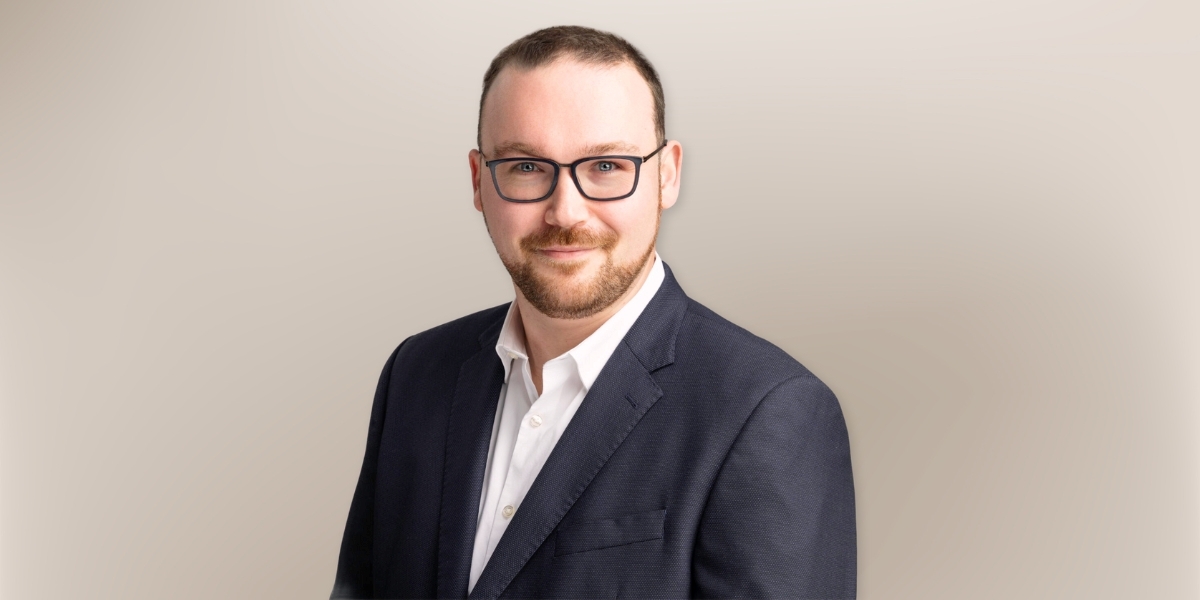
In an era when American cities face escalating housing costs and shrinking land availability, one industry leader is challenging developers to rethink their fundamental assumptions about space. Christopher Tiessen, President/CEO of KLAUS Multiparking America, represents a compelling blend of German engineering precision and American entrepreneurial vision, a combination that’s helping reshape how architects, developers, and city planners are beginning to consider one of real estate’s overlooked challenges: parking infrastructure.
From Germany to America: A Journey Built on Innovation
Christopher Tiessen’s path to leadership wasn’t conventional. After completing his education in Germany and spending his formative years in retail, he developed an appreciation for something that would define his leadership philosophy: results often matter more than rigid processes. This mindset, combined with his bicultural perspective, would prove invaluable when he took the helm of KLAUS Multiparking America.
The company he leads is no newcomer to innovation. With roots stretching back over 60 years, KLAUS Multiparking GmbH has built hundreds of thousands of parking spaces worldwide. But when Christopher arrived to lead the American subsidiary, he saw an opportunity that went far beyond simply selling parking systems. He saw an opportunity to potentially transform the U.S. real estate industry’s approach to urban development.
“I’ve always concentrated on results,” Christopher explains. “I empower our teams with trust and autonomy, encouraging them to challenge assumptions, go beyond the conventional way, and pursue the effective path. We value innovative thinking over convention.”
That unconventional thinking became the foundation for KLAUS Multiparking America’s approach to the U.S. market.
The Hidden Cost of Horizontal Thinking
Walk through any American city, and you’ll see the problem Christopher addresses daily: vast expanses of land dedicated to parking, surface lots, multi-story garages, and sprawling structures that consume valuable urban real estate. In a country grappling with a housing crisis, this represents an enormous opportunity cost.
“For decades, we’ve designed cities around vehicles, sacrificing enormous amounts of valuable space for traditional parking structures and surface lots—space that could have been used for housing, green space, education, healthcare, or cultural enrichment,” Christopher reflects. “The opportunity cost of inefficient parking may no longer be sustainable when so many communities struggle to create sufficient housing supply.”
Research supports his concern. Studies suggest that mandated parking minimums can increase housing costs by up to 25%, making projects financially unfeasible and limiting housing supply. When developers must dedicate significant portions of their budget and footprint to meeting parking requirements, the mathematics of affordable housing development often fall apart.
Christopher’s solution? Engineering parking vertically, not horizontally.
Building Up, Not Out
At the core of KLAUS Multiparking America’s approach is a deceptively simple concept: instead of spreading cars across horizontal space, stack them vertically using automated and mechanical systems. The technology ranges from stackers to semi-automatic “puzzle” systems (that can accommodate vehicles up to five levels high) to fully automated solutions.
The impact becomes clear in real projects. At The Mather in Tysons Corner, Virginia, a premier senior living community just outside Washington, D.C., KLAUS installed 130 stacker systems delivering 390 parking spaces in a dramatically reduced footprint. The vertical solution allowed the developer to prioritize additional living space, green areas, and luxury amenities while eliminating the need for ramps, extensive excavation, and long circulation paths.
“What developers are starting to understand is that parking doesn’t have to be a cost center,” Christopher notes. “When you optimize parking infrastructure, you unlock value across the entire project. That space you save can become additional units, community amenities, or outdoor spaces that may attract residents and could command premium rents.”
The company’s recently launched kVario 8000 Series represents the cutting edge of this approach. Unlike previous systems limited to three levels, the new technology can independently stack up to five vehicles with retrieval times under one minute, regardless of where a car is positioned in the system.
The Sustainability Advantage
Beyond space efficiency, Christopher emphasizes the environmental benefits that can often go unrecognized. Traditional parking creates hidden sustainability costs that extend far beyond the initial construction.
“Circling for parking can take up to 10 minutes or more in dense areas — that’s a significant source of unnecessary CO₂ emissions,” Christopher explains. “KLAUS systems get cars off the street quickly. Once the vehicle is parked and shut off in the system, on-site CO₂ emissions from idling or searching are effectively eliminated.”
The space efficiency enables additional sustainability gains. Projects using KLAUS systems may create room for green areas where water can naturally drain, reducing stormwater management challenges. The reduced construction footprint means less concrete, fewer materials, and potentially lower embodied carbon compared to traditional parking structures.
This sustainability focus extends to KLAUS Multiparking’s own operations. The company’s German headquarters achieved energy self-sufficiency through solar installations, saving 814 tons of CO₂ annually, a model Christopher views as part of a broader responsibility to practice what the company preaches.
Breaking Through Conventional Barriers
Despite the clear advantages, Christopher acknowledges that shifting industry thinking remains one of his biggest challenges. Developers, architects, and city planners have decades of experience with conventional parking approaches. Introducing mechanical and automated systems requires education, patience, and demonstrated results.
“When you face significant pushback, sometimes it’s wise to step back, let people think about it, and then try to navigate the situation with questions that delve deeper into the subject,” Christopher shares. His approach emphasizes results over salesmanship, letting project economics and successful case studies demonstrate value rather than relying on traditional promotion.
The strategy is working. KLAUS systems are finding adoption not just in dense urban cores but in unexpected locations like Jackson Hole, Wyoming, and Ketchum, Idaho, where developers are beginning to recognize the value of space optimization even in less constrained environments.
The Movement Beyond Products
Perhaps what distinguishes Christopher most is his vision extending beyond commercial success. He speaks passionately about a larger movement, one that seeks to reimagine how cities use every square foot of land.
“The future of cities depends on how wisely we use every square foot,” he emphasizes. “Smarter infrastructure isn’t just a design choice, it’s a responsibility to the generations that will inherit the cities we build today.”
This philosophy drives his belief that automated, space-efficient parking technologies represent something bigger than engineering innovation. They’re a pathway toward creating cities that are more livable, equitable, environmentally responsible, and future-ready. Every square foot recovered from inefficient parking could instead support affordable housing, community amenities, or economic development opportunities.
Looking Forward
As American cities continue wrestling with housing affordability, climate challenges, and urban density, Christopher sees KLAUS Multiparking America positioned at the intersection of these pressing issues. The company provides turnkey solutions, from early design consultation through installation, commissioning, and long-term maintenance, backed by both U.S. expertise and German engineering heritage.
Recent projects demonstrate the breadth of applications. In Manhattan’s exclusive Gramercy Park neighborhood, KLAUS installed a fully automated MasterVario system providing secure parking for 24 vehicles in a two-tiered underground structure, complete with integrated EV charging for 10 vehicles. In Jersey City, the company partnered with developers on Swift & Co., a nine-story mixed-use development, installing TrendVario systems that maximize parking efficiency while preserving real estate for residential, retail, and office use.
“Our goal is that the synonym for mechanical parking becomes ‘it’s KLAUS,'” Christopher states with characteristic directness. “And I think we’re on a good road to do that.”
The recognition Christopher seeks isn’t merely about market dominance. It’s about fundamentally changing how the industry approaches infrastructure design. When developers automatically consider vertical parking solutions the way they consider elevators or HVAC systems, that’s when the real transformation in urban development may begin.
A Vision Worth Building
In the world of commercial real estate development, where margins are tight and risk aversion runs high, Christopher Tiessen represents something increasingly valuable: a leader willing to challenge fundamental assumptions about how cities should function. His bicultural background gives him a perspective that purely domestic executives often lack: the ability to see American cities through the lens of European urban efficiency while understanding the unique challenges of the U.S. market.
More importantly, Christopher demonstrates that technical innovation becomes truly transformative only when paired with a vision extending beyond immediate commercial interests. By framing parking efficiency as part of the larger challenge of creating sustainable, affordable, and livable cities, he’s positioning KLAUS Multiparking America not just as a supplier but as a genuine partner in addressing some of the pressing challenges facing American urban development.
For Christopher, disruption isn’t about being different for its own sake; it’s about delivering results that matter. And in an industry where every square foot counts and every dollar impacts project viability, that focus on meaningful results is exactly what the future of American cities needs.
“If we have the technology to build smarter, more human-centered cities — we should use it,” he concludes. “And we should do it now.”
That urgency, backed by German engineering precision and delivered with entrepreneurial American spirit, makes Christopher Tiessen a leader worth paying attention to as cities reimagine their futures.
For more information about KLAUS Multiparking America and its innovative parking solutions, visit KLAUS Multiparking America.