
By: Cameron Trepp
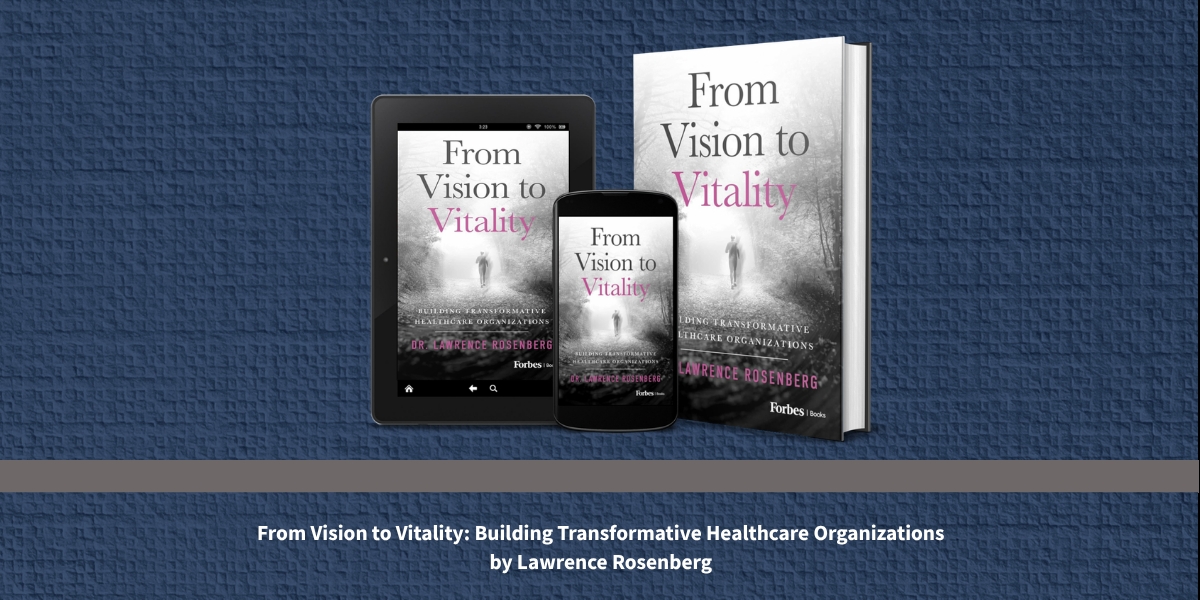
The healthcare leadership genre is crowded with books that promise transformation and deliver mostly vocabulary, new terms for old problems, frameworks that look compelling on a slide and dissolve under the pressure of an actual organizational crisis. Dr. Lawrence Rosenberg’s From Vision to Vitality is a genuine exception to that pattern, and the reason becomes clear within the first chapters: Rosenberg is not selling a methodology; he is documenting what he has personally learned from decades spent first as a transplant surgeon and then as the CEO responsible for one of Canada’s most closely watched health systems. The book reads like the work of someone who has actually had to make the decisions he is writing about, with real consequences attached to getting them wrong.
The experience of reading this book is one of steady, accumulating respect rather than immediate excitement. Rosenberg does not write to dazzle. He writes to clarify, walking readers through the genuine difficulty of leading integrated care across hospitals, long-term care facilities, and community settings with an honesty about the obstacles that most leadership books prefer to skip past. That honesty extends to his treatment of failure, which he discusses not as a rhetorical device meant to demonstrate humility but as a genuine part of the learning that shaped his approach to leadership. Readers in demanding leadership positions of their own will likely find that honesty is more useful than any number of polished success stories.
What the book is ultimately arguing, underneath its practical guidance on value-based care and operational transformation, is that lasting organizational change is fundamentally a character problem before it is a strategy problem. Courage, curiosity, and integrity recur throughout the book not as inspirational chapter headings but as the actual operating principles Rosenberg credits for whatever success his own leadership has achieved. That argument resonates well beyond healthcare specifically, touching on questions that matter to anyone responsible for leading complex organizations through periods of genuine uncertainty, where the right answer is rarely obvious, and the cost of inaction can be just as real as the cost of a wrong decision.
Rosenberg writes with the voice of a physician and a scientist as much as an executive, careful with evidence, attentive to nuance, willing to say that something is promising without overselling it. His treatment of digital health and artificial intelligence reflects that same scientific temperament, genuinely optimistic about the potential for these tools to make healthcare more anticipatory and less reactive, while remaining appropriately cautious about the risks that come with rapid technological adoption inside systems responsible for vulnerable people’s wellbeing.
From Vision to Vitality earns its place as essential reading for healthcare leaders, but its deeper contribution is the model it offers of what serious, principled leadership actually looks like under genuine pressure. Rosenberg has lived the argument he is making, and that lived authority is what makes the book worth the attention of anyone serious about leading well, in healthcare or anywhere else where the stakes are real, and the easy answers have already failed.
If you believe that lasting organizational change starts with character rather than just strategy, From Vision to Vitality by Dr. Lawrence Rosenberg will confirm that belief and give you the practical tools to act on it. Head over to Amazon and get your copy today. The healthcare system your patients and your people deserve starts with the kind of leadership this book describes.