
1. The Unsung Heroes of Lash Artistry
In the intricate world of lash extensions, two skills stand paramount and often distinguish a good lash artist from a truly exceptional one: isolation and glue retention. While creativity, mapping, and speed matter, mastering these two foundational techniques underpins the longevity, health, and aesthetic perfection of every lash set. Lash courses, especially comprehensive programs offered by institutions like Training Beauty & Beyond, spend significant time on these challenging yet crucial aspects, recognizing their fundamental role in client satisfaction and the artist’s reputation. The sections that follow break down the nuances of isolation and glue retention, explain why they are considered the hardest skills to teach and master, and offer practical insights for lash artists at all levels.
2. Understanding Isolation, the Foundation of Flawless Lashes
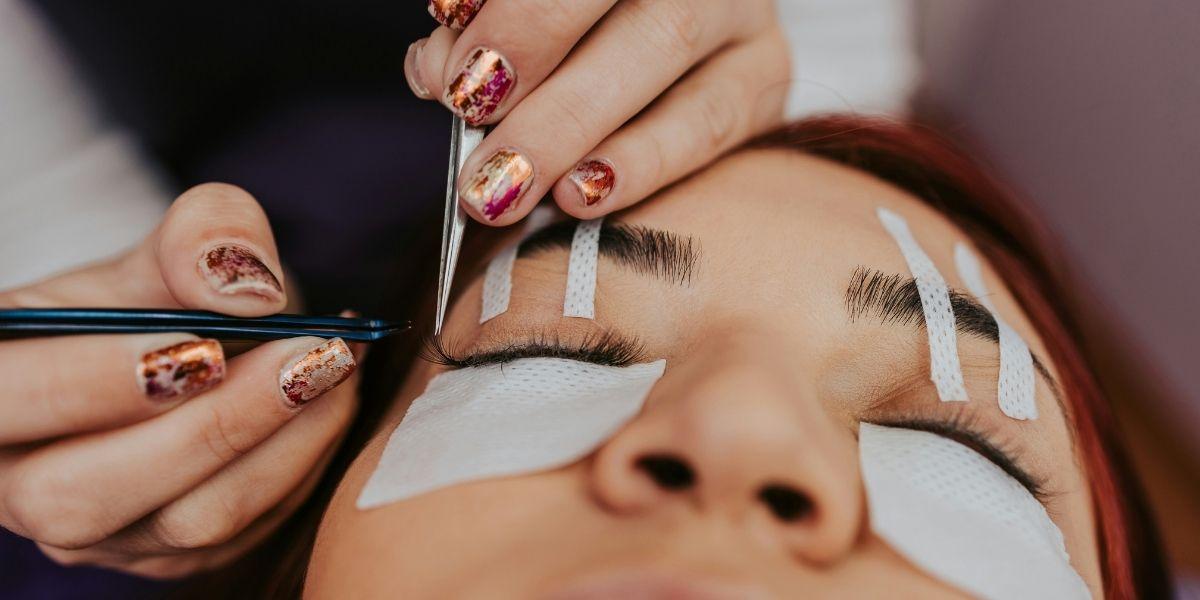
Isolation is the process of separating a single natural lash from its neighboring lashes before applying an extension. It sounds deceptively simple, but it requires immense precision, patience, and a steady hand. Without proper isolation, multiple natural lashes can be inadvertently glued together, leading to several problems. These issues include discomfort, premature shedding of natural lashes from pulling multiple hairs, and, in severe cases, permanent damage to the hair follicle. Flawless isolation isn’t just about avoiding damage; it is also about ensuring each extension has a strong, independent anchor, which directly affects the overall health and appearance of the lash line. It is the cornerstone upon which all other lash extension techniques are built.
3. The Art of Perfect Isolation, Techniques and Tools
Achieving perfect isolation is an art form that evolves with practice. It combines correct grip, appropriate tools, and a deep understanding of lash growth patterns.
3.1. The Right Tweezers
Choosing the right isolation tweezers is critical. Straight, curved, or L-shaped tweezers can all be effective, but the key is finding a pair that feels comfortable in your hand and lets you maneuver precisely. The tips must be finely tapered and perfectly aligned to grab and separate individual lashes without snagging or pulling. Many artists find that fine-tipped, slightly curved tweezers offer the best control for navigating the lash line.
3.2. Mastering the Grip
The way you hold your isolation tweezers significantly affects your ability to separate lashes cleanly. A relaxed, yet firm grip is essential. Holding the tweezers too tightly can cause hand fatigue and tremors, while a grip that’s too loose reduces control. Many lash artists employ a “tripod grip,” similar to how one holds a pen, to maximize stability and precision.
3.3. Isolation Techniques
1. The “Push and Pull” Method: This involves gently pushing surrounding lashes away with one tweezer while simultaneously pulling the target lash forward with the other. This creates a clear space around the single natural lash.
2. The “Wiggle” Method: For densely packed lashes, a gentle wiggling motion of the isolation tweezers can help to loosen and separate individual strands. This technique requires a very light touch to avoid irritating the client’s eyelid.
3. Layering Isolation: Natural lashes grow in multiple layers. A skilled artist isolates layer by layer, starting with the lower layers and working up, ensuring every lash is accounted for. This systematic approach prevents missed lashes and ensures even coverage.
3.4. Client Positioning and Lighting
Optimal client positioning and bright, shadow-free lighting are often overlooked but play a significant role in successful isolation. Support the client’s head comfortably, giving the artist clear access to the lash line from various angles. High-quality, adjustable lighting illuminates every lash, making even the finest vellus hairs visible.
4. Demystifying Glue Retention, More Than Just Adhesive
Glue retention refers to how long the lash extensions remain attached to the natural lashes. It is often clients’ primary concern and a major indicator of an artist’s skill. While the adhesive plays a vital role, blaming retention issues solely on the glue is an oversimplification. Mastering isolation and glue retention, as taught in advanced lash programs, involves understanding a complex interplay of factors, from pre-application preparation to post-application care. Poor retention can cause gaps, an uneven appearance, and ultimately client dissatisfaction. It is a critical metric for a lash artist’s success.
5. Factors Influencing Glue Retention
Excellent glue retention is a multi-faceted achievement. Here are the key elements that influence how long extensions stay put:
5.1. Proper Preparation of Natural Lashes
The canvas must be clean. Any residue of makeup, oils, or dirt on the natural lashes will act as a barrier, preventing the adhesive from forming a strong bond.
1. Thorough Cleansing: Using a professional lash cleanser specifically designed for extensions is imperative. This step removes impurities without leaving behind residues that could interfere with bonding.
2. Priming: A primer can help to balance the pH level of the natural lash and remove any remaining oils, creating an optimal surface for the adhesive. It also ensures the natural lash cuticle is open, allowing better adhesion.
5.2. Adhesive Selection and Handling
The lash adhesive is a sophisticated chemical compound, and its performance is highly sensitive to environmental factors and proper handling.
1. Humidity and Temperature Control: Lash adhesives cure (harden) through polymerization, a process initiated by moisture. Each adhesive has an optimal humidity and temperature range. If humidity or temperature is too high or too low, the adhesive will cure too quickly or too slowly, leading to weak bonds. A hygrometer is an indispensable tool for monitoring your workspace.
2. Freshness of Adhesive: Adhesives have a shelf life. Once opened, their efficacy gradually diminishes. Store adhesive correctly (cool, dark place, upright) and replace it regularly (typically every 3-4 weeks after opening).
3. Correct Amount of Adhesive: Too much glue creates a heavy, clumpy bond and can wick onto the skin, causing irritation. Too little glue results in a weak bond that will quickly break. The ideal amount creates a tiny, almost invisible bond at the base of the extension.
5.3. Application Technique
How you apply the extension to the natural lash directly affects retention.
1. Optimal Bonding Area: The extension should be attached to the natural lash with a sufficient bonding surface. A common guideline is to ensure at least 2-3 mm of the extension base adheres to the natural lash.
2. Direction and Placement: The extension should be placed on top, underneath, or to the side of the natural lash, ensuring it follows the natural lash growth direction for comfort and longevity. The base of the extension should sit snugly against the natural lash, not floating.
3. Speed of Application: As adhesives cure rapidly, a quick and precise application is necessary. Hesitation can cause the adhesive to partially cure before the bond fully forms.
5.4. Post-Application Care
Client compliance with aftercare instructions is paramount for maximizing retention.
1. Avoiding Moisture: Clients should avoid water, steam, and excessive humidity for the first 24-48 hours post-application, allowing the adhesive to fully cure.
2. Gentle Cleansing: Regular, gentle cleansing with a lash-safe cleanser prevents oil and makeup buildup, which can degrade the adhesive bond over time.
3. Avoiding Oil-Based Products: Oil-based makeup removers, mascaras, and skincare products can dissolve the adhesive. Educate clients on suitable alternatives.
4. Minimizing Manipulation: Rubbing, picking, or pulling at the lashes will inevitably cause premature shedding.
6. Troubleshooting Common Isolation Challenges
Even experienced lash artists encounter isolation difficulties. Recognizing and addressing these issues promptly is key to maintaining quality and efficiency.
6.1. Sticky Lashes
Sometimes, natural lashes are naturally sticky or intertwined, making isolation difficult.
1. Solution: A very fine-tipped isolation tweezer can help. Gently “comb” through the lashes with the tweezers to separate them. Using a small amount of primer applied directly to a micro-brush can also help to de-tangle.
6.2. Fine or Sparse Lashes
Working with very fine or sparse lashes requires extra care to avoid damaging them.
1. Solution: Employ a very light hand and use ultra-fine isolation tweezers. Consider using lighter-weight extensions to match the delicate natural lashes.
6.3. Client Movement
Even slight client movement can disrupt isolation.
1. Solution: Ensure the client is comfortable and well-supported. Communicate clearly and ask them to remain still. Using medical tape to gently lift the eyelid can also provide better visibility and stability.
7. Advanced Strategies for Enhancing Retention
Beyond the basics, advanced techniques and products can further boost retention.
1. Superbonder/Nano Mister: These products accelerate the curing process of the adhesive, helping to seal the bond and reduce sensitivity. A superbonder instantly polymerizes the adhesive, creating a more elastic, less brittle bond, while a nano mister provides a fine, controlled mist of water to aid curing.
2. Adhesive Shaking: Always shake your adhesive bottle thoroughly for at least 30-60 seconds before dispensing each drop. The ingredients in lash adhesive can separate, and proper shaking ensures a consistent, effective formula.
3. Optimizing Dip and Placement: For volume lashing, ensuring the fan base is perfectly dipped and placed on the natural lash is crucial. Keep the base minimal and fully wrapped around the natural lash for maximum contact and retention.
8. The Role of Environment in Lash Longevity
The environment within your lash studio is a silent partner in your retention efforts. As part of a comprehensive lash education, such as those offered by Training Beauty & Beyond, understanding and controlling your workspace environment is emphasized.
8.1. Humidity Control
This is arguably the most critical environmental factor. If humidity is too low, the adhesive will cure too slowly, leading to weak, flexible bonds and potential “shock curing” if suddenly exposed to moisture. If humidity is too high, the adhesive cures too quickly, leaving too little time for a strong bond to form and potentially leading to brittleness. A humidifier or dehumidifier is often necessary to maintain the ideal range specified by your adhesive manufacturer.
8.2. Temperature Regulation
Extreme temperatures can affect adhesive viscosity and curing speed. If it’s too cold, the adhesive can thicken and cure slowly. Too hot, and it can thin out and cure too quickly. Maintaining a consistent, comfortable room temperature is best for both the adhesive and the client.
8.3. Air Circulation and Ventilation
Good air circulation helps to disperse adhesive fumes, improving comfort for both the artist and the client, and contributes to a stable environment. An air purifier can also help minimize airborne particles that might interfere with the lashing process.
9. Continuous Learning and Professional Development
The lash industry is dynamic, with new products, techniques, and insights emerging regularly. Mastery of isolation and glue retention is not a one-time achievement but an ongoing journey. Attending advanced workshops, participating in online forums, and staying updated with industry publications are all vital for continuous improvement. Seeking mentorship from highly experienced artists can provide invaluable personalized feedback and guidance. Investing in high-quality training, such as programs at Training Beauty & Beyond, ensures artists have the latest knowledge and best practices.
10. The Mark of a Master Lash Artist
Mastering isolation and glue retention truly sets an ordinary lash technician apart from a master lash artist. It signifies not just technical proficiency, but also a deep understanding of lash health, product chemistry, and client care. Artists who excel in these areas build strong reputations, attract loyal clientele, and enjoy the satisfaction of consistently delivering beautiful, long-lasting, and healthy lash extensions. It reflects their dedication to their craft, ensuring that every lash set is not just pretty, but also perfectly applied and built to last.