

For many high-achieving women, burnout does not arrive as a sudden collapse. It builds slowly, often beneath the surface of what appears to be a successful and well-managed life. The career is progressing, the responsibilities are being handled, and from the outside, everything appears to be working. Internally, though, something begins to shift. Energy becomes harder to access, clarity starts to feel strained, and the sense of effort required to maintain the same level of performance quietly increases.
This is the space where Dr. Tracy Latz has spent much of her career working. Not at the point where things fall apart, but in the subtler, often-overlooked phase where high-functioning women begin to feel the cost of sustaining their lives at a high level.
With more than 35 years of clinical experience in psychiatry, Dr. Latz has built a reputation for approaching mental health through a lens that is both deeply scientific and intentionally expansive, a perspective she continues to develop through her broader body of work, writings, and ongoing programs. Trained in medicine, neuroscience, and immunology, she pursued an early career in traditional clinical practice. Over time, however, she began to observe patterns that did not fit neatly within conventional frameworks. Patients were not only experiencing symptoms but also experiencing cycles. They were not simply dealing with stress; they were operating within systems of expectation, identity, and performance that were interacting with their biology in complex ways.
What emerged from those observations is now central to her work: the idea that burnout in high-achieving women is not primarily a failure of resilience, but a predictable biological and psychological response to prolonged overperformance.
This distinction shifts responsibility away from the individual and toward a broader understanding of how high-functioning lives are structured. Women who consistently operate at high levels, particularly in demanding professional and personal roles, are often managing multiple layers of pressure simultaneously. There is the visible workload, the invisible labor, the internalized expectations, and the physiological impact of sustained stress. Over time, these layers accumulate, not always in obvious ways, but in ways that affect cognition, emotional regulation, and physical well-being.
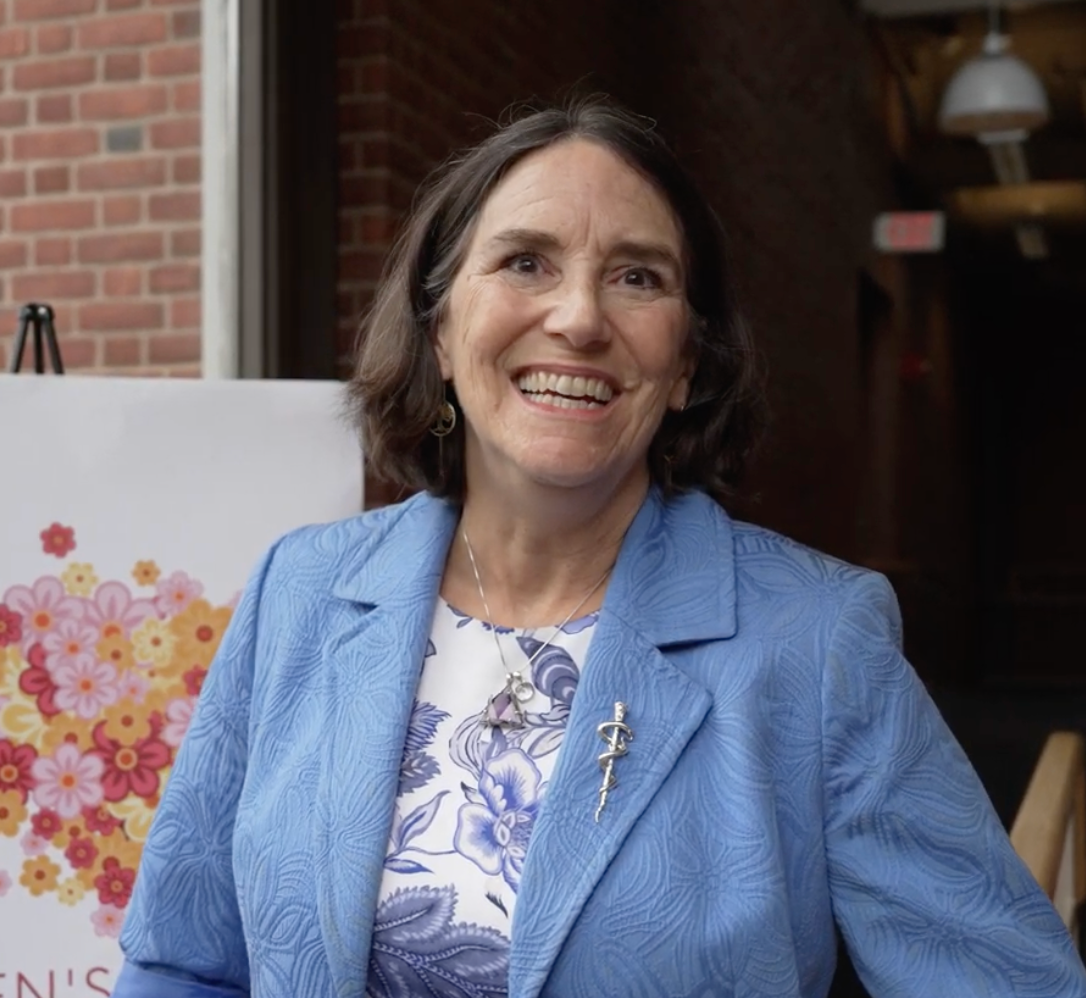
Dr. Latz’s work challenges the prevailing narrative that these experiences can be resolved through surface-level solutions. While conversations about self-care and balance have become more common, she argues that they rarely address the underlying mechanisms that drive burnout. Telling high-achieving women to simply do less, she notes, often fails to account for the structural and internal factors that make sustained overperformance possible, and ultimately unsustainable.
Her approach, developed over decades of clinical practice and continued study, integrates multiple disciplines. In addition to her medical training, Dr. Latz has pursued advanced work in mind-body medicine, energy-based practices, epigenetics, and consciousness studies. While some of these areas fall outside traditional psychiatric models, she sees them as essential to understanding the full scope of human functioning. Rather than viewing mental health in isolation, she frames it as part of a broader system that includes biology, identity, environment, and learned behavioral patterns.
This integrative perspective has not always been met with immediate acceptance. Like many professionals who move beyond established frameworks, Dr. Latz has encountered both skepticism and recognition. Still, her work has continued to gain traction, particularly among women who find that conventional approaches do not fully address their experiences.
Part of what distinguishes her perspective is the extent to which it is informed by her own life. Over the course of her career, she has worked through significant personal and professional challenges, including serious health issues, a difficult divorce, and the demands of raising three children while maintaining a high-level medical career. At various points, she has balanced private practice with institutional roles, including work within a state psychiatric hospital during the pandemic. These experiences have provided her with a firsthand understanding of the pressures her clients face, not as abstract concepts, but as lived realities.
Rather than leading her away from her work, these challenges deepened it. They prompted a more deliberate exploration of how individuals can maintain high levels of performance without compromising their well-being. Central to that exploration is the belief that sustainable success requires alignment, not just effort. Alignment between how a person operates, what their body can sustain, and the identity structures that shape their behavior.
In practice, this means helping clients recognize patterns that often go unnoticed. High-achieving women, in particular, are frequently conditioned to equate value with output. They are rewarded for consistency, reliability, and the ability to perform under pressure. Over time, these traits can become so ingrained that they continue even when the cost becomes significant. The result is a cycle in which the behaviors that drive success also contribute to depletion.
Dr. Latz does not approach this by encouraging disengagement from ambition. Instead, her work focuses on creating a more sustainable model of achievement, one that allows individuals to continue performing at a high level without relying on chronic overextension. This involves a combination of clinical insight, practical tools, and a reframing of how success is defined and maintained.
Her influence extends beyond individual practice into broader educational and institutional settings. Her work has been featured across academic and media platforms, reflecting a growing recognition of her approach to burnout and sustainable performance in high-achieving women. She has worked with college students, advisors, and professional organizations, particularly in the wake of increasing awareness around mental health challenges in high-pressure environments. In response to rising concerns about student well-being, she developed accessible tools and resources designed to help individuals regulate emotional overwhelm and shift out of fear-based thinking. These tools, grounded in both clinical and integrative principles, reflect her broader goal of making mental health strategies both effective and immediately usable.
At this stage in her career, Dr. Latz continues to expand her work through writing, teaching, and speaking. She is currently developing new material focused on sustainable performance in high-achieving women, including an upcoming book that further explores the biological and psychological drivers of burnout. Her previous publications and trainings have already established her as a voice in the intersection of mental health, personal development, and professional performance.
What distinguishes her perspective is not simply the breadth of disciplines she draws from, but the consistency of her central message. Burnout, in her view, is not an inevitable outcome of success, nor is it a sign that someone has failed to manage their life effectively. It is a signal, one that reflects the interaction between a person’s internal systems and the demands placed upon them.
Understanding that signal, rather than suppressing it, is where meaningful change begins.
For the women who encounter her work, that reframing can be significant. It replaces self-blame with awareness and opens the possibility that success and well-being need not be in opposition. Instead, they can be structured so that both can be sustained over time. As her work continues to expand across speaking, academic, and professional platforms, experts like Dr. Latz are increasingly being positioned and supported through firms such as Ni’ Nava & Associates, which focus on elevating voices in spaces where these conversations are long overdue.