
By: Symba Marketing
David Svoboda does not fit neatly into the traditional profile of a business leader. Over the past two decades, he has launched companies across entertainment, telecommunications, consumer goods, workforce technology, hospitality, and social enterprise – often entering markets before they fully formed and operating in regions many Western entrepreneurs overlooked.
Now, Svoboda is preparing to publish Lifehacking Tips from the Million Dollar Flight Attendant, a book focused on mindset, strategic thinking, and what it means to approach obstacles with unconventional logic. For followers of entrepreneurial leadership, the project is generating interest not simply because of its message, but because of the career behind it.
“I have always been a fan of learning from those who do, not from those who only teach,” one early reader remarked when describing the anticipation surrounding the release.
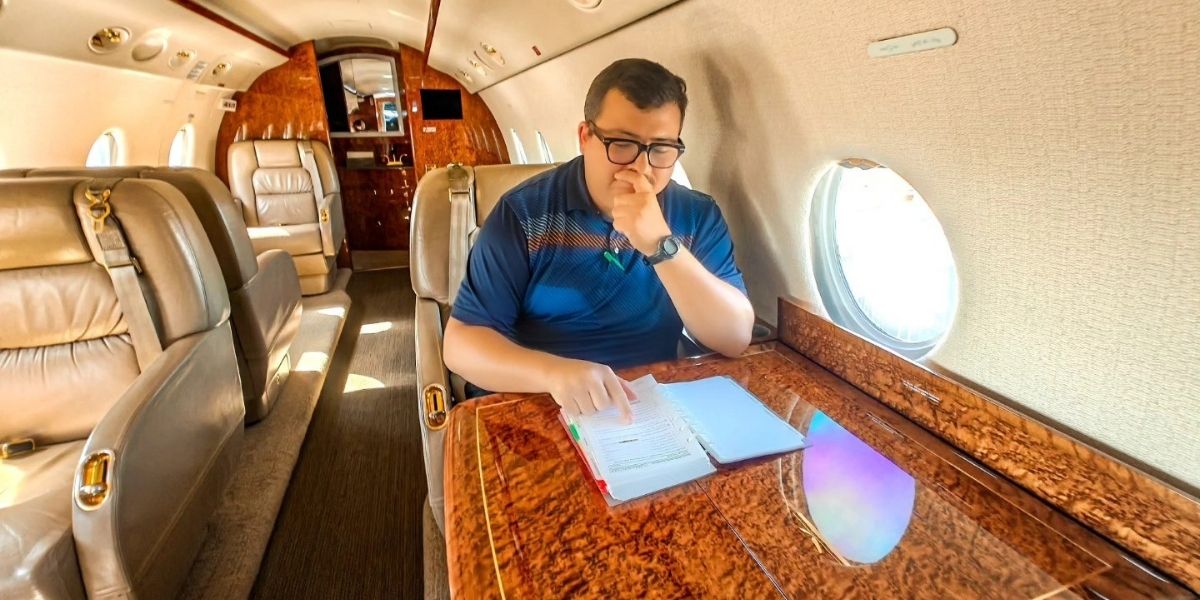
So who exactly is the Million Dollar Flight Attendant?
An Unconventional Start
Svoboda was born in the United States and homeschooled by parents who both held doctorate-level educations. By age 17, he had completed high school and had been operating as an entrepreneur for years.
Among his earliest startups was one of the first remote-access computer repair services, launched in 2002 – at a time when most consumers still brought malfunctioning computers into retailers such as Circuit City and waited up to five business days for service.
By 2007, he was importing electronic cigarettes from China before regulations existed and before most consumers were even familiar with the concept of vaping.
At 17, he made a decision that would set the tone for his career: he left home, left the country, and went abroad in search of success.
Musicology Records and Early Digital Innovation
One of Svoboda’s earliest international ventures was Musicology Records, which began as an artist management company before expanding into a record label.
Among the notable artists he managed and published was Keith Martin, whose song “Because of You” topped the charts in the Philippines. Svoboda successfully booked Martin at events throughout Southeast Asia, strengthening both the artist’s regional presence and the company’s reputation.
Musicology also pioneered a product known as “vaults” – physical cards that granted time-locked access to exclusive and evolving digital content. The model gave artists a way to sell merchandise directly tied to a digital experience, an approach that anticipated today’s hybrid physical-digital monetization strategies.
Bringing the Boston Symphony Orchestra to Indonesia
The success of Musicology naturally evolved into concert promotion and large-scale events.
Svoboda launched Classical Jakarta, a concert series that brings world-class classical musicians to Indonesia. In 2013, principal members of the Boston Symphony Orchestra performed as part of the series, marking the first time members of the orchestra had appeared in the region.
Classical Jakarta was intentionally positioned as more than a performance platform. It was marketed as a networking environment where influential government officials and business leaders could connect while enjoying high-end food and drinks and performances by globally recognized musicians.
Waterproofing Technology and Television Exposure
In 2014, Svoboda secured exclusive rights to LiquidOff, a solution that allowed consumers to waterproof electronics, clothing, shoes, and accessories after purchase.
The product began with a successful Kickstarter campaign and later appeared as a contestant on the television show All American Makers, further expanding its visibility.
Building Indonesia’s First Content Delivery Network
Svoboda also built what is widely recognized as the first content delivery network in Indonesia capable of streaming licensed high-definition broadcasts to smart devices.
The launch pre-dated Netflix’s entry into the market by four years. However, the company ultimately dissolved in 2015 due to licensing costs and currency exchange pressures. Netflix entered the Indonesian market the following year.
The experience underscored a reality familiar to many executives: timing and macroeconomics can outweigh even well-positioned innovation.
Nonprofit Collaboration with Indonesian Talent
In 2015, Svoboda turned his attention toward nonprofit work.
Through GIVE BACK, he orchestrated a collaboration of Indonesian talent. The initiative supported the telethon “Voice of Children,” led by Noor Traavik, the spouse of the Norwegian Ambassador to Indonesia.
The combined launch and event ultimately broke fundraising records previously unseen by the United Nations in the region.
Consulting, Workforce Technology, and Job Placement
Svoboda later partnered with Rob Davies to launch PT. Connections is a consulting firm that helped international companies secure business deals, government contracts, and legal permissions to operate in Southeast Asia.
Together, they developed an employment application called Rob’s Jobs, designed to help blue-collar workers find work using a swipe-style interface similar to popular dating apps. In its first year, the platform achieved more than 10 times the number of job placements LinkedIn recorded in the Indonesian market during the same period.
Reinventing Food Logistics
Partnering with MasterChef Blake Thornley, Svoboda launched Rasa, a sous-vide food company focused on delivering five-star-quality meals to organizations that preferred not to invest in full kitchens or culinary talent.
Meals were prepared, vacuum sealed, frozen, and delivered to hotels, movie theaters, and restaurants seeking high-quality food that could be ready in 15 minutes or less.
Today, Thornley’s culinary work can be experienced at Mozaic Bali, the highest-rated restaurant in Ubud.
Modernizing Fax Communications
Svoboda later entered telecommunications with D-Fax after recognizing that many Indonesian institutions still relied heavily on fax technology.
Government agencies communicated by fax, the stock market confirmed transactions via fax, and financial institutions conducted much of their correspondence via fax.
Working with NGN Telecoms in South Africa, Svoboda helped digital fax creators Calum McCracken and Justin Webb expand their technology into Indonesia. By partnering with central telecommunications providers, government entities, and major financial institutions, the initiative securely digitized fax communications.
Using a sender-pays model with premium numbers enabled the company to provide fax numbers at no cost while generating revenue through sharing agreements with existing telecom operators.
Creating Opportunity for Disaster Survivors
Before leaving Indonesia in 2017, Svoboda launched Bamboo Tips, a social initiative developed in partnership with a facility in Bandung created by the Japanese Red Cross.
The facility employed individuals who had been disabled by earthquakes and volcanic activity. Together, they produced handcrafted joint holders for the smoking industry.
The products debuted at the CHAMPS trade show in Las Vegas – and quickly gained traction.
A Turn Toward Diplomacy
In 2018, Svoboda shifted his focus to diplomacy, launching a private initiative to open trade and encourage investment between nations that lack formal channels of communication.
The effort achieved measurable progress before being disrupted by government powers resistant to improved relations between unfriendly states.
As with many ambitious initiatives operating at geopolitical intersections, progress proved fragile.
The Book That Ties It Together
By 2019, Svoboda began writing Lifehacking Tips from the Million Dollar Flight Attendant. He says the motivation was simple: to help others think differently and develop a mindset capable of navigating obstacles.
“I don’t believe in hitting walls,” Svoboda explains. “I believe there are multiple solutions to every obstacle – you just have to find your way around what’s blocking your path.”
The book is expected to blend autobiography, self-help, and financial education while exploring how disruption can flourish in a world often resistant to change.
For executives evaluating leadership in an era defined by volatility, Svoboda’s career offers a consistent theme: progress often belongs to those willing to challenge assumptions others accept as fixed.
Whether readers ultimately see him as a disruptor, strategist, or unconventional operator, one thing is clear – the story behind the Million Dollar Flight Attendant is likely to spark conversation well beyond the airline cabin.
Disclaimer: The views and opinions expressed in this article are solely those of the author and do not necessarily reflect the official policy or position of any company, organization, or individual mentioned. The content provided is for informational purposes only and should not be construed as professional advice. Always consult with a professional before making any business, financial, or personal decisions.