
By: Elena Mart
Jim Butler, the founder of HJ3 Composite Technologies, never set out to become a CEO or an international business leader. He was driven to build something that mattered—something that could outlast him and contribute to strengthening the world’s most critical infrastructures.
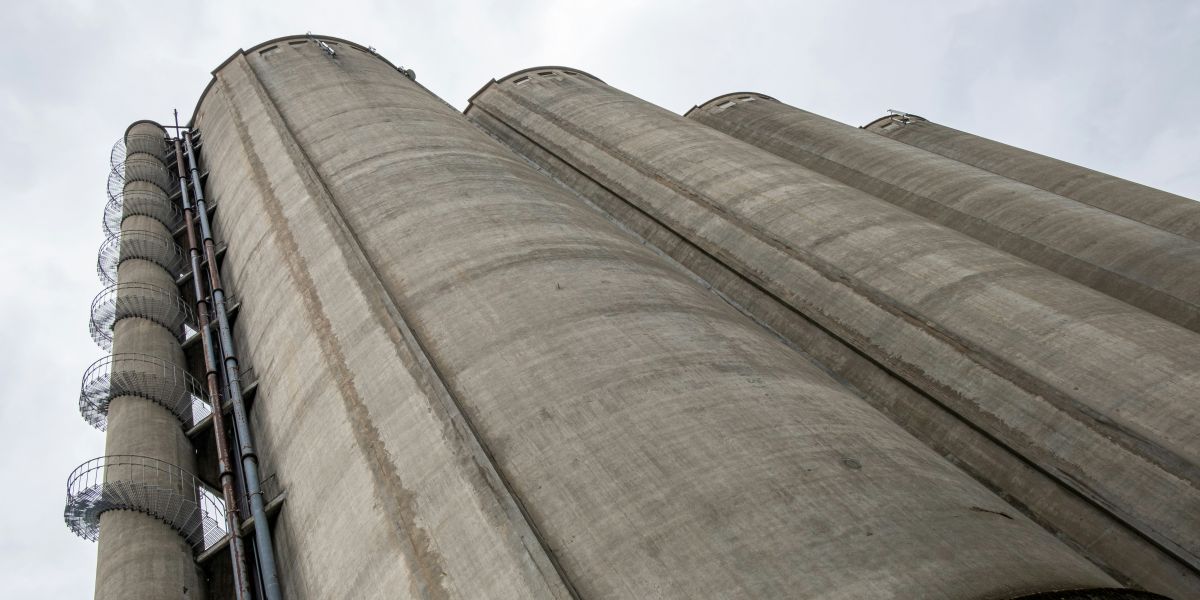
Today, HJ3 has grown into a global force in carbon fiber composite repair systems, reinforcing pipelines, tanks, silos, and concrete structures across six continents. The company’s patented carbon-fiber systems are widely regarded as some of the strongest in the industry, and its model of same-day engineering and same-day shipments has helped redefine rapid response in times of crisis.
But to understand HJ3’s rise, it’s important to travel back over two decades to a warehouse floor in Tucson, Arizona, where a young entrepreneur began dreaming not of boardrooms and venture capital, but of extending the life of tanks, pipelines, and silos—while helping clients avoid unnecessary downtime.
From Humble Beginnings to Global Vision
Jim Butler’s story begins long before composites and code compliance.
“My grandfather barely finished high school, but he was brilliant in the way he understood people and built relationships,” Butler recalled. His grandfather’s grit and hustle powered a car-dealership enterprise built from scratch.
Butler’s father carried that entrepreneurial torch into robotics and industrial automation.
Jim joined the family business in high school and after college, working in warehouses, assembly lines, and sales calls—absorbing lessons in logistics and leadership along the way.
“I wasn’t interested in copying what others were doing,” he said. “I wanted to create something different—something that solved a real problem.”
That problem was infrastructure decay: concrete that cracks, pipes that leak, silos that deteriorate.
The idea for HJ3 emerged in the University of Arizona’s entrepreneurship program when a technology-transfer opportunity sparked Butler’s imagination. He saw a chance to harness carbon-fiber composites—long used in aerospace—to fortify aging structures while often reducing costs compared to full replacements.
“One of my most pivotal moments in my career was my first business plan competition,” Butler shared in a recent interview. “As I prepared, I discovered a natural talent for pitching ideas and presenting with confidence. With the guidance of an exceptional mentor in the entrepreneurship program, I refined my skills and perfected my delivery. Winning that competition was a turning point—it helped me realize that I could compel others to connect with our vision. That experience strengthened my resolve to launch HJ3.”
Rapid Response in Critical Moments
Founded in 2002, HJ3 quickly distinguished itself by pairing advanced materials with industrial markets that required rapid response times and systems capable of withstanding harsh environments.
The requirements to sell their systems in the industrial markets required the company to meet various code approvals.
“We are similar to a pharmaceutical company in that we have to complete years of large-scale testing to meet code requirements before our clients can approve the use of our systems,” Butler explained.
In 2010, the company launched CarbonSeal™, HJ3’s pipe repair system, funded by a state of Arizona Innovation Grant. Over time, the use of CarbonSeal™ expanded to process piping applications inside oil refineries. To support contractors in this market, HJ3 had to match the emergency nature of these repairs, resulting in its Speed to Solution™ Total Quality Management System.
“We quickly adapted the business model to support our customers inside the refineries. They needed us to turn around engineering designs the same day, and ship the same day.”
“Same-day calculations and same-day shipments became a core commitment to our customers,” Butler says.
HJ3’s same-day engineering and same-day shipments model was born from that urgency. Today, the company has accumulated over 200 years of combined expertise, an installer network spanning 80 countries, and more than 25 million square feet of material sold.
Building Culture with The Collaborative Way
HJ3’s technical breakthroughs are matched by a deliberate focus on culture.
In the depths of the 2015–16 industrial downturn, canceled contracts and cash-flow struggles forced Butler to confront a hard truth: talent alone wouldn’t save the company—culture would.
A chance encounter with the book The Collaborative Way led him to embrace principles of trust, accountability, and open communication. He invited the author, Lloyd Fickett, to work side-by-side with HJ3’s leadership team to implement these principles: namely, Listening Generously, Speaking Straight, and Honoring Commitments.
“The transformation wasn’t easy,” Butler admitted. “Some people resigned. But those who stayed became the heart of our resurgence.”
Employee turnover gave way to empowered teams, data-driven decision-making, and disciplined execution.
Regular goal-setting and performance tracking aligned every staff member around a shared vision of excellence.
Innovation Across Industries
HJ3’s portfolio reflects a wide range of global infrastructure challenges. In 2008, the company completed the first composite strengthening of a high-rise building envelope in Philadelphia. A year later, its CarbonSeal™ system performed strongly in DNV research on pipeline corrosion.
In 2013, Union Pacific Railroad tapped HJ3 to be the first to reinforce one of its concrete bridges in Las Vegas. By 2019, HJ3 had played a key role in advancing carbon-fiber composites for above-ground storage tank repairs under API-653 Annex J.
“We’ve gone from proving the concept to helping shape the code,” Butler said. “Our systems now meet ICC, ASME, API, NSF, UL, FDA, ANSI, and ISO standards. That credibility opens doors—from water districts in California to mining operations in Australia.”
HJ3’s innovations include TankWrap™, SiloWrap™ for food-grade silos, and FireSeal™ for fire-resistant coatings. Each product reflects Butler’s conviction that materials science can deliver both strengthening and sustainability.
“We often save clients up to 80% of the cost of replacements while significantly reducing the time it takes to replace structures, along with minimizing the environmental impact of demolishing and rebuilding,” he noted. “That’s real impact.”
Giving Back Through Sports
Jim Butler’s commitment to work-life balance extends naturally into a passion for supporting youth and community athletics. He believes the lessons learned on the field—teamwork, resilience, discipline—mirror the values that drive HJ3’s success. Here are a few of the schools, organizations, and athletic teams the company actively supports:
- FC Sonora Youth Soccer League: HJ3 serves as the title sponsor for FC Sonora in South Tucson, underwriting uniforms, equipment, and scholarships so every child can play regardless of family income. “Sports gave me confidence as a kid,” Butler says. “If we can remove barriers so others experience that same joy, it’s worth every dollar.”
- Tucson Roadrunners Hockey: Partnering with the AHL’s Tucson Roadrunners puts HJ3 in the heart of the local sports scene. “Seeing our logo on the ice reminds me that business and community thrive when we invest in each other,” he notes.
- FC Tucson: As a sponsor of FC Tucson’s professional soccer club, HJ3 helps elevate the city’s profile on the national stage. Butler views this as a long-term play: “Investing in pro sports fuels local pride and inspires the next generation of athletes and innovators.”
- University of Arizona Athletics: HJ3’s origins as a UA technology transfer make supporting the Wildcats especially meaningful. From research grants to stadium signage, the company champions both academic and athletic excellence. “We began in UA labs,” Butler reflects. “Giving back to the Wildcats is our way of honoring the roots that launched us.”
Through these partnerships, Jim Butler and HJ3 reinforce the same Collaborative Way they practice internally—fostering stronger teams, stronger communities, and stronger futures.