
By: Samuel Whitaker
You can feel it almost immediately.
A sales call starts, and something feels off.
Too scripted. Too polished. Too focused on getting to the close.
You nod along, but mentally, you’re already stepping back.
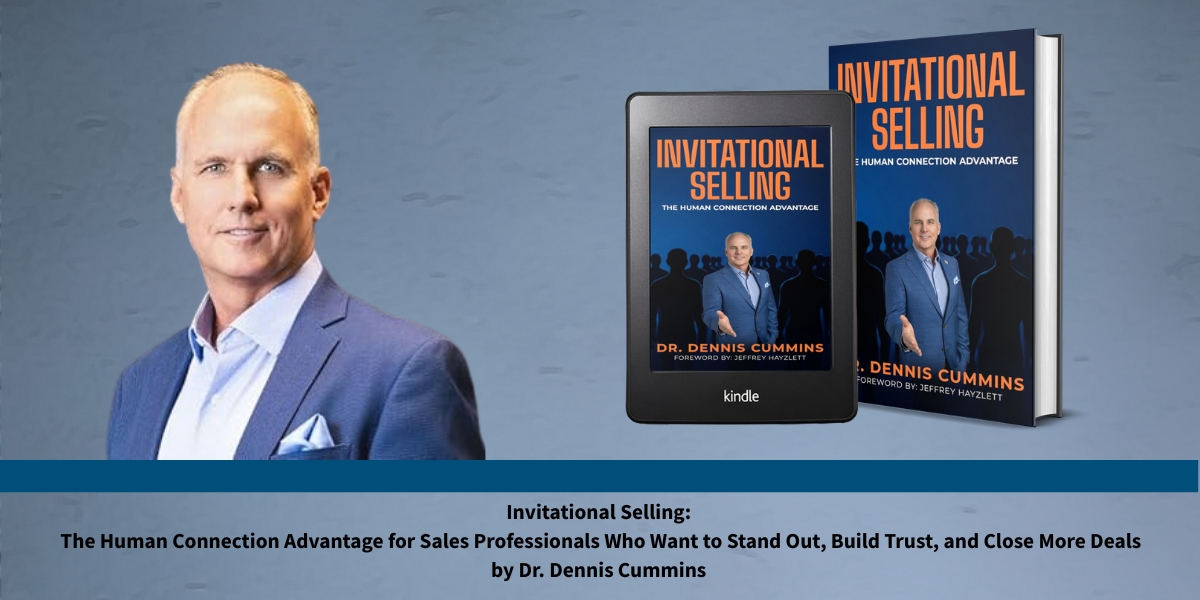
That’s the gap Dennis Cummins is trying to close with Invitational Selling: The Human Connection Advantage for Sales Professionals Who Want to Stand Out, Build Trust, and Close More Deals.
His idea is simple, but it runs counter to how most people were trained.
Stop trying to close people.
Start inviting them.
The Lesson That Didn’t Come From Sales
Dennis didn’t learn this in a sales seminar.
He learned it in healthcare.
In that environment, there is no room for manipulation. If a patient doesn’t trust you, they don’t follow through. And when that happens, the consequences are real.
So the approach was different from the start.
No pressure. No convincing.
Instead, he would walk patients through a decision.
What’s normal? What’s not? What options exist? What tends to work best?
Then a simple question.
“What would you like to do?”
That moment matters more than it sounds.
Because when people choose, they commit.
And when they commit, they follow through.
That was the foundation of what he later called Invitational Selling.
The Shock of Entering Traditional Sales
Then came the shift into business.
And the contrast was immediate.
Scripts. Pressure. Objection handling as a default. Conversations designed to steer, not understand.
It felt disconnected.
Not just philosophically, but practically.
Because it ignored how people actually make decisions.
We don’t like being pushed. We resist when we feel handled. We hesitate when something feels off, even if we can’t explain why.
Dennis saw that gap clearly.
And instead of adapting to it, he questioned it.
The Simplicity That Changed Everything
Sometimes the clearest insight comes from unexpected places.
For Dennis, it came from watching his daughter sell bracelets.
No script. No technique.
Just a simple question.
“How many would you like?”
No pressure behind it. No hesitation.
Just an invitation.
And people bought.
That moment reinforced something he had already seen in healthcare.
When you remove pressure, decisions become easier.
Not harder.
Trust Is Not What Most People Think
In today’s sales environment, everyone talks about trust.
Few define it clearly.
Dennis breaks it down to something direct.
Trust is when the other person believes you understand them and have their best interest in mind.
That’s it.
Not your credentials. Not your presentation. Not how smooth you sound.
Intent.
And alignment.
That’s why trust has become the real differentiator.
Because everything else has flattened.
Same tools. Same information. Same AI-generated outreach that all starts to sound identical.
So buyers filter differently now.
They don’t ask, “Who sounds the smartest?”
They ask, often subconsciously, “Who feels real?”
The Problem With Most Sales Training
Most sales training focuses on control.
What to say next. How to handle objections. How to move the deal forward.
But that mindset creates a problem.
You stop paying attention.
Dennis puts it bluntly. Emotional intelligence in sales is just paying attention.
Not to your script.
To the person in front of you.
Are they hesitating?
Are they unsure but not saying it directly?
Are they leaning in or pulling back?
Those signals are always there.
Most people miss them because they are too focused on their next line.
What High Performers Do Differently
The best salespeople don’t dominate conversations.
They read them.
They slow down enough to notice what’s actually happening.
Dennis breaks this into three parts.
Presence. Are you really listening or just waiting to speak?
Awareness. Can you pick up on what’s being felt, not just said?
Adaptability. Are you willing to change your approach in real time?
That combination changes everything.
Because now the conversation becomes fluid instead of forced.
Why Sales Teams Resist This At First
There’s always pushback when you introduce a more human approach.
Especially in teams that are heavily focused on numbers.
The concern is predictable.
“If we stop pushing, won’t results drop?”
Dennis handles that directly.
He doesn’t start with philosophy. He starts with outcomes.
Long sales cycles. Constant objections. Deals that stall late.
Most teams are already dealing with this.
They just haven’t connected it to how they’re communicating.
So instead of asking for a full shift, he introduces small changes.
A different way to open a conversation.
A better question.
A cleaner way to present options.
Then they test it.
And that’s when things click.
What a High Quality Conversation Actually Feels Like
Most sales conversations are transactional.
They’re built to move something forward.
A high-quality conversation feels different.
You’re not trying to guide someone to your answer.
You’re helping them find theirs.
You ask better questions.
You listen without rushing.
You respond in a way that shows you actually understand.
And the other person feels that.
That’s the key.
They don’t feel handled.
They feel understood.
Why This Approach Works Faster, Not Slower
At first, this method can feel like it takes more time.
More listening. More questions. Less control.
But the opposite tends to happen.
When people feel understood, resistance drops.
They open up faster. Decide faster. Commit more fully.
You spend less time chasing.
Less time overcoming objections.
Less time trying to fix something that never felt right to begin with.
The Bigger Shift Behind Invitational Selling
What Dennis is really challenging is not just technique.
It’s a mindset.
Selling does not have to feel like pressure.
It can feel like guidance.
It can feel like clarity.
It can feel like helping someone make a decision they already know they need to make.
That shift changes how conversations unfold.
And more importantly, it changes how people experience them.
Because at the end of the day, no one wants to be closed.
But most people are open to being invited.
To learn more about Dennis Cummins and his work, visit his official website, or explore his book Invitational Selling available on Amazon.