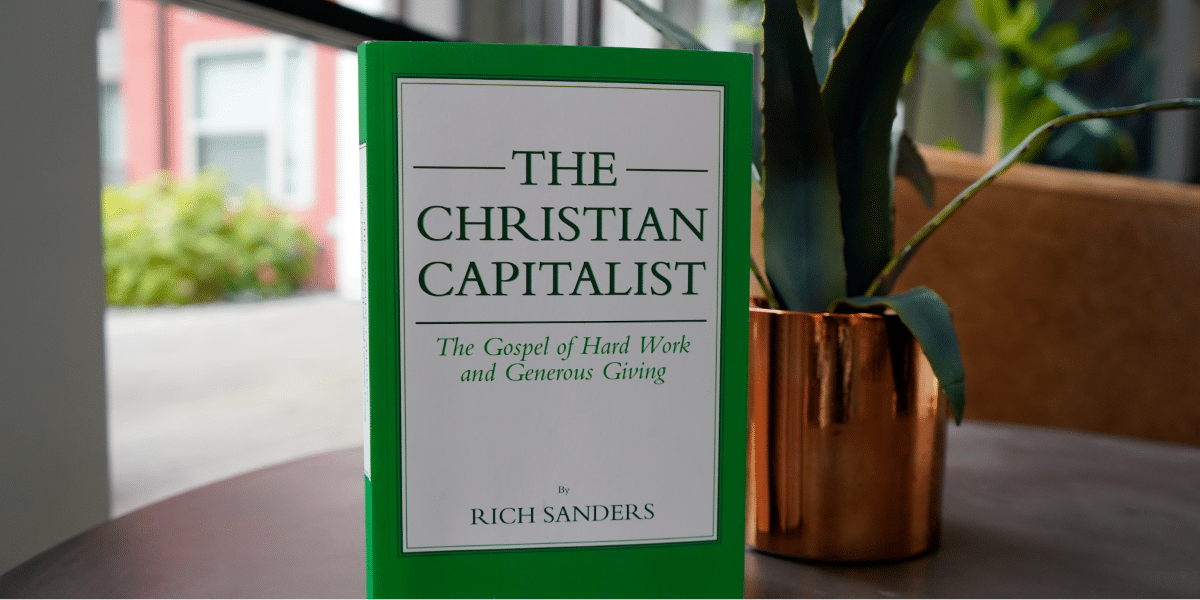

In an era where the quest for material wealth often overshadows the spirit of generosity, “The Christian Capitalist” emerges as a beacon of light, guiding us toward a path that harmonizes hard work with heartfelt giving. At its core, this philosophy is not merely about amassing wealth but about recognizing our stewardship role over God’s creation and our responsibility toward our fellow human beings. Through the ten principles outlined in “The Christian Capitalist,” we are invited to embark on a journey that redefines success, wealth, and fulfillment in life. For business executives who strive to develop a culture of hard work and generous giving among their leadership teams and workforce, these ten principles provide a roadmap for that strategy.
Principle 1 posits that everything in the universe, including our earnings and possessions, is part of God’s creation and thus a divine blessing. This foundational belief sets the tone for understanding our material gains not as ends in themselves but as means to serve higher purposes.
Reflecting upon Principle 2, we see ourselves as made in God’s image, destined to work and create just as He did. Work, therefore, becomes an act of worship—a means through which we can glorify God by harnessing our talents and energies in pursuit of excellence.
The narrative continues with Principle 3, emphasizing Jesus’ mission to fulfill God’s work on Earth—a mission He entrusted to us through the Great Commission. Our professional endeavors gain new significance when viewed as extensions of Jesus’ redemptive work, leading us to make disciples of all nations through our daily labors.
Principle 4 champions prudent financial management and saving as expressions of love for ourselves and our families. By aiming for personal self-sufficiency, we uphold dignity and prevent burdening others—principles at the heart of loving our neighbors.
Principle 5 confronts us with a powerful dichotomy: serving God versus serving wealth. Herein lies a profound truth—our wealth is ultimately meant for service. As stewards of God’s blessings, we are called to share generously—a sentiment encapsulated by the rallying cry, “The more we make, the more we give!”
Principle 6 delves deeper into Jesus’ teachings on love—urging us to mirror God’s unconditional love by supporting those less fortunate. This principle reminds us that sharing with the needy isn’t just an act of charity; it’s a manifestation of divine love.
In Principle 7, servant leadership is presented as an ideal model within business ventures. By prioritizing others’ interests and leading through example, we walk in Jesus’ footsteps—inspiring transformational change around us.
Humility in giving forms the essence of Principle 8. Recognizing that our ability to give stems from divine grace fosters humility—an attribute dearly loved by God alongside cheerful generosity.
With Principle 9 comes an enlightening perspective on true riches: wisdom and closeness with God outweigh material possessions. This principle encourages even those with modest means to participate in giving—highlighting that generosity transcends monetary value.
Finally, Principle 10 elevates the discourse by reminding us that earthly riches are transient compared to the eternal joy and salvation offered by living according to Gospel values—hard work complemented by generous giving paves the way for lasting fulfillment beyond this life.
“The more we make, the more we give!” echoes not just as a motto but as a transformative reminder from “The Christian Capitalist” that true prosperity flows from what we share rather than what we accumulate. In embracing these tenets, individuals find themselves partaking in a legacy far greater than mere wealth accumulation; they engage in building up treasures where moth nor rust can destroy (Matthew 6:19-20).
By intertwining hard work with generous giving, underpinned by the spiritual convictions detailed above, “The Christian Capitalist” leaves strategies for financial success to other sources— instead, it provides blueprints for living a life imbued with purposeful meaning rooted deeply within the faith tradition.
As society grapples with finding a balance between personal ambition and altruistic contributions, “The Christian Capitalist” stands out as both a timely resource and an illuminating path forward, where prosperity serves a higher purpose, empowering communities while enriching individual lives spiritually and emotionally. For further insights or engagement opportunities, interested readers are encouraged to visit www.christiancapitalist.life exploring how the principles discussed can be actualized in personal and professional realms alike.
In essence, “The Christian Capitalist” isn’t merely about fostering economic growth and personal gain—it advocates for a holistic approach combining diligence and compassion, aiming at societal upliftment and spiritual enlightenment for individuals actively participating in a global mission to spread the Gospel through actions and words alike, guided by unwavering faith, hope, and love.
Published by: Khy Talara