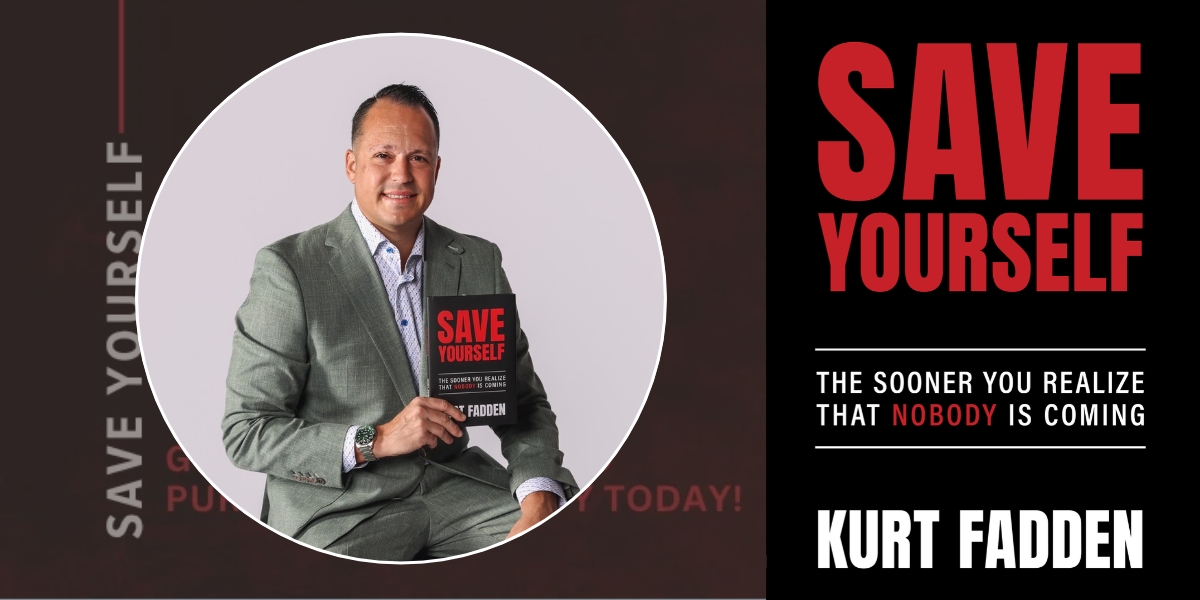

When results fall short of expectations, the instinct is often to look for an external explanation: an unresponsive market, an unmotivated team, limited opportunities, or circumstances beyond anyone’s control. Those factors can matter, but they do not explain everything. Kurt Fadden, a real estate professional, sales coach, and speaker, emphasizes a different starting point for improvement: examining the decisions, habits, and attitudes that remain within an individual’s control.
That principle sits at the center of his book, Save Yourself: The Sooner You Realize That Nobody Is Coming. Its central message challenges people to stop waiting for circumstances or other people to change before taking action. For leaders and professionals, the idea raises a practical question: how much progress remains possible when attention shifts from what cannot be controlled to what can be changed through consistent effort?
Accountability Begins With Personal Choices
Personal accountability is easy to endorse in principle and more difficult to practice when circumstances become frustrating. A missed target may prompt a search for external causes. A difficult conversation may be postponed. A new initiative may remain an intention because familiar routines feel more comfortable than uncertainty.
Fadden’s philosophy encourages a different response. Rather than treating every setback as evidence that progress is impossible, individuals can examine their own decisions and identify what they can do differently. That does not require ignoring external barriers or assuming every outcome is entirely personal. It means distinguishing between circumstances that cannot be controlled and responses that can still be chosen.
For leaders, this distinction can influence how they approach performance and responsibility. A manager who focuses only on what employees, competitors, or the market should change may overlook opportunities to clarify expectations, improve communication, or model the discipline being requested from others. Accountability becomes more useful when it leads to specific action instead of blame.
The same principle applies to individual contributors. Progress may begin with a more consistent routine, a difficult task addressed sooner, or a willingness to reconsider an approach that has stopped producing the desired result. These actions may appear modest, but they make improvement something people can practice rather than simply hope to experience.
Why Motivation Needs the Structure of Discipline
Motivation can create an initial willingness to change, but it does not always remain steady. Energy and enthusiasm fluctuate, especially when progress is slow or the work becomes repetitive. Without a structure for action, even a clear goal can be displaced by more immediate demands.
Fadden is known for motivating sales teams and promoting discipline and ownership. His approach points toward the difference between wanting a result and establishing behaviors that support it. A professional may want to improve performance, strengthen a team, or develop a new skill, but those ambitions require decisions that can be repeated beyond moments of enthusiasm.
Discipline provides a way to act when motivation is limited. It can mean following through on commitments, reviewing performance honestly, preparing for important conversations, or continuing to learn after an early setback. The relevant habit will differ by role and objective, but the underlying principle remains consistent: intentions become more meaningful when they shape behavior.
For leaders, this also has implications for team culture. Encouraging accountability is not only about asking people to accept responsibility after something goes wrong. It also involves establishing clear expectations and demonstrating consistency. Leaders who connect their words to their actions give teams a more concrete example of what responsibility looks like in practice.
Resilience Requires a Willingness to Reconsider
Taking ownership does not guarantee immediate success. Some decisions will not produce the expected result, and some attempts to change will expose weaknesses that were previously overlooked. Resilience becomes important in those moments because progress often requires the ability to respond constructively rather than retreat into familiar explanations.
Fadden’s emphasis on mindset, faith, and resilience reflects a broader view of personal development in which setbacks do not have to determine the next decision. A disappointing result can become an opportunity to assess an approach, seek a different perspective, or develop a skill that needs attention.
This approach also challenges the tendency to treat established habits as permanent features of a person’s identity. A professional who struggles with consistency can examine the routines that interfere with follow-through. A leader who finds it difficult to delegate can reconsider the assumptions behind that reluctance. The purpose is not to deny difficulty, but to recognize that some responses can be learned, examined, and changed.
Fadden’s message encourages people to try new approaches and think differently about their potential. In a professional setting, that willingness can create room for experimentation and growth, provided reflection leads to practical adjustments rather than another cycle of unfulfilled intentions.
Turning Ownership Into Forward Movement
In Save Yourself, Fadden challenges readers to recognize that waiting for rescue or for ideal circumstances can postpone meaningful action. Applied to leadership, the message is less about doing everything alone and more about taking responsibility for the choices that remain available.
People can seek advice, collaborate with colleagues, and learn from mentors while still owning their decisions. Accountability does not require isolation. It requires recognizing that support from others cannot replace personal commitment and follow-through.
For business leaders and professionals, that distinction offers a useful place to begin. Instead of waiting for motivation to return or for every obstacle to disappear, they can identify one behavior to change, one responsibility to address, or one new approach worth testing. Consistent action does not eliminate uncertainty, but it gives individuals a more active role in how they respond to it.
Fadden’s central message is ultimately a challenge to move beyond intention. Better results may begin not with a dramatic transformation, but with an honest assessment of current habits and a deliberate decision to act differently. When accountability becomes a daily practice rather than a slogan, it can provide a foundation for more disciplined leadership and continued professional growth.
Explore / Learn More and Connect with Kurt Fadden
Book: Save Yourself: The Sooner You Realize That Nobody Is Coming
Website: https://kurtfadden.com/
Facebook: https://www.facebook.com/kfadd