
By: Fabiana Simmons
The most honest thing Dr. Dennis Cummins does in Invitational Selling is admit what the industry has been reluctant to say out loud: that the way most organizations have been training their sales teams is quietly working against them. Not because the tactics are unethical exactly, but because buyers have changed, the information landscape has changed, and the tolerance for feeling managed through a conversation has dropped to nearly zero. That admission alone would make this book worth reading. What Cummins builds from it makes it essential.
There is something genuinely relieving about reading this book if you have spent any time in sales, feeling vaguely uncomfortable with the pressure the role seemed to require. Cummins gives language to that discomfort, and more importantly, he gives you a different path. Reading Invitational Selling feels like someone finally giving you permission to have the kind of conversations you always suspected were more effective, the ones where you listen more than you speak, where you create space instead of filling it, where you extend an invitation at the end rather than applying a close. That permission turns out to be backed by real strategic thinking, not just a preference for being nice.
The themes Cummins explores stretch well beyond the sales floor. The idea that human connection has become a genuine competitive advantage in an environment saturated with AI-generated content applies to leadership communication, organizational culture, customer relationships, and any professional context where one person is trying to earn the trust of another. He draws those connections carefully without overreaching, and the result is a book that will resonate with people who have never carried a quota in their life but who recognize that the ability to communicate authentically under pressure is one of the most valuable professional capabilities available right now.
What makes the writing work is how unimpressed Cummins is with his own framework. He doesn’t position Invitational Selling as a revelation. He positions it as a recovery, a return to the kind of human communication that got buried under decades of pressure tactics and script-heavy training programs. That humility gives the book a credibility that more self-congratulatory business writing consistently lacks. He is not asking you to reinvent yourself. He is asking you to remember something you probably already knew and build a more deliberate practice around it.
The personal story at the heart of the book, his daughter Lauren and her intuitive understanding of what it means to connect before you ask anything of someone, gives Invitational Selling an emotional honesty that most business books deliberately avoid and are worse for avoiding. It earns its place in the narrative not as a sentimental detour but as the clearest possible illustration of everything the framework proposes. Real connection, extended freely and without an agenda attached, is what opens people. Everything else follows from that.
For anyone navigating a sales or leadership communication role in an environment where everyone is starting to sound the same, this book arrives at precisely the right moment and with precisely the right message. Stop performing. Start connecting. Invite rather than push. Cummins makes that shift feel not just possible but immediately within reach, and that combination of insight and practical accessibility is what will make this book stay with you long after you finish it.
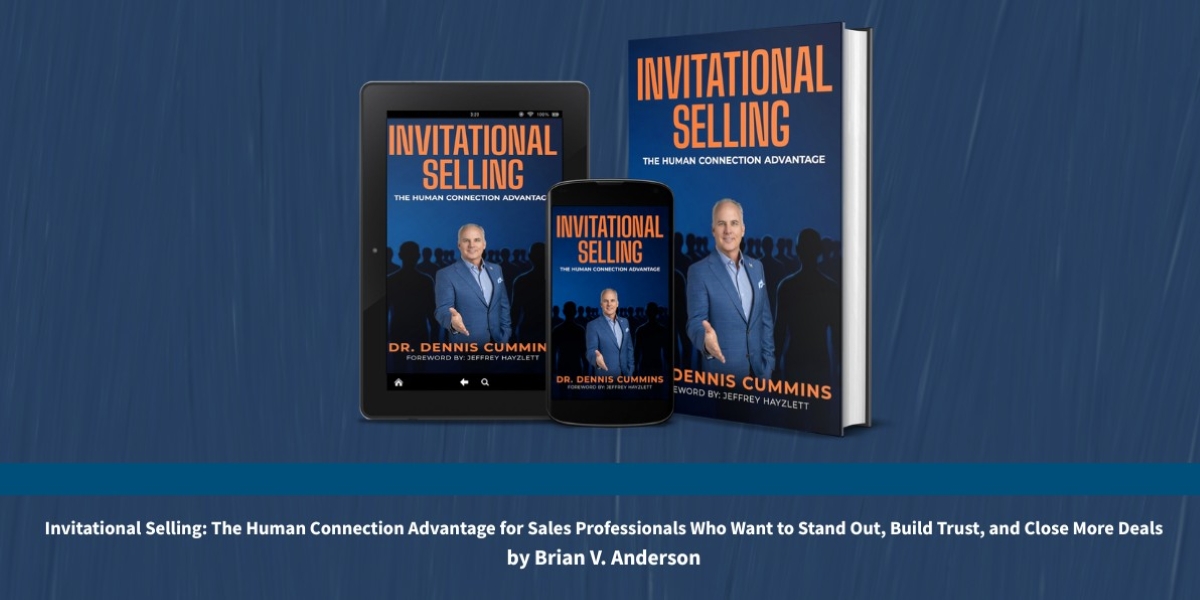
Invitational Selling: The Human Connection Advantage for Sales Professionals Who Want to Stand Out, Build Trust, and Close More Deals is available on Amazon.