
The Human Challenges Behind Executive Leadership
We think of executive leadership as something people earn through credentials and strategy. But beneath the prestige is a very human reality. When you strip away the title, you find the same thing you’d find anywhere: people trying to be understood, trying not to fail, and trying to figure out how to get other people to trust them.
The same human struggles, at a different altitude.
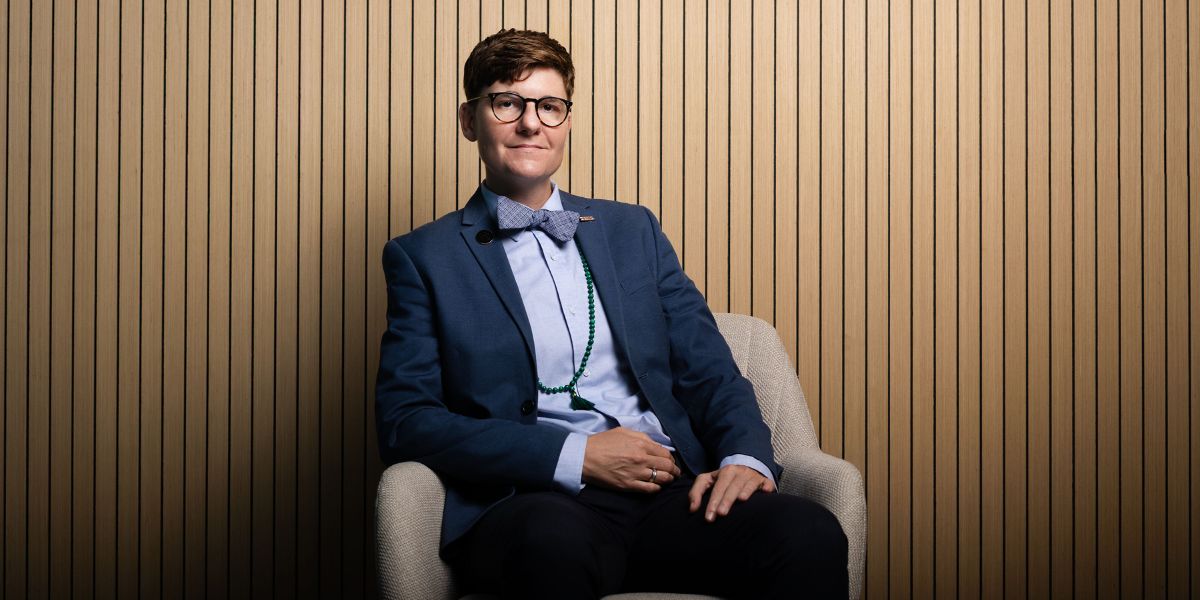
Aang Lakey has spent years watching this up close. A former U.S. Army leader and federal civil servant turned executive leadership coach, Lakey has advised organizations at the highest levels of government—including the U.S. Department of State and the U.S. Military—on leadership, equity, and cultural transformation. Through that work, one pattern kept surfacing:
What looks like a performance problem is almost always a people problem.
Why Most Leadership Problems Are Symptoms, Not Root Causes
A company may think it has a productivity problem when its people are actually burned out. A team may call it a communication issue when underneath there’s fear, mistrust, or unresolved conflict. And a leader struggling with “performance” may simply be exhausted or disconnected from purpose.
“Most people are trying to fix what’s visible on the surface,” Lakey explains. “But our behaviors are often shaped by something deeper: fear, biases, past experiences, stress, shame, grief, or ways we’ve learned to protect ourselves over time.”
Over the years, Lakey noticed that many leadership breakdowns weren’t caused by a lack of intelligence or experience; they were caused by blind spots. Leaders often couldn’t see how their behaviors were being experienced by others and how their assumptions shaped decision-making. And the higher someone rose, the more expensive those blind spots became, because fewer people felt safe enough to name them.
But Lakey’s work goes a lot deeper than awareness alone.
Awareness is recognizing a pattern. Competency is being able to change it—in real time, under pressure, when it counts. And that kind of change only happens in an environment where it’s safe to try, get it wrong, and adjust.
This is where reflexivity becomes essential. Lakey defines it simply: awareness, evaluation, adjustment. Not once, but on repeat. “Reflexivity isn’t a moment of insight you have and then move on from,” Lakey says. “It’s a cycle you keep returning to, every time you get new information about yourself or the people you’re leading.” It’s the practice of continually testing what you think you know against what happens when you try to apply it, and adjusting from there. Not a one-time insight, but a loop: try, notice, learn, try again.
Why Awareness is Crucial to Increasing Consciousness in Leadership
According to Lakey,awareness, emotional agility, and the ability to navigate personal and systemic blind spots are essential for building healthy teams.
This is the heart of their work around increasing consciousness in leadership.
At its core, increasing consciousness means expanding awareness across three levels— personal, social, and systemic—and how our thoughts and behaviors affect us, the people around us, and the systems we’re part of.
For Lakey, leadership is fundamentally relational, meaning the way a leader shows up internally always shows up externally, whether they intend it to or not.
“We’re all co-creators,” they explain. “Every conversation builds or erodes trust. Every action shapes the culture around us. Leadership isn’t something we do to people; it’s something we create with them.”

Awareness Is Only the Beginning
Years of working with executive leadership teams taught Lakey that organizations were good at identifying surface-level problems. A team isn’t collaborating, so they bring in a communication workshop. Morale is low, so they launch an engagement survey.
But, more often than not, things stayed the same. The awareness existed, but the change didn’t follow.
“The question isn’t whether we receive feedback,” Lakey says. “The question is what we do with it.”
This is reflexivity in action: awareness colliding with real conditions, then adjusting.What Lakey found was that most leaders genuinely wanted to do better. But without the right tools, awareness remains intellectual. And intellectual awareness, on its own, rarely changes behavior.
One of the tools Lakey teaches is what they call “pause practices.” These help people interrupt autopilot responses and create space for conscious choice. Rather than reacting from stress, fear, or conditioning, individuals learn to recognize patterns in real time, regulate their responses, and act with greater intention.
It sounds simple. But in practice, it can radically change the way people lead, parent, partner, communicate, and move through the world.
Aang Lakey’s Leadership Consciousness Essentials Series
For the first time, the lessons Lakey has spent years teaching are available to a broader audience through their six-book Leadership Consciousness Essentials series.
At the center of the series is the upcoming overview volume, also titled Leadership Consciousness Essentials, to be published July 31st, 2026 which serves as a roadmap to the entire body of work. The book introduces readers to Lakey’s model of personal, social, and systemic mastery, and provides an accessible entry point into the frameworks explored throughout the rest of the series.
Personal mastery focuses on self-awareness, emotional regulation, intentionality, and congruence between values and behavior. Social mastery explores relational trust, communication, accountability, and cultural intelligence. Systems mastery helps leaders understand the broader environments they operate within and how individual behaviors scale into organizational culture.
The remaining books function as practical guides, helping readers apply these concepts to real-world challenges through reflection and action.
Lakey shares, “I wrote this series because I believe when we do the inner work to lead ourselves with integrity, we show up differently with others. We communicate more clearly, build deeper trust, and make others feel safe, especially across differences. And when enough of us lead this way, systems begin to shift.”
The Future of Leadership Is More Human
What makes the series especially timely is that it arrives during a moment when many people are recognizing that external success alone does not create fulfillment, trust, or meaningful connection. People are hungry for a different way of leading—not just in corporations, but in families, communities, relationships, and everyday life.
For Lakey, leadership has never been about status or authority. It’s about how we show up in moments that require honesty, accountability, self-awareness, and care.
“What we view as leadership struggles are actually human struggles.”
The deeper invitation behind this work is not simply to become better leaders, but to become more conscious human beings whose actions create positive change. The Leadership Consciousness Essentials series is where that work begins.
You can find Aang Lakey’s full collection of books and resources, including the Leadership Consciousness Essentials series, here.