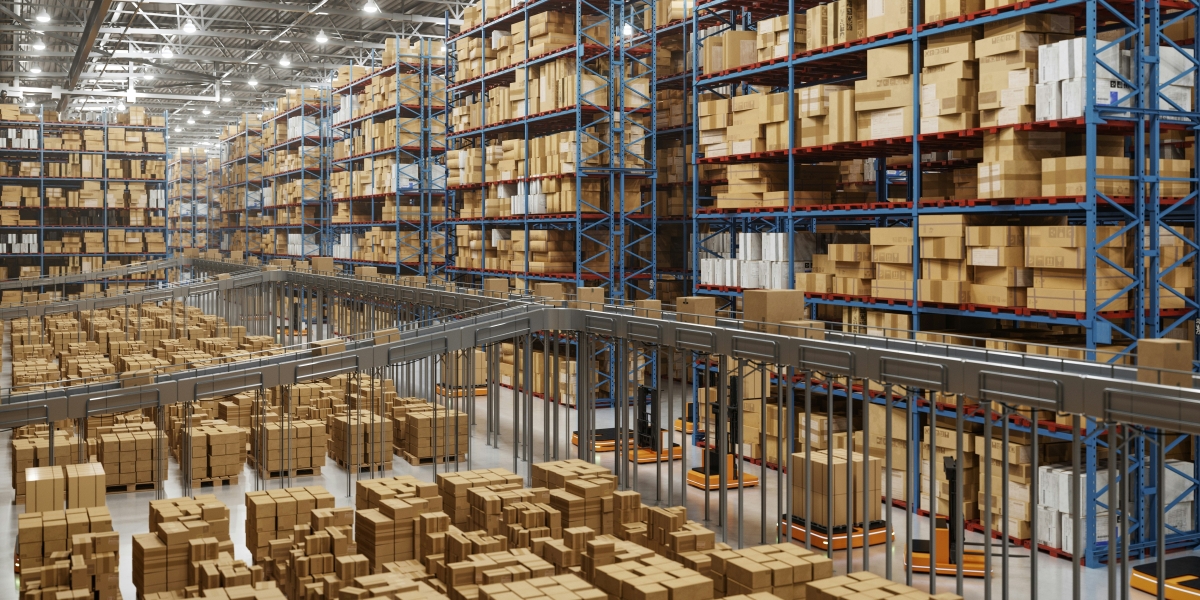


Efficiency is a must-have for businesses in the present-day supply chain competition. The role of warehouses has changed fundamentally from simply storing goods to becoming active fulfilment centres that are dependent on digital intelligence and automation. At the core of this transition is the warehouse management system (WMS), a solution specifically designed to simplify processes, increase productivity, and improve overall business agility.
An effective warehouse management solution can change companies’ approach to managing inventory, labour, and demand fluctuations. What follows is a list of the main features that have made the modern WMS platforms vital for efficient operations and sustainable growth.
1. Real-Time Inventory Visibility
Real-time inventory visibility is one of the most significant features of a powerful WMS. Businesses can keep track of stock levels through digital tracking and live data updates, identify shortages, and reduce the risk of overstocking or understocking.
This kind of visibility not only speeds up decision-making but also enhances forecasting precision. By ensuring the right products are available at the right time, warehouses can efficiently meet customer demand without exceeding budget.
2. Seamless Integration with Automation Systems
Contemporary warehouses heavily rely on automation. A powerful WMS connects smoothly with automated storage and retrieval systems (ASRS), autonomous mobile robots (AMRs), and conveyor systems.
This integration enables seamless coordination between physical movements and digital tracking. An expertly implemented communication line between the automation systems and the WMS can lead to speedier, more uniform, and less error-prone operations. Moreover, this interoperability ensures the warehouse remains adaptable and scalable as technology advances.
3. Process Optimisation and Workflow Automation
The efficiency of a warehouse is greatly influenced by the quality of the processes in place and their management. An effective warehouse management system automates as many repetitive tasks as possible, including order picking, stock replenishment, and dispatch planning.
The algorithms used are based on the data, enabling the system to prioritize high-velocity SKUs, adjust travel routes, and distribute work among available workers based on their level of expertise. This leads to minimal human assistance, fewer unnecessary movements, and quicker order fulfilment, all crucial factors in the drive for excellence in operations.
4. Scalability and Flexibility
The growth of a business directly affects the evolution of its warehouse needs. One of the key features of modern WMS is its ability to provide flexibility and allow things to move on without any significant changes to the system.
Scalability enables storage facilities to handle larger inventories, add new high-tech facilities, and support multiple sales channels simultaneously. Whether it’s a greenfield setup or an upgrade to an existing facility, a flexible warehouse management system ensures performance remains up to the mark despite increased complexity.
5. Data Analytics and Continuous Improvement
Data mainly powers the operational enhancement process. An effective warehouse management system (WMS) is not merely an inventory manager; it also serves as a performance metrics analyzer, thereby revealing inefficiencies and areas for improvement.
Warehouse managers can view KPIs such as order accuracy, throughput rates, and space utilisation in real time through analytics dashboards. This helps spot trends, forecast demand fluctuations, and gradually hone processes. The method of continuous improvement based on real-time data ensures the unfailing operation of warehouses at peak efficiency, thereby supporting the business’s long-term growth.
6. User-Friendly Interface and Easy Integration
The adoption of digital systems across teams is one of the major hurdles in the implementation process. With an effective warehouse management solution, adoption is facilitated by an easy-to-use interface and an uncomplicated integration with existing enterprise systems, including ERP and transportation management software.
While ease of use reduces the learning curve, it still allows employees to adapt quickly to the new processes. The integration with other business platforms not only ensures data consistency but also provides a unified view of operations, making the decision-making process faster and more accurate.
7. Mobile Accessibility and Remote Monitoring
The increasing demand for quick responses has made mobile access a key feature of WMS. Managers using cloud-based systems can remotely monitor warehouse operations, receive reports, and even make changes in real time.
Besides, mobile dashboards are very useful, especially for on-site use, as they can now scan items, mark shipments, and update inventory while on the go. Such mobility greatly ensures ongoing operations when workers are scattered across multiple large warehouses.
8. Enhanced Order Accuracy and Customer Satisfaction
At the end, the triumph of any warehouse operation relies on its capability to deliver orders correctly and promptly. WMS systems improve picking accuracy through barcode scanning, RFID integration, and assisted workflows.
With fewer errors, customer satisfaction increases. The brand’s reputation strengthens through fewer returns, quicker delivery, and greater accuracy, while operational costs decline.
9. Integration of Robotics and Smart Technology
Robotics and AI have taken warehouse efficiency to another level. Warehouse management systems have been developed to integrate robots, analytics powered by AI, and inmates’ workflows, even from leading companies, among which is Addverb, a pioneer.
The resulting system can manage complex processes—improving both speed and precision simultaneously. When robots and WMS are fully integrated, companies can achieve a smooth transition from human labour to machines, resulting in higher output with less downtime.
Driving the Future of Warehousing
The contemporary warehouse is not only a storage facility; it is also an intelligent operation that relies heavily on digital systems. A future-proof warehouse management system guarantees not only efficient but also scalable, sustainable, and profitable operations.
By combining automation, analytics, and real-time visibility, companies can turn their warehouses into strategic assets that directly drive business growth. The industry’s accelerated move towards integrated technologies has demonstrated that warehouse management solutions remain pivotal in creating supply chains that are more intelligent, faster, and more resilient.
Conclusion
The appropriate warehouse management system is the foundation of operational excellence and long-term scalability. Real-time tracking, automation integration, data analytics, and mobile accessibility are some of the main features that help businesses keep their agility in the supply chain environment, which is getting more and more complex.
Pioneers like Addverb are always pushing the boundaries of warehouse technology—creating smart, adaptive systems that align with the industry’s changing demands. WMS platforms will always be the driving forces behind efficiency, sustainability, and growth in the warehouse sector as it undergoes digital transformation.