
By: Jake Smiths
Enterprise finance is one of the few business functions where the primary response to a persistent problem has been to add more of what created it. Fragmented systems produce unreliable data. The answer has been more systems, more integrations, and more people to manage both. The function gets more expensive. The underlying problem gets harder to see.
Viewz is stepping out of stealth this week with $7 million in seed funding and a direct challenge to that pattern. The company, backed by Ibex Investors and Flint Capital, is not offering a better integration layer or a smarter analytics tool. It’s replacing the fragmented stack with a single governed operating model built around a native general ledger.
A Founding Team That Ran Finance
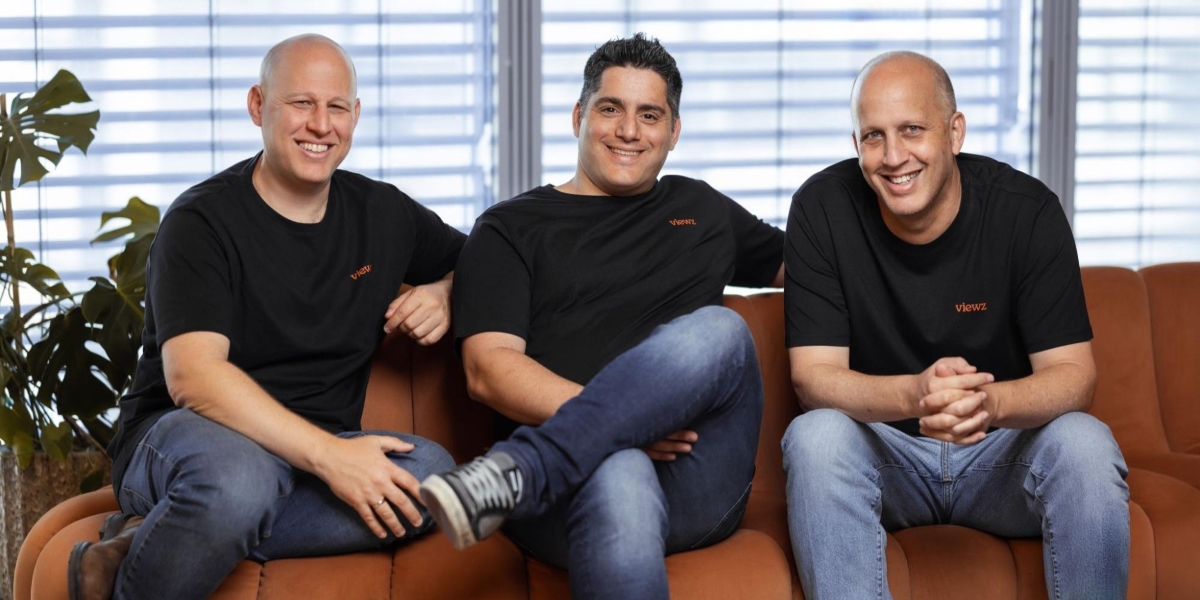
Co-founders Moti Cohen, Omer Aviad, and Liran Kessel collectively bring more than 50 years of experience across audit, CFO roles, and financial operations. Their professional backgrounds shaped the company’s founding thesis in ways that distinguish it from teams that approached the finance software market from the outside.
The thesis: the problem in enterprise finance isn’t a lack of data or a lack of intelligence. It’s a lack of structure. Specifically, a governed architecture that keeps financial data consistently formatted, reconciled, and trustworthy across every system that touches it. Without that structure, every tool in the stack is working on imperfect inputs. Every AI model built on top of that stack inherits the same imperfections.
“I started Viewz because I spent 20 years watching finance fail in the same way, not from a lack of data, but from a lack of structure,” said Cohen. “We are not a better tool. We are a different answer to the same question every finance leader has been asking for years: why does this still feel so hard?”
The Platform
Viewz is organized around a native general ledger that the company governs directly. Bookkeeping, FP&A, payroll, compliance, and reporting all flow through that single ledger, which is reconciled daily. The platform doesn’t integrate with existing systems. It replaces them.
Daily reconciliation produces what the company calls a continuous close, an always-current financial position that makes the traditional month-end process unnecessary. When the ledger is always reconciled, there’s no periodic gap to close. AI agents and an embedded expert finance function operate on top of this governed data layer, producing outputs that are reliable because the inputs are consistent.
The alternative, which describes most enterprise finance environments today, is AI running on inconsistently reconciled, fragmented data. The AI may be sophisticated. The outputs it produces on that foundation are not dependably trustworthy.
Why the Investors Backed It Now
The $7 million seed round from Ibex Investors and Flint Capital reflects a specific view about timing. As AI adoption in enterprise finance accelerates, the quality of underlying data infrastructure is becoming the limiting factor for AI reliability. Companies that invest in intelligence without investing in the foundation first are discovering that the outputs can’t be trusted at scale.
Aaron Rinberg, Partner at Ibex Investors, described the company in terms that reflect that timing. “Most finance-oriented startups are layering intelligence on top of broken plumbing. Viewz rebuilt the plumbing. That’s a much harder thing to do, and it’s the only version of automated finance that scales.”
Sergey Gribov, General Partner at Flint Capital, pointed to the company’s retention record as the clearest proof point. Since launching quietly about a year ago, Viewz has built a growing customer base while maintaining zero voluntary churn. “What stood out wasn’t the growth; it was the retention. Zero voluntary churn tells you customers aren’t using Viewz alongside their existing tools. They’re using it instead. One thing that really caught my attention was feedback from one of my CFOs: he believes a platform like this could meaningfully reduce the size of his finance team.”
What the Numbers Confirm
Zero voluntary churn over the first year of operation is a signal about product depth, not just product quality. Customers who are satisfied with a tool might still leave if a better option appears. Customers who have replaced their finance infrastructure with a platform have removed the alternatives from their operations. Leaving requires rebuilding what they’ve dismantled.
Erez Fisher, VP of Finance at Dig Security, described this dependency plainly. “Viewz is my finance department from A to Z; everything I need is in one place. When I moved companies, I brought Viewz in from day one.”
Carrying a finance platform between employers is the behavior of someone who has stopped treating it as a vendor and started treating it as the way they do their job. That’s the outcome Viewz is designed to produce.
Next Steps
The $7 million funds the next stage of building what Viewz calls a “fully agentic finance team,” a continuously operating finance system delivered as infrastructure. The company’s direction is clear. As the gap between AI built on governed data and AI built on fragmented data becomes more visible across enterprise finance, Viewz is positioned on the side of that divide that produces reliable results.