
By Chase Alley, Chief Operations Officer (USA), MATW Project
Every year, a concentrated window opens in the Islamic giving calendar. For the nonprofits that have built real infrastructure to meet it, and for the donors now asking harder questions, that window is revealing something important about where the sector is heading. MATW’s Qurbani donations are an extension of its year-round distribution infrastructure. The same local teams, the same verified beneficiary lists, and the same accountability frameworks that govern food distributions, water projects, and orphan sponsorship programs throughout the year also govern Qurbani.
In 2015, an Australian entrepreneur named Ali Banat received a terminal cancer diagnosis. He was 29 years old, the owner of a successful fashion business, and by any conventional measure, at the beginning of his most productive years. What he did next was not conventional. He liquidated his estate, the cars, the watches, the property, gave the proceeds away, and spent the remainder of his life building humanitarian infrastructure across West Africa and beyond. He died in 2018, at 37. The organization he founded, MATW Project (Muslims Around the World), is now in its tenth year of operation, running programs across 16 countries on four continents.
That founding story matters not because it is unusual (though it is), but because of what it demanded structurally from the organization Banat left behind. An organization built on the public act of giving everything away carries an implicit accountability contract with every donor who gives to it. The standard Banat set was not rhetorical. It was operational: giving must be total, visible, and verifiable. Ten years on, that standard is the lens through which MATW measures its own performance, and it is increasingly the lens through which donors in the Islamic giving sector are measuring everyone.
The Accountability Shift in Faith-Based Philanthropy
The Islamic humanitarian sector manages significant capital. Zakat, the obligatory annual almsgiving that constitutes one of the five pillars of Islam, is estimated to generate between $200 billion and $1 trillion globally each year, with the range reflecting how much of the giving flows through informal channels that are not centrally tracked. Sadaqah, the voluntary charitable giving that supplements Zakat, adds further volume. And every year, during the days of Eid al-Adha, a concentrated spike occurs: Qurbani, the ritual sacrifice in which an animal is slaughtered and its meat distributed to those in need, generates a surge of online donations from Muslim communities across North America, Europe, and Australia toward distribution operations in the developing world.
For most of the sector’s history, the accountability infrastructure governing that capital flow has lagged significantly behind its volume. Donors giving online have often had little more than stated intent and a compelling campaign to assure them that their contribution reached anyone at all. The sector has not lacked sincerity. It has, in places, lacked systems.
That is changing. Younger, more digitally native Muslim donors in the US, UK, and Australia are applying the due diligence frameworks of their professional lives to their charitable giving. They want audited financials. They want program expense ratios. They want to understand the beneficiary selection criteria, how a family was identified as eligible for a Qurbani meat distribution, who verified it, and what documentation was generated. They want impact data that is specific enough that it cannot be falsified. They want, in short, what donors in any other sector have come to expect: evidence.
What Qurbani Reveals About Operational Depth
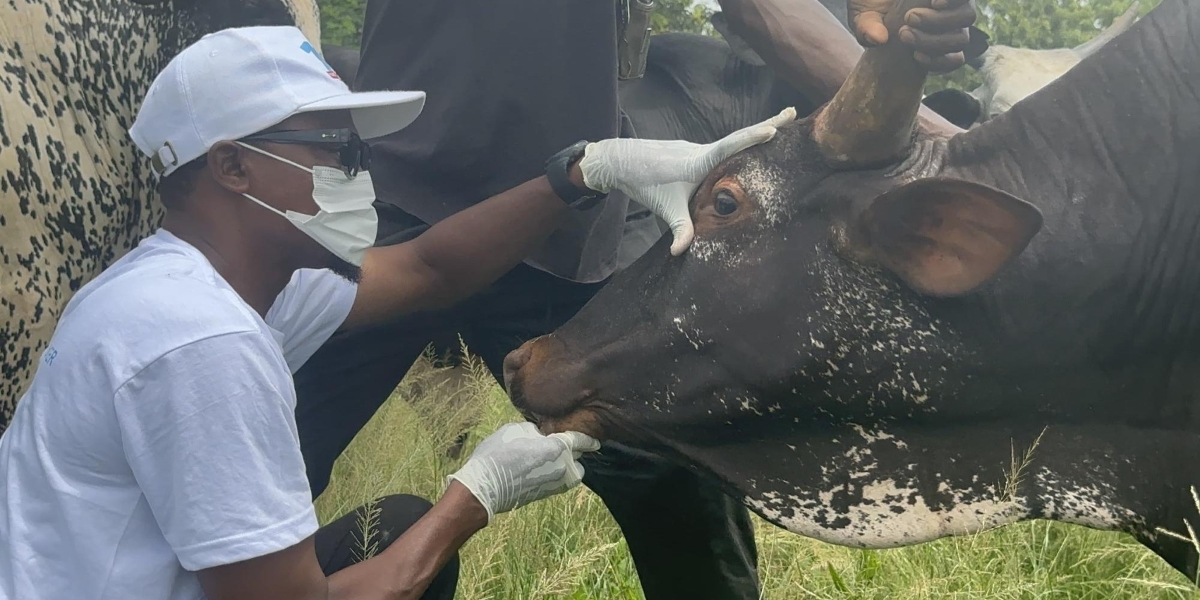
Eid al-Adha, which falls in late May this year, marks the holiest sacrifice in the Islamic calendar. The Qurbani obligation performed on the 10th through 12th of Dhul Hijjah requires that a livestock animal be sacrificed by a qualified person, in accordance with halal requirements, with the meat divided into thirds: one for the donor’s family, one for friends and neighbors, and one for those in need. For Muslims in wealthy countries donating online, the practical question is whether the organization they give through can carry that obligation faithfully to a family in Togo, Bangladesh, or Indonesia, correctly, documentably, and at scale.
That question is, in effect, a stress test of operational depth. Performing Qurbani correctly at scale requires year-round field presence, not a seasonal operation assembled for Eid and wound down afterward. It requires verified beneficiary lists maintained through ongoing community relationships, not assembled in the weeks before a campaign. It requires qualified personnel and local scholarly oversight at every distribution site. And it requires a documentation chain that connects a donor’s online transaction to a specific family’s receipt of meat on a specific day.
During Ramadan 2026, that infrastructure delivered over 1.4 million iftar meals, 112,455 food packs, and 72,000 rice bags across 16 countries. Every figure logged. Every distribution is verified by field teams. Every country-level breakdown is published in full in the organization’s impact report, not projected, not estimated, not rounded to a press-friendly number.
The Numbers That Do Not Round Easily
It is worth being specific about what MATW’s field operations documented during Ramadan 2026, because specificity is exactly what accountability looks like in practice.
In Togo, where Banat’s founding work is most deeply rooted, MATW distributed 34,500 iftar meals, 3,473 food packs, 1,400 Eid gifts, and 64,000 rice bags. In Bangladesh, 25,100 iftar meals, 11,000 food packs, 8,000 rice bags, and 1,500 units of baby milk. In Indonesia, 17,000 iftar meals and 1,500 food packs. In Chad, 42,000 iftar meals and 14 water tanks, each holding 25,000 litres. In Kenya, Uganda, and Tanzania, distributions spanned food packs, rice, and Eid gifts reaching thousands of families across East Africa.
These are not the numbers of an organization rounding to the nearest thousand for a press release. They are distribution logs. The specificity is not a stylistic choice. It is accountability made visible. Numbers that do not round easily are numbers that came from somewhere real.
“Compliance and accountability are not administrative checkboxes for us, they are the foundation of trust. Every Qurbani we deliver is documented, distributed to a verified family, and carried out in full accordance with the required standards. When someone gives through MATW, they can know, with confidence, that the sacrifice reached the person it was meant for.”
Chase Alley, Chief Operations Officer (USA), MATW Project
Infrastructure as Legacy: What Banat Actually Built
The infrastructure through which MATW now operates its Qurbani distributions was not built for Eid al-Adha season. It was built over a decade of year-round programmatic work, including schools and orphanages in Togo and Guinea, community kitchens that operate 365 days a year, water well projects that serve tens of thousands of people daily, and orphan sponsorship programs providing education, nutrition, and housing to children who have lost one or both parents.
The water well program is illustrative of how MATW thinks about the relationship between charitable giving and structural impact. A completed well does not require recurring donations to continue functioning, since it serves a community for years, often decades, at zero ongoing cost to the donor who funded it. According to MATW’s project documentation, the recently completed well in Gaza now supplies clean water to over 15,000 people daily. Similar projects across sub-Saharan Africa have transformed the daily lives of communities where water collection previously consumed hours of each day, particularly for women and children.
The orphan sponsorship model operates on a similar logic. Rather than episodic giving (a food pack here, a blanket there), sponsorship creates a sustained relationship between a donor and a specific child, funding education, nutrition, and housing over a multi-year horizon. The model produces outcomes that emergency distributions cannot: children who complete school, develop economic capacity, and eventually break cycles of poverty rather than simply surviving within them.
This is the infrastructure into which Qurbani donations flow. Not a seasonal campaign, but a permanent operational network with established community relationships, verified beneficiary lists, and the kind of institutional knowledge that only comes from being present in a place continuously, not just when a giving season arrives.
The Structural Shift Among Major Donors
The most significant development in Islamic philanthropic giving over the past several years is not in the volume of donations. It is in the sophistication of the questions donors ask before making them. High-net-worth Muslim donors, in particular, are increasingly applying professional due diligence to their charitable portfolios. They want to see governance structures, not just mission statements. They want program expense ratios that demonstrate operational efficiency. They want field operations overseen by named, accountable individuals, not anonymous implementation partners.
This shift is creating a divergence between organizations that have built the accountability infrastructure to satisfy these questions and those that have not. MATW holds compliance registrations in Australia, the UK, the US, and France, four jurisdictions with distinct and enforceable standards for nonprofit financial management, fund use reporting, and governance. Its operations are overseen by CEO Mahmoud Ismail and Head of Operations Samuel Harris, whose names appear on the impact reports, not in the small print. Its financials are audited. Its impact data is published in full.
For the growing segment of donors who treat charitable giving with the same rigour they apply to any other significant financial decision, structural accountability is not a secondary consideration. It is the primary one.
Ten Years On
MATW marks its tenth year of operation in 2026. The organization Ali Banat founded with the proceeds of a liquidated estate has become a humanitarian nonprofit in the Islamic giving sector with a documented operational track record, built not on the scale of its marketing, but on the specificity of its documentation. 1.4 million meals. 112,455 food packs. 72,000 rice bags. 27,530 Eid gifts. Logged, verified, and published.
The question Banat implicitly posed when he gave everything away (can giving be total, visible, and verifiable?) turns out to be the question the entire sector is now being asked to answer. For the donors entering this Qurbani season looking for an organization whose accountability infrastructure means their sacrifice reaches a verified family, that question has a documented answer.
More information on MATW Project’s Qurbani 2026 operations and full Ramadan 2026 impact data is available at matwproject.org.