
By: Robert Garcia
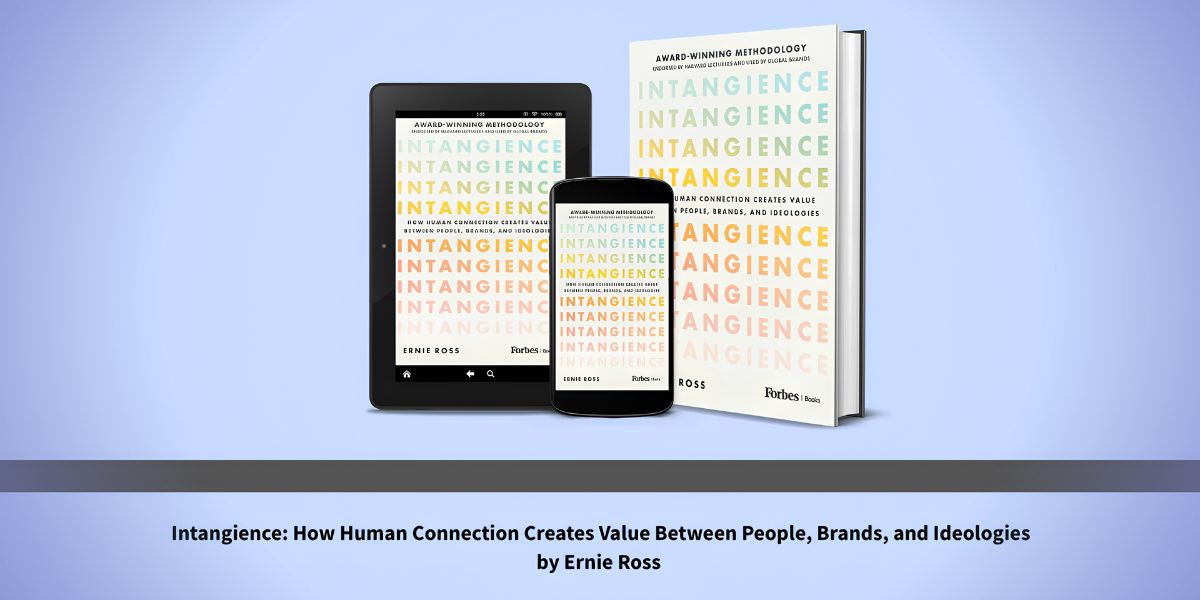
There are books that teach you a framework and books that change how you see the world, and the rarest ones do both simultaneously without you quite noticing the shift happening. Intangience by Ernie Ross belongs in that rare category. The word itself, a portmanteau of intangible and science, tells you everything important about what Ross is attempting: to take the invisible forces that drive human connection and subject them to the kind of rigorous, structured understanding that makes them not just observable but actionable. That ambition alone would make the book worth reading. The decades of real-world evidence Ross brings to support it make it genuinely essential.
Inside the Frameworks Ross Built
Reading this book produces a specific kind of intellectual excitement that is difficult to manufacture and impossible to fake. Ross writes like someone who has been living inside these ideas for so long that he has stopped seeing them as ideas and started seeing them as simply the way things work, and that confidence communicates itself to the reader in a way that makes the most complex concepts feel both credible and immediately useful. You find yourself reading about the Pillars of Purpose or the Currency of Conversation and thinking not about abstract theory but about specific relationships, specific campaigns, specific moments in your own professional life where understanding what Ross is describing would have changed everything about how you approached the problem.
The Real Stories Behind the Methodology
The stories he tells are where the book earns its most lasting credibility. Converting gang leaders through basketball. Rescuing a national brewery from foreign competition through the reactivation of cultural pride. Elevating the first female prime ministers and presidents across multiple Caribbean nations through campaigns built on emotional resonance rather than political calculation. These are not case studies polished for classroom consumption. They are accounts of real work done in real and difficult conditions, and the specificity of what Ross describes, what he noticed, what he changed, what happened as a result, gives the methodology a grounding that purely theoretical frameworks never achieve.
Why Intangible Values Shape Human Connection
What runs underneath all of it, through every chapter and every example and every framework the book introduces, is a conviction that Ross has clearly held for decades and that the book expresses with unusual clarity: that the most powerful thing any communicator, leader, brand, or human being can do is identify and activate the intangible values that actually drive another person’s decisions, because those values are where genuine connection lives and genuine connection is where genuine value is created. That insight sounds deceptively simple until you begin following its implications into every domain it touches, which turns out to be essentially all of them.
Intangience is certified by the United Nations-established University for Peace and has been taught to thousands of entrepreneurs and leaders worldwide, and you sense throughout the book why it travels so well across cultures and contexts. The principles Ross has identified are not Western, Caribbean, or industry-specific. They are human, which is exactly what a book called Intangience was always going to need to be in order to earn its own argument.
If you have ever sensed that the most powerful driver of human connection was something you could feel but never quite name, Intangience by Ernie Ross is the book that finally gives it a name and a framework you can actually use. Grab your copy on Amazon today and discover the hidden language that has been shaping every meaningful connection you have ever made or missed.