
Many leaders assume capacity problems are primarily time-management problems.
The usual response is to improve efficiency, optimize schedules, delegate more effectively, or install better systems. While those approaches can help, they often overlook a deeper issue: many professionals are attempting to manage far more than their attention, energy, and decision-making bandwidth can sustainably support.
For entrepreneurs, executives, and high-capacity professionals, the accumulation happens gradually. More commitments are added. More responsibilities are retained. More decisions require ongoing attention. Over time, the constant maintenance of work, possessions, communication, schedules, and operational complexity can quietly erode clarity and focus.
Lauren Craddock believes this issue extends beyond productivity.
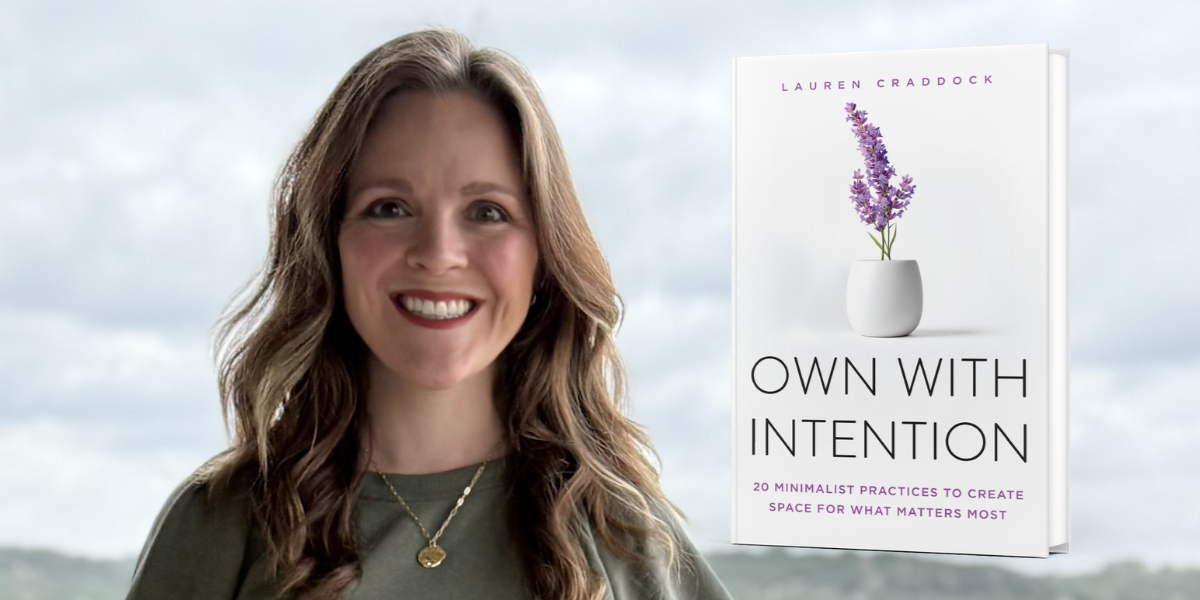
As the founder of Own With Intention and author of Own with Intention: 20 Minimalist Practices to Create Space for What Matters Most, Craddock teaches minimalism not as an aesthetic lifestyle trend, but as a practical framework for reducing unnecessary management. Her work focuses on helping people evaluate what they continually own, maintain, organize, monitor, and mentally carry so they can operate with greater intentionality.
For leaders responsible for teams, businesses, and families, that perspective has become increasingly relevant.
Decision Fatigue Is Not Limited to the Workplace
Leadership conversations often focus on strategy, execution, and performance, but many professionals underestimate the cumulative effect of constant decision-making across every area of life.
The issue is not simply major business decisions. It is also the steady stream of smaller choices competing for attention throughout the day. Unnecessary purchases create future maintenance. Overcommitted schedules create fragmented focus. Disorganized environments create friction. Excessive obligations reduce the margin needed for clear thinking.
Craddock argues that the things people manage are rarely neutral. They either support capacity or consume it.
That principle applies inside businesses as much as it does inside homes.
Organizations frequently discuss operational efficiency while overlooking personal operational overload. Leaders may streamline company systems while privately functioning inside environments filled with constant mental clutter, unresolved maintenance, and reactive decision-making. Eventually, the weight of managing too much begins to affect clarity, presence, and the ability to prioritize effectively.
Minimalism as an Operational Discipline
Minimalism is often misunderstood as personal preference or lifestyle branding, but Craddock approaches it more as an intentional filtering process.
The question is not how little someone can own. The question is whether what they manage aligns with what matters most.
For leaders, that framework can influence far more than physical possessions. It can shape meeting culture, communication habits, scheduling practices, purchasing decisions, team expectations, and even how attention is allocated throughout the day.
Many professionals continue adding responsibilities without regularly evaluating the long-term maintenance attached to them. Every commitment introduces ongoing management costs, even when those costs initially appear small. Over time, complexity compounds.
Craddock encourages people to examine not only what they acquire, but also what repeatedly demands their attention. In practice, that may involve simplifying workflows, reducing unnecessary obligations, narrowing priorities, or creating systems that reduce constant reactive decision-making.
The goal is not rigid control. It is greater intentionality.
Creating Capacity for Higher-Impact Leadership
High-capacity professionals are often rewarded for how much they can carry. Yet sustained leadership typically depends less on how much someone can hold and more on how clearly they can think, prioritize, and remain present under pressure.
That requires margin.
Craddock’s work resonates with leaders because it reframes minimalism as a capacity practice rather than a restrictive philosophy. By reducing unnecessary management, professionals can create more space for strategic thinking, meaningful work, stronger relationships, and clearer decision-making.
Her approach avoids perfectionism. The emphasis is not on building an idealized lifestyle, but on making intentional adjustments that support long-term sustainability in real life.
Through Own with Intention, Craddock offers readers practical ways to evaluate what is consuming their time, energy, space, and attention. In a business culture that often equates accumulation with success, her perspective introduces a different leadership question: not simply what should be added next, but what supports the direction and impact the business is desiring.
Learn More
Lauren Craddock is the founder of Own With Intention and author of Own with Intention: 20 Minimalist Practices to Create Space for What Matters Most, a book focused on helping people create more intentional lives by reducing unnecessary mental, physical, and operational overload.
Website: www.ownwithintention.com
Instagram: @ownwithintention
Facebook: Own With Intention
LinkedIn: Lauren Craddock