
Most founders in clinical services expand by adding locations. Dr. Deena Moustafa added a product line, and the reasoning behind it is a better lesson in category adjacency than most of what gets taught as one.
She founded Go Behavioral in 2018, delivering applied behavior analysis for children with autism and ADHD. In 2025 she launched Cozyino, a direct-to-consumer sensory-friendly and adaptive apparel brand. The two businesses share a founder, a team and an insight, and almost nothing else about how they make money.
That structure is deliberate, and it answers a problem every founder in professional services eventually runs into.
The constraint in a clinical services business
Clinical services scale with headcount. There is no version of an applied behavior analysis practice that grows without hiring more clinicians, and the market for those clinicians is the tightest it has ever been.
The numbers are stark. In 2015, there were 3,901 US job postings requiring board certified behavior analyst credentials. In 2025 there were 132,307, according to labour market analysis published by the Behavior Analyst Certification Board in January 2026. California alone accounted for fifteen percent of that demand, more than any other state, and California is where Moustafa’s business is largest.
Growing a services company into that market means competing for the same scarce people as everyone else, in the state where the competition is fiercest. Every founder in that position faces the same fork: raise prices, lower standards, or find a second engine.
Moustafa’s route to the third option came from the work itself.
An insight the services business could not monetise
Practitioners in her field spend years observing something that never appears on an invoice. Clothing was a recurring, daily source of distress in the households she worked with, and it was a design problem rather than a clinical one.
“My background as a BCBA, professor, and founder of Go Behavioral played a significant role in the creation of Cozyino,” she has said. “The brand was inspired by years of working directly with autistic and sensory-sensitive individuals and recognizing the need for clothing that combines comfort, function, inclusion, and style.”
Cozyino launched in August 2025 across four lines: a children’s range, Easy-Dress Adaptive Wear, Everyday Essentials, and Sleep and Calmwear. The construction specifics are the point of difference: printed rather than sewn-in labels, flat and seamless stitching, soft breathable fabric, and adaptive openings for independent dressing. Prices run roughly $15 to $65.
Commercially, it does what the services business cannot. It sells to a national audience without a clinician in the room, it carries no caseload, and its unit economics improve with volume rather than degrading with it. It is not an extension of the therapy business. It is a separate company built on the same observation.
In April 2026 she put both in front of the same audience, hosting CozyCon, an invitation-only sensory-friendly fashion and community event in Highland Park, Los Angeles, with partners including the sensory inclusion nonprofit KultureCity.
The discipline that runs through both
What is more instructive for other founders in regulated and credibility-sensitive categories is what Moustafa declines to do.
Asked for client stories to support a media feature, she turned the request down without being pushed. “While I would prefer not to share specific client stories, I can certainly provide general insights on how confidence, sensory comfort, and supportive environments can help children participate more successfully in activities,” she wrote, offering the general version instead.
That instinct shapes the commercial positioning of both companies. Go Behavioral describes its approach rather than its results: evidence-based, individualised, data-informed, delivered in homes, schools, clinics, community settings and virtually. Cozyino describes fabric, seams and closures rather than outcomes. Neither markets a promise, in a category where promising is easy and checkable.
Her own account of the through-line is simpler. “Through everything I do, whether running my company, teaching, or writing, my goal is always the same: to support families, empower professionals, and make sure no one feels alone in this journey.”
What the model is worth copying for
Moustafa is a board certified behavior analyst and, in her own words, holds “a Ph.D. in Special Education.” She is also an associate professor, the author of four books, and a consultant to schools and employers on neurodiverse workplace culture. The team behind both companies is multilingual, with practitioner training courses delivered in English, Arabic and German, and part of the operation runs out of Egypt.
The transferable part is not the apparel. It is the sequence. She built expertise, noticed a pattern the expertise gave her privileged access to, checked that the pattern described a purchase rather than a service, and then built the second company outside the constraint that limits the first.
Founders in professional services are usually told to productise their service. That is rarely what works, because a productised service is still a service. Moustafa productised the observation instead.
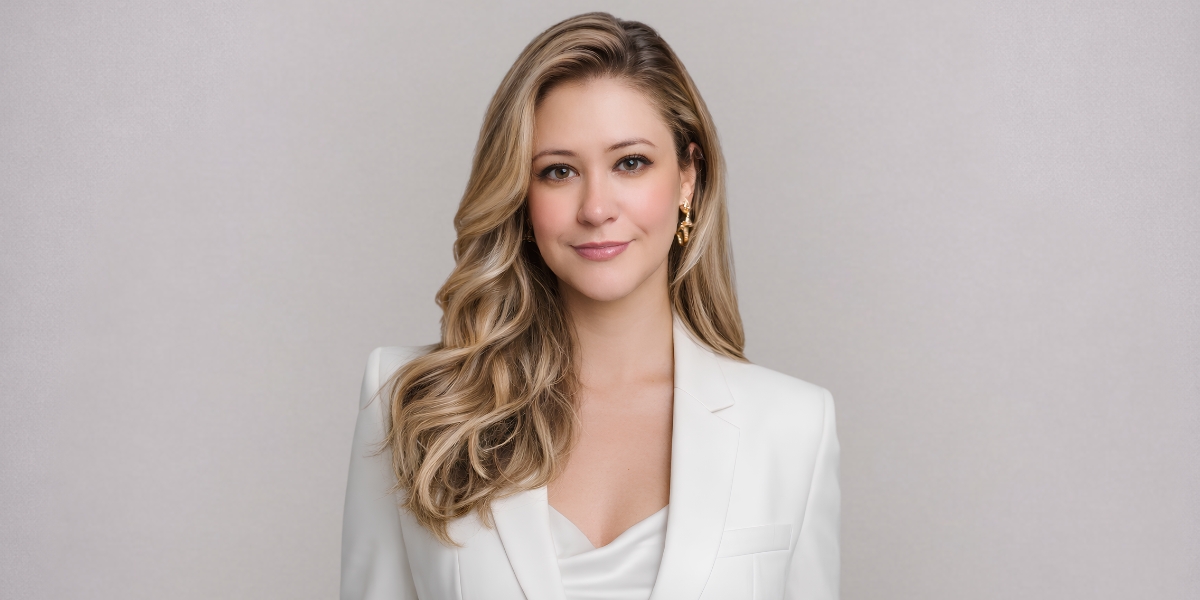
Dr. Deena Moustafa is the founder and CEO of Go Behavioral and the founder of Cozyino. More at gobehavioral.com and cozyino.com.
This article features branded content from a third party and is provided for general information only. It is not medical advice.