
Drive about two and a half hours north of Manhattan, and the traffic eventually gives way to hemlock forests, small lakes, and the particular quiet of the Catskills in off-season. Somewhere in the hills sits Big Hollow Green, a property that doesn’t fit neatly into any conventional real-estate category. Resort isn’t quite right. Private residence doesn’t land either. The clearest description is a working showroom for what its creators think the American home is about to become.
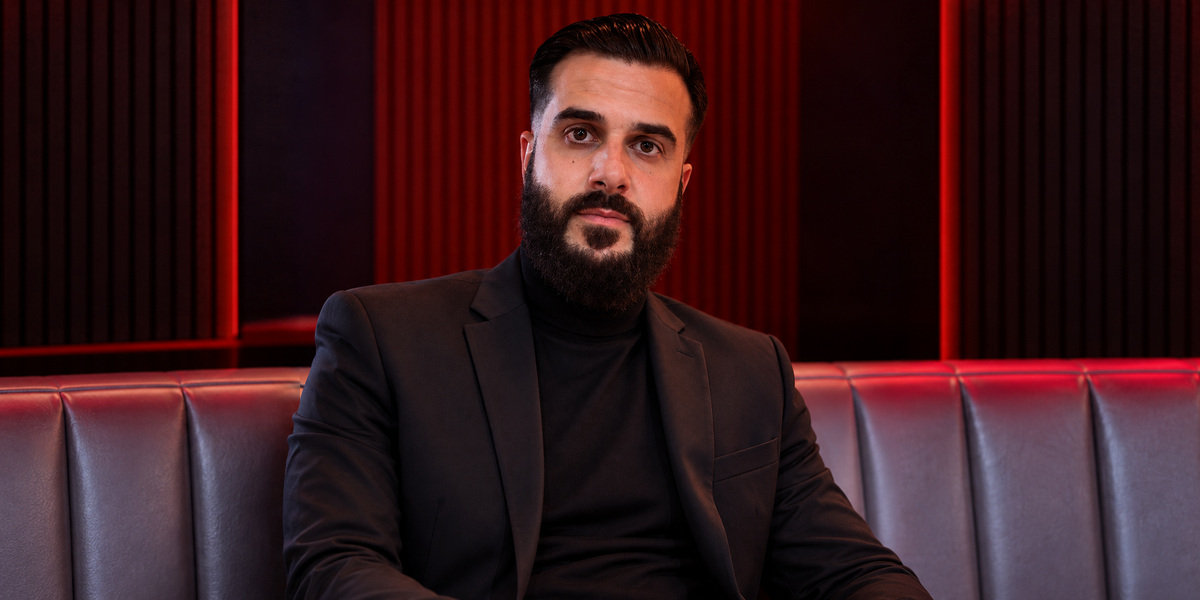
Big Hollow Green is the flagship location for TerraLux, the New York company trying to define a new category of modular home. Mayan Metzler, the firm’s founder and CEO, calls the structures Healing Homes. Each is engineered around a specific activity rather than a generic idea of daily life. Visitors come to the Catskills to stay inside one and get a physical sense of the concept.
Who Is Behind TerraLux?
Mayan Metzler launched Terra Lux with a straightforward critique of the way homes are normally built. A traditional house, in his view, sits static and underused. Its design targets a general concept of living rather than a specific one. Most square footage goes unused at any given moment. The structure rarely earns its keep beyond shelter.
Terra Lux reframes that equation. The company designs modular homes as discrete, purpose-built environments that an owner can assemble into custom ecosystems. Metzler has described the ambition in blunt terms. “The goal is to create spaces that actively support human biology, not just house it,” he has told interviewers.
Touring the Modular Homes Catalog
Ten variants currently anchor the TerraLux product line. Sleep, Focus, Recovery, Creator, Performance, Longevity, Kitchen, Garden, Social, and Live each function as a distinct module tuned to a specific human activity. The idea is to let owners assemble a small constellation of environments rather than compress every function into one catch-all house.
A Sleep Home is built around rest. Creator modules operate as content production studios. Recovery builds host wellness sessions with visiting practitioners, and Performance Homes handles physical training. The Garden and Kitchen modules round out the domestic functions, the Social one anchors gatherings, and the Live variant serves as a more general daily hub.
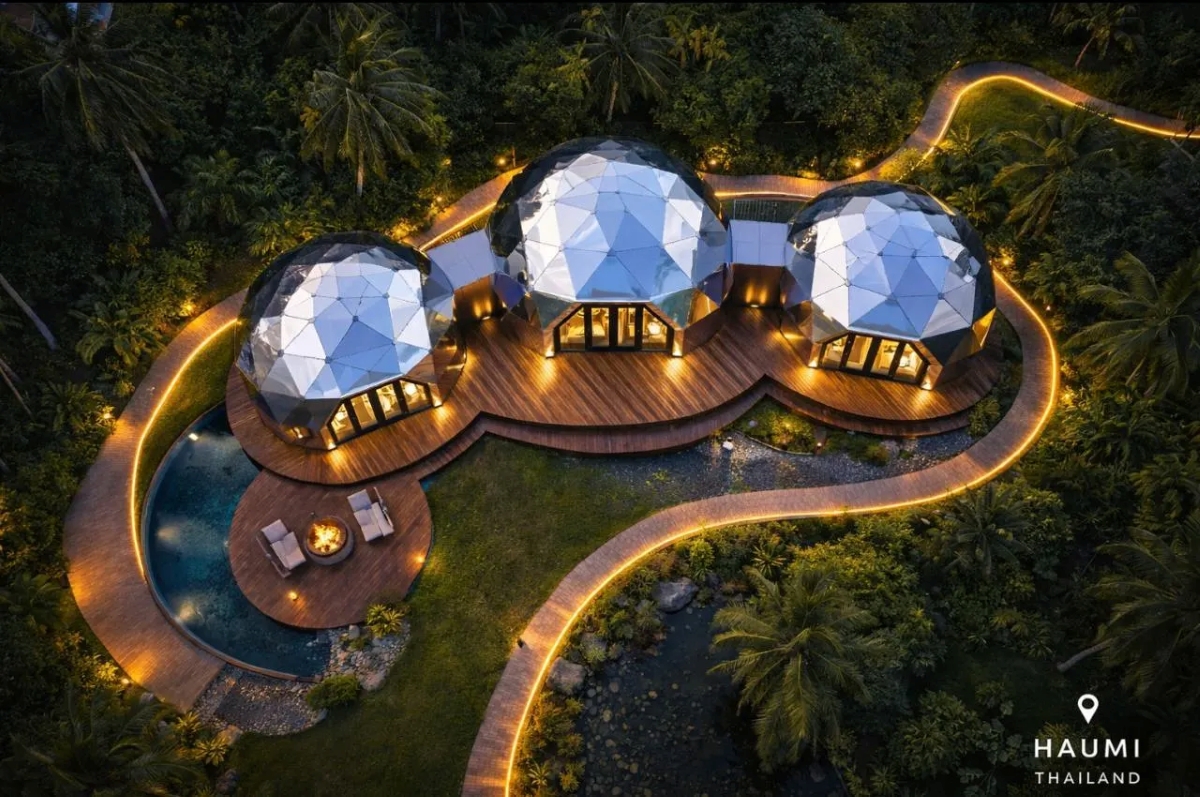
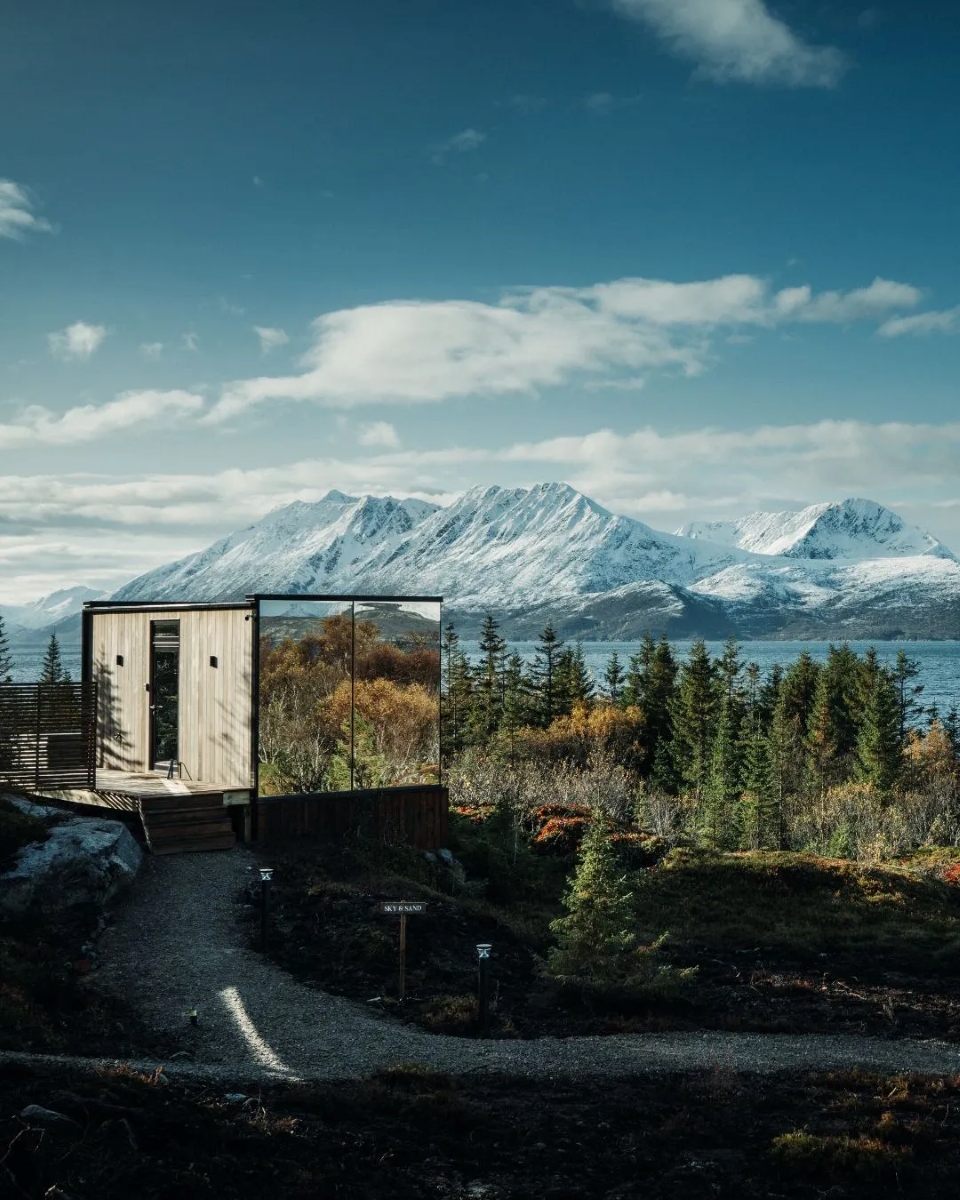
Architecturally, the lineup stays intentionally eclectic. No single design language runs through the product line. Geodesic domes filled with tropical greenery share catalog space with mirror-clad alpine cabins that fade into their surroundings. Earth-integrated structures carpeted in living vegetation sit alongside minimalist glass micro-homes and curved modular cabins built for slow living principles.
Where Wellness Meets Architecture
Every TerraLux structure shares a common design framework called Homes That Heal. The framework treats building systems that conventional construction ignores as primary design elements. Air filtration comes standard, lighting tracks circadian rhythms, and the water runs filtered and mineralized. Acoustics follow intentional design rather than accident, electromagnetic exposure stays low by engineering choice, and integrated planting beds handle both aesthetics and food production.
None of this is unprecedented on its own. What sets TerraLux apart is the refusal to treat wellness features as premium upgrades. A Terra Lux modular home arrives with the baseline installed, and owners can add more advanced systems depending on how they intend to use the space.
Can a House Pay for Itself?
Because each module is purpose-built, each can also function as something beyond a private residence. Take the Creator Home. With its content studio configuration, owners can rent it to local freelancers, agencies, or independent filmmakers looking for a shoot location. Recovery modules become a venue space for visiting practitioners with their own book of clients. Sleep Homes, engineered for rest conditions and wrapped in photogenic exteriors, fit naturally into the premium short-term rental market.
TerraLux frames this as a shift from property-as-cost-center to property-as-active-asset. That shift has a certain resonance at a moment when housing has become the biggest line item in most household budgets. A structure that can earn alongside its residential use changes how the basic math of ownership works.
The Digital Side of Terra Lux
The physical product doesn’t stand alone. Terra Lux also runs a digital platform, the Spatial Network, which functions as a design studio in the browser. Before committing to a build, an owner can drop Healing Homes onto a representation of their property, test different layouts, and see how the finished ecosystem might look. The tool pulls the planning phase forward, giving buyers something tangible to iterate on rather than static renderings.
The membership tier is where the platform converts from an interesting tool to an ongoing relationship. Members get preferred pricing on new units, early access when fresh variants launch, partner benefits across Terra Lux’s network of collaborators, and a direct line into the community of other owners. Metzler has positioned the membership as an entry point into an ecosystem, partly because most owners end up expanding their footprints over time.
What Comes After the Catskills
Big Hollow Green is the first stake in the ground. The longer view, according to Metzler, is a broader network of Terra Lux properties in different climates and regions, each assembling its own set of Healing Homes suited to how people in that place actually want to live.
Where that vision lands as a matter of residential real estate is still an open question. Modular construction has had false starts before. What feels different about TerraLux is the insistence on specific use cases rather than generic prefab, and the implicit argument that the homes Americans buy next should do more than serve as backdrops to everything else.
Anyone curious to see these modular homes in person can book a time at Big Hollow Green. The TerraLux modular homes website covers the broader catalog and the current state of the Spatial Network. For more information on TerraLux visit their website
- Email Mayan Metzler: mayan@GermanKitchenCenter.com Call: (347) 992–0410
- To read the full interview with Marco Derhy and Mayan Metzler, visit the source of this article.
- Media – Contact : Derhy Enterprises 1(310) 613-2773