

By: Catalina Maya
For Steven Wayne Davis, the end of military service did not mark the end of the war. Long after hanging up his Army uniform, the memories, responsibility, and unanswered questions followed him into civilian life. His story is not only about what happens on the battlefield, but also about what happens after the homecoming when veterans are expected to reintegrate into a system unprepared to support them quietly.
As an Army Nurse Corps officer deployed to Baghdad in 2004 and 2005, Davis worked in a combat-zone emergency room where life and death were separated by seconds. He witnessed extraordinary courage from young servicemembers who relied on teamwork and instinct to survive situations most civilians will never experience. Those moments stayed with him, carefully recorded in journals and etched into his nervous system.
What haunted him most, however, was not combat itself. It was what happened after.
After leaving active duty, Davis continued his nursing career in civilian hospitals, only to discover how little value was placed on military medical experience. He faced unemployment, underemployment, and dismissive attitudes that left him questioning how younger veterans with fewer credentials were expected to survive.
“If I was being turned away,” Davis reflects, “what chance did they have?”
While working in civilian emergency rooms, Davis began treating veterans who were struggling financially, emotionally, and psychologically. Many arrived after suicide attempts. Some did not survive. Comforting families shattered by loss, one encounter changed his life when a grieving relative demanded, “Do something so other families don’t have to go through this.”
That moment sent Davis back to his journals.
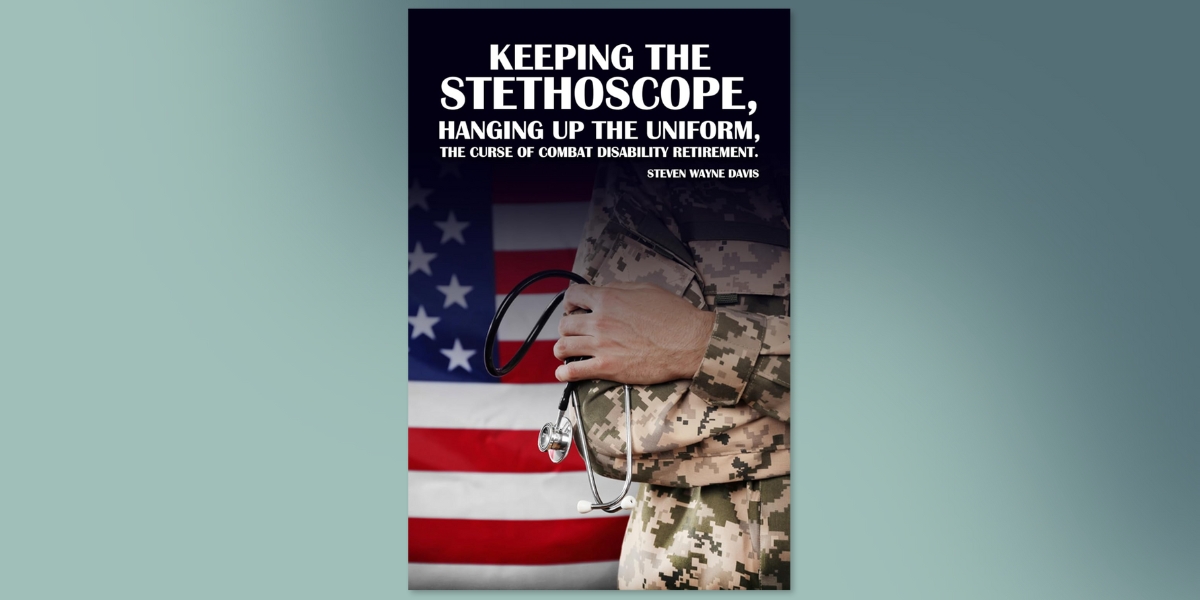
Writing Keeping the Stethoscope, Hanging Up the Uniform became an emotional battlefield of its own. Revisiting trauma triggered intense physical reactions, sweating, shaking, and moments when the words simply would not come. The book went through more than twenty drafts as Davis struggled to balance honesty, responsibility, and healing.
Yet the writing process also gave him clarity. Returning to his experiences helped him rediscover his voice and purpose. “This book brought something to the surface,” he says, “a way to help veterans and help society understand them.”
At the core of the book is a largely overlooked policy crisis affecting combat-disabled veterans. Those medically discharged before completing 20 years of service lose their earned military retirement pay dollar for dollar when they receive VA disability compensation. Often called the “wounded veterans tax,” the policy has no civilian equivalent and leaves many families financially devastated.
Davis believes this financial strain contributes directly to veteran suicide. “When people say ‘thank you for your service,’ it doesn’t pay the bills,” he says. “It doesn’t stop the despair.”
He calls for the immediate passage of concurrent receipt legislation, allowing veterans to receive both their earned retirement pay and disability compensation, a reform promised nearly two decades ago but still unrealized.
Transitioning to civilian life often strips veterans of identity, income, and community all at once. Symbolic gestures of appreciation frequently replace meaningful inclusion, leaving many veterans isolated and unseen. For some, the outcome is homelessness, fractured families, or silent suffering. The lack of adequate support systems further exacerbates these challenges, making it difficult for veterans to find their footing in a world that doesn’t fully understand their sacrifices. As a result, many face a lifetime of struggles, with little recognition of the true cost of their service.
Steven Wayne Davis is more than a former Army nurse. He is a husband, a father of two, an EMT, an athlete, and a lifelong caregiver. Today, his mission extends beyond medicine to advocate for policy change and to ensure veterans are supported long after their service ends.
“This is not about politics or budgets,” Davis says. “This is about saving lives.”
To learn more about Steven Wayne Davis, his book, and his advocacy efforts, visit:
https://keepingthestethoscopehanginguptheuniform.com/