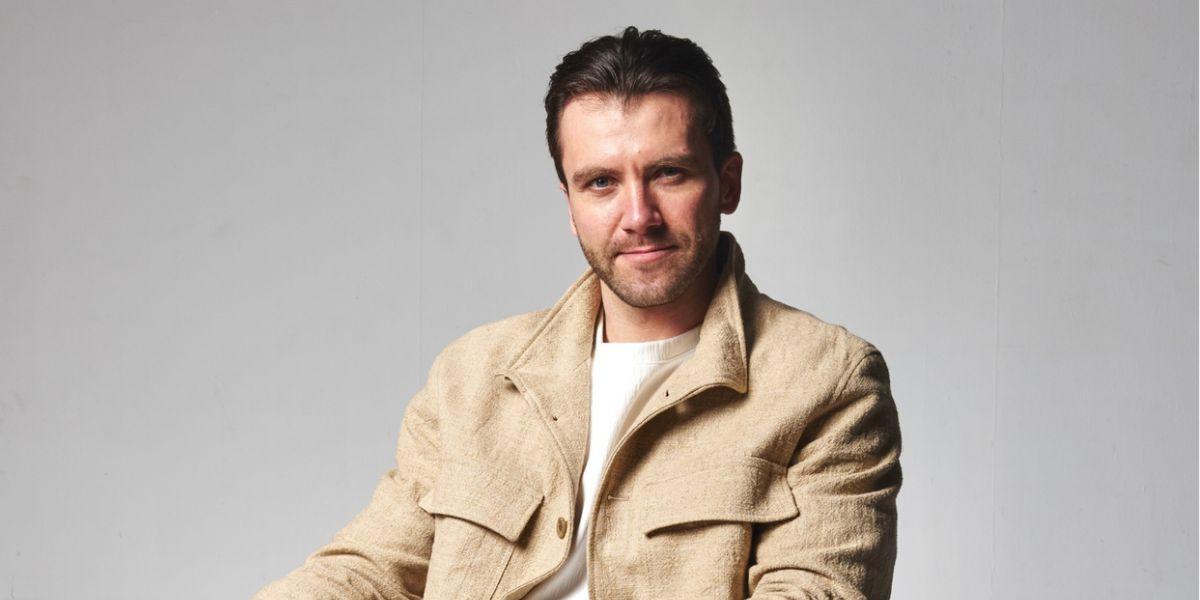

Through Big Growth Group and RemoveTheFounder.com, Romans Ivanovs is helping agency founders build businesses that can grow without depending on them for every decision.
A marketing agency can grow its revenue, hire more employees and take on larger clients while becoming increasingly dependent on one person: its founder. For Romans Ivanovs, co-founder of Big Growth Group and RemoveTheFounder.com, that dependence is one of the biggest obstacles facing agency owners, particularly as artificial intelligence changes how marketing services are delivered.
Ivanovs believes the next three to five years will force agencies to reconsider how they operate, what clients pay them for and how much responsibility founders should carry. His work focuses on helping agency owners build the leadership teams and delivery systems needed to grow without remaining involved in every client issue or operational decision.
Why Agency Growth Doesn’t Always Mean Founder Freedom
Ivanovs came to this conclusion through his own experience building businesses. After starting in executive coaching, he established a boutique travel agency and later co-built an eCommerce marketing agency.
Those ventures exposed him to a problem familiar to many agency owners. A founder builds a team to handle an increasing workload, but important decisions, client concerns and unexpected problems continue to find their way back to the person who started the business.
Adding employees may increase capacity without reducing that dependency. In some cases, growth introduces more decisions for the founder to make rather than fewer.
Ivanovs argues that the usual solutions often fall short. Hiring an operations manager or documenting standard procedures can help, but neither necessarily changes how decisions are made or how responsibility is distributed.
Through Big Growth Group, he approaches the issue through three connected areas: operational systems, founder leadership development and alignment between an agency’s services and its ability to deliver them.
The distinction matters because an agency can have documented processes while still requiring its founder to approve important decisions. Similarly, a capable leadership team may struggle if the business sells services that its delivery structure cannot consistently support.
AI Is Changing the Work, but Not the Need for Leadership
The growing use of artificial intelligence introduces another challenge for agencies trying to scale.
AI tools can reduce the time required for research, content production, reporting and other recurring tasks. For smaller agencies, that creates the possibility of handling more work without expanding their teams at the same rate.
But Ivanovs cautions against treating automation as a substitute for a functioning business.
“If your processes are a mess and nobody knows who owns what, AI won’t fix that,” he says.
His point is that technology works within the structure an agency already has. When responsibilities are unclear or delivery is inconsistent, introducing additional automation does not necessarily address the underlying problem.
For founders, the more important question becomes how to organize their businesses around the capabilities these tools provide.
Ivanovs expects AI to take on a greater share of execution over the next several years. As that happens, he believes clients will place more importance on an agency’s judgment, understanding of their business and ability to produce meaningful results.
That could change what separates one agency from another. When more providers have access to similar technology, the ability to execute routine work may become less of a competitive advantage. Understanding what a client actually needs, choosing the right strategy and taking responsibility for the outcome may carry greater weight.
Building Agencies That Can Operate Beyond Their Founders
Ivanovs and his team have worked with more than 60 seven-figure agencies, including Carbon Box Media, Magnet Monster, OKTOBER and GROWTHUB.
Their work centers on helping founders develop businesses where teams can take ownership of delivery and make decisions without constant intervention.
That requires more than delegation. Employees need to understand what they are responsible for, what successful work looks like and when a decision genuinely requires the founder’s involvement.
Founders, meanwhile, must develop the leadership skills to establish expectations, hold teams accountable and give others room to operate.
There is also a commercial component. An agency’s service offering needs to match what its team can reliably deliver. Growth becomes harder to manage when every new client introduces a different operating model or requires the founder’s personal attention.
For Ivanovs, these are not separate issues. Leadership, operations and delivery influence one another, and weaknesses in any one area can limit an agency’s ability to scale.
What the Next Five Years Could Mean for Agency Owners
The agencies that succeed in an AI-driven market may not necessarily be those with the largest teams or the greatest number of automated processes.
Ivanovs sees a future in which smaller, well-organized teams can produce more while agency leaders devote greater attention to strategy, client relationships and business development.
Reaching that point, however, requires founders to confront how much of their current business depends on their individual involvement.
An agency that cannot make routine decisions without its owner faces a different challenge from one whose leadership team can operate independently. AI may improve productivity in both, but it does not automatically eliminate that difference.
Through Big Growth Group and RemoveTheFounder.com, Ivanovs is working with founders who want to address that dependency while preparing for the changes ahead.
His central argument is that building a successful agency over the next five years will involve more than adopting new technology. It will require designing a business in which capable people, clear responsibilities and consistent delivery allow growth to continue without the founder managing everything personally.