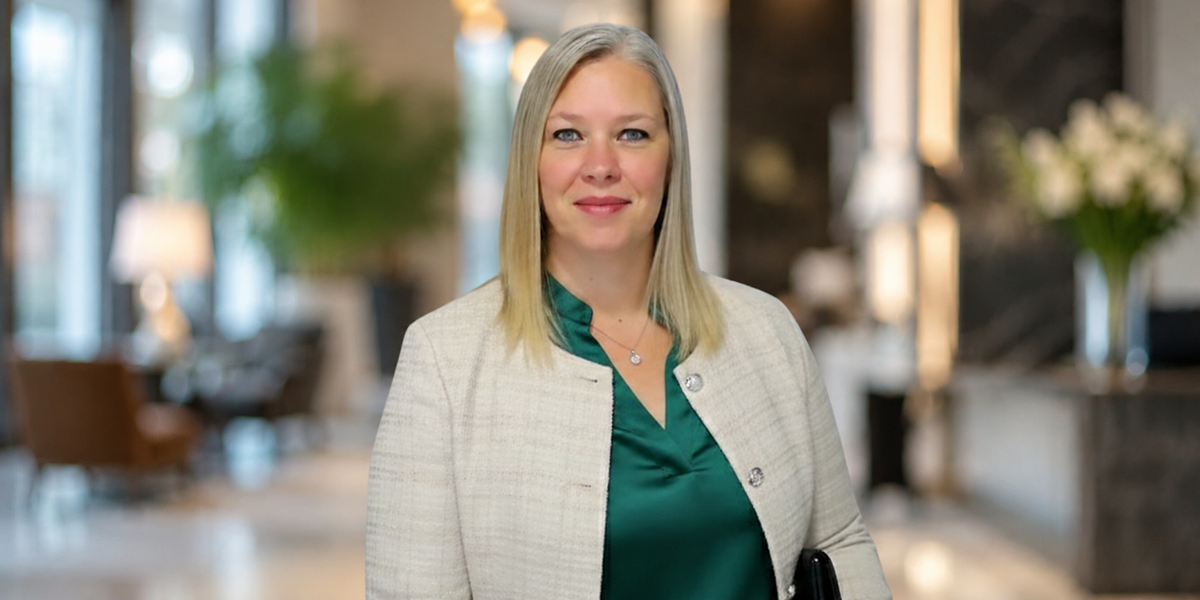

Dr. Amanda Fernandez, a Professional Certified Coach (PCC), Board Certified Coach (BCC), and Doctor of Education, and the founder of Waypoint North, has sat across from many leaders who are not moving. Not failing. Not moving. Most leadership development, she says, doesn’t know how to see the difference.
She presents three examples:
The First Leader: A leader sits on a decision for months, calling it diligence: more buy-in, another round of options, one more look at the data, a board conversation that keeps sliding to “next month.” Every reason sounds reasonable. Together, they add up to a decision that never arrives. What’s underneath isn’t a lack of information. It’s the belief that a good leader has all the right answers, and that a wrong decision isn’t a normal cost of the job. It’s a referendum on whether she belongs in the role at all. Gathering more input was never really about the data. It was a way of postponing the moment the choice became hers.
The Second Leader: Another leader, a man who has run successful teams for over a decade, sits in meetings where his actual workload, constraints, and disagreements go unspoken. He nods. He absorbs. He vents to no one, because venting would mean admitting there’s something to vent about. The toll is no longer quiet enough to ignore. He used to enjoy this work. Now he dreads the meetings on his calendar days in advance, performing an agreement he doesn’t feel. He doesn’t feel like himself in that room anymore. He can trace the rule if you ask him to: don’t raise your head above the parapet. He learned it early, watching someone else pay for speaking up, and he’s been fluent in that silence ever since. It cost him nothing for years. Then it started costing him the parts of the job he used to love.
The Third Leader: The third leader coaches everyone else on their careers except her own. She watches colleagues step into roles she wanted first. She never applies, never raises her hand. Ask her why, and she’ll say the timing isn’t right. Ask a layer deeper, and something more honest surfaces: if she puts herself forward and gets passed over, that rejection won’t just sting, it will confirm a quiet suspicion she’s carried about herself for years. So she removes herself from consideration before anyone else can. The envy she feels watching others move past her isn’t petty. It’s grief, for a career she keeps not letting herself pursue.
Three different people. Three different symptoms. One identical architecture underneath.
Protective Stagnation: The Survival Strategy That Keeps Leaders Stuck
Dr. Fernandez calls this protective stagnation.
In session after session, this is what fear-based thinking actually does, she explains. It doesn’t just make people anxious. It hinders their ability to take risks, make confident decisions, and pursue the goals they say they want most. That’s the real cost, and it’s rarely named clearly enough for a client to see it happening in real time.
Fear, the freeze response, and catastrophic thinking are well-documented in research on stress and cognition. What years of coaching leaders across engineering, education, finance, and executive leadership have sharpened, for Dr. Fernandez, is a way to name this pattern precisely enough that it becomes workable. It’s the exact material she’ll be teaching coaches this September at the 2026 ICF Sacramento Conference in her session “When Fear Is in the Room: A Coach’s Toolkit for Moving Clients from Paralysis to Forward Motion,” because, she says, most coaches in the profession have watched this pattern and reached for the wrong tool.
The wrong tool is more pressure: tighter deadlines, blunter feedback, someone above them saying, more or less, just do it. This doesn’t work. Stagnation looks like a motivation problem from the outside. It rarely is one. What’s actually happening, below conscious strategy, is that the brain has classified visibility, or a wrong decision, or a direct conversation, as dangerous. Not inconvenient. Dangerous. That reaction has a name: a freeze response, triggered the moment a perceived threshold gets crossed. Underneath it sits what Dr. Fernandez calls protective logic, a survival strategy that made sense once, in a context that no longer exists, and never got the update. No amount of external pressure talks a nervous system out of a threat it has already decided is real.
The language a leader uses to describe their stuckness is never incidental, Dr. Fernandez notes. When someone says they “need more buy-in” before deciding, or they’re “not ready yet” to apply, that phrase is protecting them from the truer sentence underneath: I’m afraid of what it will mean about me if this goes badly. The first real move in the work, she says, is naming that fear specifically, not the polished version, the actual thing. Vague dread keeps a person stuck indefinitely. A named, concrete fear is something a person can work with.
Once the fear has a name, the next move is reframing what’s at stake. Most of these leaders, Dr. Fernandez has found, operate in verdict thinking: every outcome becomes a referendum on their worth. A decision that goes wrong isn’t information; it’s proof. A rejected application isn’t data; it’s confirmation. The shift she coaches toward is a verdict to experiment: not “what does this say about me,” but “what will this teach me.” It sounds small. In practice, it’s the difference between a leader who can tolerate trying and one who can’t.
Decatastrophization: The Coaching Method That Doesn’t Dismiss Fear
The tool Dr. Fernandez uses most for fear itself is decatastrophization, and she’s precise about what that actually means, since it gets flattened into “think positive” more often than it should be. Decatastrophization isn’t telling a client their fear is unfounded. It’s separating the story the brain is generating about what will happen from what is actually, evidentially, likely to happen, without dismissing what they’re feeling. The leader who won’t decide isn’t wrong that a bad decision has real consequences. She’s wrong that those consequences prove something permanent about her competence. Those are different claims, Dr. Fernandez says, and most people have never been asked to tell them apart. She’s careful to name the boundary clearly: this is coaching, not therapy. The work isn’t treating the origin of the fear. It’s working with how that fear is showing up right now, in this decision, this meeting, this application that still hasn’t been submitted.
The leader who feels like a convincing performance of himself hasn’t tested the belief that speaking up would make things worse. Not once, not in this role, not with this team. The work with him was never about assertiveness training, Dr. Fernandez explains. It was one sentence, said out loud, low stakes enough to survive and honest enough to matter. That’s the whole intervention. It sounds too simple to work. In practice, it is the hardest thing most clients are asked to do.
This work is personal for Dr. Fernandez, not theoretical. She has navigated her own version of it, in what she’s come to call her chrysalis of crisis, and what she now builds entire frameworks around is this: self-belief isn’t a feeling to wait for. It’s a decision made while the evidence is still incomplete. Her coaching practice serves leaders across industries, including education, nonprofit, engineering, and beyond.
The Future of Conscious Leadership: Closing the Fear Gap
Organizations lose an enormous amount when this pattern goes unaddressed, Dr. Fernandez argues, not because these leaders are underperforming on any review, but because the version of them capable of applying, deciding, speaking, and growing is sitting one conversation away from the version currently going through the motions. That gap isn’t a training gap. It’s a fear gap. And fear gaps don’t close because someone was told to be braver. They close because someone learned, specifically and repeatedly, that the thing they were protecting themselves from was survivable all along.