
In an era where deepfakes, synthetic media, and manipulated footage have become disturbingly accessible, the question of broadcast authenticity has moved from niche technical concern to mainstream urgency.
Whether the content in question is a live news feed, a recorded video statement, a streaming event, or a corporate announcement, audiences and regulators alike are demanding higher standards of verification. Proving that a broadcast is genuine — unaltered, accurately sourced, and transmitted without tampering — requires a combination of technical tools, institutional processes, and informed viewing habits.
Why Broadcast Authenticity Matters More Than Ever
The proliferation of manipulated media has created a trust deficit that affects journalism, public safety, financial markets, and legal proceedings. A fabricated emergency broadcast can trigger mass panic. A doctored corporate statement can move stock prices. A synthetic video of a public figure can destroy reputations before corrections ever reach the same audience.
Beyond the dramatic cases, everyday misinformation quietly erodes public confidence in legitimate institutions. Understanding how authenticity is established — and how to verify it — is now a fundamental digital literacy skill.
Start With the Source
The first and most reliable indicator of broadcast authenticity is the originating source. Verified broadcasts come from known, accountable entities: licensed broadcasters, registered media organizations, official government channels, or credentialed journalists with established publication histories.
When a broadcast surfaces on social media without clear attribution, the absence of a verifiable source is itself a red flag. Legitimate broadcasts are traceable. They carry network watermarks, chyrons identifying the outlet, and metadata linking them to a specific time, location, and production chain. Anonymous or obscurely sourced video content should always be treated with skepticism until independent verification is established.
Examine the Metadata
Every digital file carries metadata — embedded information about when it was created, what device or system produced it, and how it has been modified since its origin. For broadcast content, metadata examination is one of the most direct routes to authenticity verification.
Forensic tools used by professional fact-checkers and media authentication services can read this embedded data and identify inconsistencies. A video claiming to have been recorded in one city at a specific time, but whose metadata places it in another location or on a different date, is almost certainly manipulated or misrepresented. Metadata alone does not guarantee authenticity, but discrepancies in it are strong indicators of tampering.
Use Reverse Image and Video Search
For still images extracted from broadcasts, reverse image search tools such as Google Images or TinEye can determine whether footage has been previously published in a different context. A photograph presented as breaking news that actually originates from an event years earlier will surface through these searches.
For video content, tools like InVID and WeVerify allow frame-by-frame analysis and reverse search capabilities specifically designed for broadcast verification. These platforms are widely used by professional fact-checkers and investigative journalists to establish the original context of circulating footage.
Cross-Reference With Independent Coverage
Authentic broadcasts of significant events rarely exist in isolation. If a major event genuinely occurred and was captured on video, multiple independent sources will typically have covered the same event from different angles, platforms, and perspectives.
Cross-referencing a suspect broadcast against coverage from unrelated outlets is one of the most effective manual verification techniques available. If a broadcast claims to document a specific incident but no other outlet, eyewitness account, or official record corroborates its occurrence, that absence of corroboration is meaningful. Authentic events leave multiple evidentiary trails.
Look for Digital Watermarks and Authentication Certificates
Professional broadcast organizations increasingly embed digital watermarks into their content — invisible markers that persist through compression, re-encoding, and re-uploading. These watermarks can be read by authentication tools and traced back to the originating broadcaster, establishing provenance even after a video has circulated widely.
Beyond watermarks, content authentication standards such as the Coalition for Content Provenance and Authenticity (C2PA) are gaining adoption across major media platforms and camera manufacturers. C2PA-compliant content carries a cryptographic certificate that records the complete chain of custody from capture to publication. When a broadcast carries this certification, its authenticity can be verified by any compatible reader without requiring access to the original production files.
Evaluate the Visual and Audio Forensics
Synthetic media and deepfakes often leave subtle but detectable artifacts. Trained analysts look for inconsistencies in lighting direction, unnatural blinking patterns, audio that does not perfectly sync with lip movement, compression artifacts concentrated around facial features, and background elements that behave in physically implausible ways.
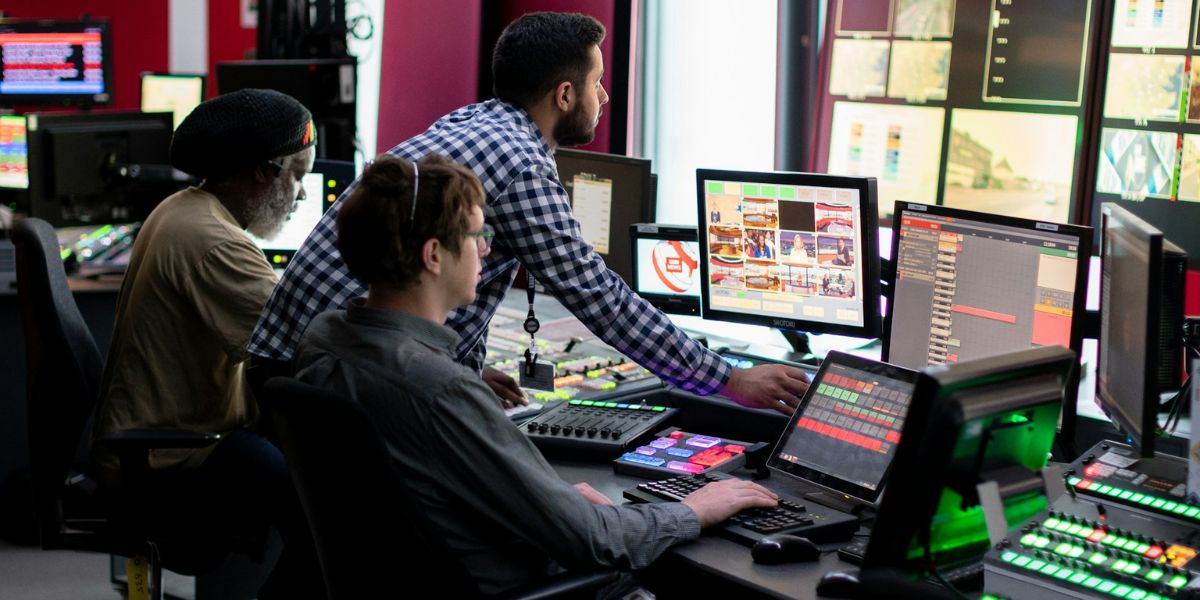
AI-based detection tools have matured significantly and are now capable of identifying generated or manipulated media with high accuracy. Organizations operating in sectors where broadcast integrity is critical — including compliance monitoring, media auditing, and regulatory oversight — routinely deploy these tools as part of their verification workflows. Compliance-focused platforms, like broadcast monitoring services, play an increasingly important role in this ecosystem by providing systematic verification infrastructure that individual viewers cannot replicate manually.
Institutional Verification and Third-Party Audits
For high-stakes broadcasts — courtroom evidence, regulatory submissions, financial disclosures, or election-related media — institutional verification processes add a formal layer of authentication beyond what individual tools can provide. Certified forensic examiners, court-recognized media authentication services, and accredited fact-checking organizations offer documented verification that carries legal and professional weight.
Third-party audits of broadcast content are also becoming standard practice in advertising compliance, where brands and regulators need confirmation that specific content aired at specific times on specific platforms — exactly as contracted and without unauthorized alteration.
Educating the Audience
Technology alone cannot solve the authenticity problem. Media literacy education equips general audiences to apply basic verification instincts before sharing or acting on broadcast content. Healthy skepticism about emotionally charged footage, attention to source credibility, and the habit of seeking corroboration before drawing conclusions are behaviors that reduce the spread of manipulated media at the audience level.
Proving a broadcast is genuine is no longer a task reserved for specialists. With the right combination of tools, habits, and institutional frameworks, verification is achievable — and increasingly, it is expected.