
By Natalie Johnson
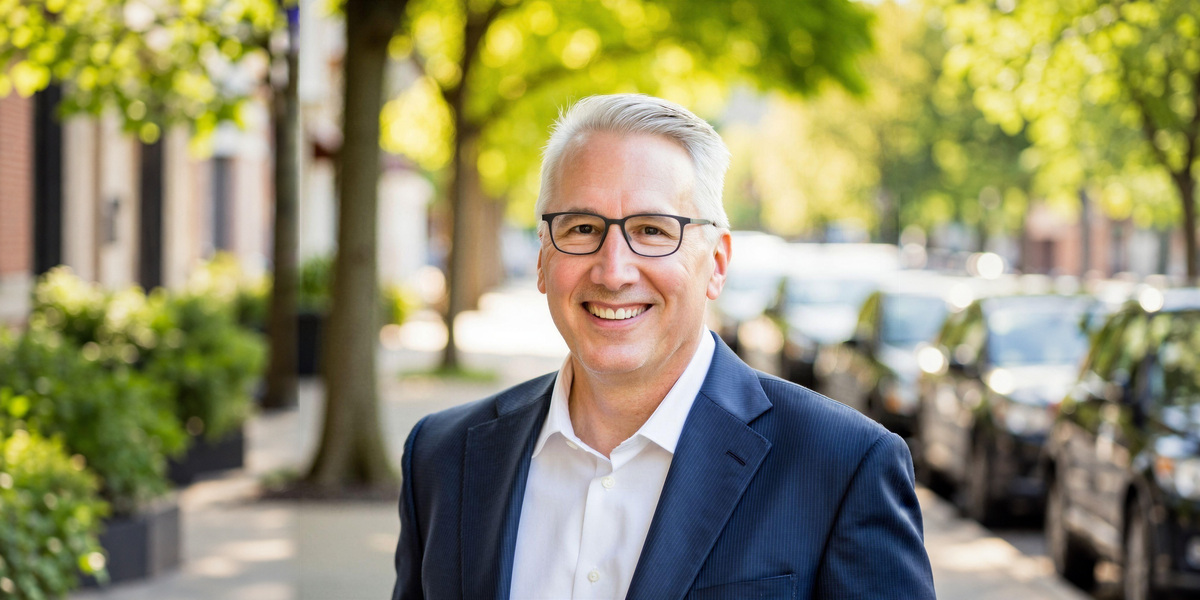
Most leaders facing uncertainty reach for more strategy: better frameworks, clearer roadmaps, tighter execution plans. The leaders who actually hold steady are not the ones with the most sophisticated plans. They are the ones with the clearest, most honest relationship with themselves. Richard A. Hinton, founder of Richard A. Hinton LLC and executive coach with over two decades of people leadership experience, has seen this pattern play out across industries and org sizes without exception. “Most struggling leaders are not short on strategy,” Hinton says. “They are short on themselves.” That is the one thing. Self-trust. And everything else flows directly from it.
The Only Foundation That Does Not Crack
The Economic Policy Uncertainty Index is at its highest level in three decades. Stability is not returning. And the leaders who built their confidence on external conditions are the ones who collapse when those conditions shift.
The leaders who do not collapse share one defining characteristic: a grounded, honest relationship with who they are, what they know, and what they do not. That is self-trust. Not blind confidence. External conditions did not build it. Which means external conditions cannot break it. It is also the one thing most leadership development programs never actually build.
Hinton points to his own decision to leave a familiar career path and launch his firm. What kept him moving was not certainty about outcomes. It was trust in himself. “Uncertainty isn’t the challenge anymore,” he says. “It’s the condition. The leaders still waiting for things to stabilize are going to be waiting a long time.”
Your Team Already Knows. You Are Just the Last to Find Out.
By the time most leaders notice disengagement, it has been building for months. The first sign is rarely dramatic. It is the meeting where questions stop appearing. Where pushback disappears. Where no one volunteers an idea. Leaders misread that silence as focus. It is withdrawal.
Only 20% of employees globally are currently engaged. Four out of five people are physically present and mentally somewhere else. In a lean team, one disengaged person is not a rounding error. It is a structural problem.
“When people get quiet in rooms where they used to speak up, something is wrong,” Hinton says. “And leaders are typically the last to find out that their teams already knew the truth.” What a leader thinks about themselves shows up in the room before they say a single word. Leaders account for roughly 70% of the variance in team engagement. Transparent communication alone makes employees four times more likely to trust their leader. Not a restructure. Not a new incentive plan. Honesty.
You Did Not Build a Culture. You Kept People Busy.
At the early stage, fast movement and shared mission can mask serious people problems for months. It feels like cohesion. Hinton is direct about what it actually is. “Leaders confuse everyone moving fast together for culture,” he says. “It’s not. It’s adrenaline. And the moment the sprint slows, you find out whether you built a culture or just kept people busy.”
The problem is timing. Leaders treat people leadership as something to build later. By the time later arrives, the patterns are set. The first 10 to 30 hires establish the cultural norms every subsequent hire absorbs and reinforces. Trust erodes quietly. It breaks loudly. Fixing culture at scale costs significantly more than building it right from the start.
“Build your culture like it’s your balance sheet,” Hinton says. “Because it is. And just like your balance sheet, ignoring it doesn’t make the problem smaller.”
The Audit Most CEOs Have Never Done
Companies with the fewest trust concerns deliver shareholder returns nine percentage points higher than those with the most, according to PwC. That gap has a dollar amount attached to it. Most organizations have not calculated it yet. But it starts and ends in the same place every time. The leader.
Self-awareness is not a soft skill. It is the precondition for every hard outcome a CEO is trying to drive. The leaders who win in uncertainty are not the ones with the best information or the tightest strategy. They are the ones who know who they are when things stop going their way. That clarity is what their teams feel. That is what people follow.
Hinton’s message to CEOs is direct: “Start with an honest audit of yourself. Not your team. Yours. Because what you don’t see about yourself, your team already has. And it is already costing you.”
Follow Richard A. Hinton on LinkedIn for more insights on leadership clarity, people strategy, and building the organizational cultures that hold up when conditions do not.