
By: Marcy Paulson
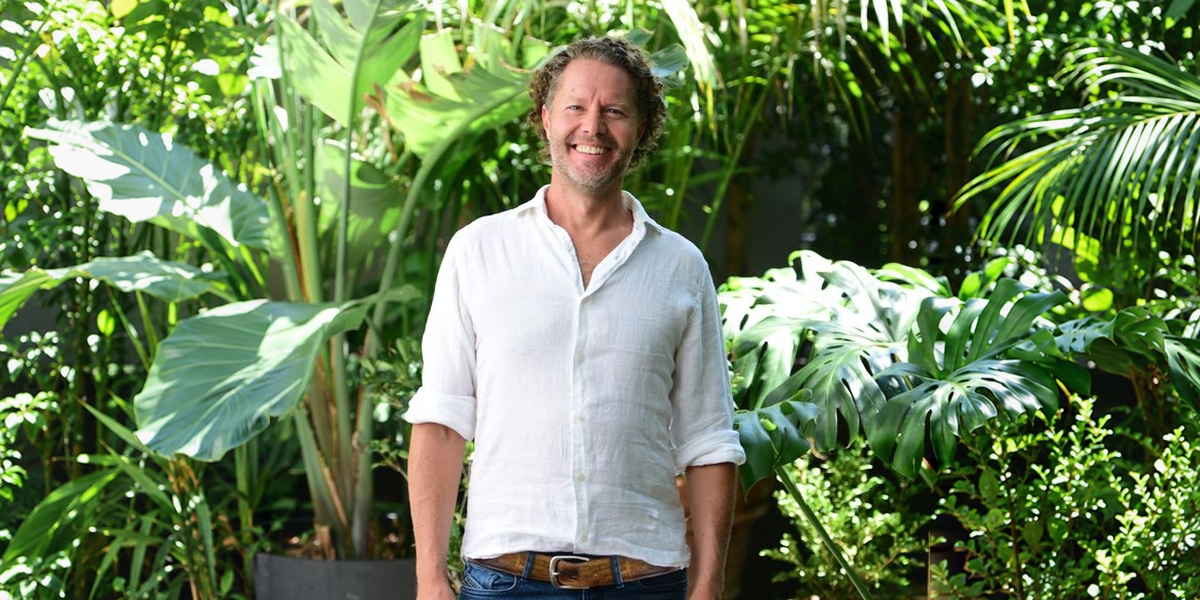
Philipp Samor von Holtzendorff-Fehling’s founder story doesn’t fit into one neat epiphany. It begins in a sector where he discovered just how much technology impacts human environments in both positive and negative ways, which led him to launch Leela Quantum Tech.
Along the way, he found that building in an unproven category doesn’t just test a product. It tests a founder’s ability to earn trust.
How telecom prepared Philipp Samor von Holtzendorff-Fehling to be a founder in frequency and quantum energy technologies
During the early days of his career, von Holtzendorff-Fehling served as an executive at T-Mobile International and as Vice President at T-Mobile US. That background taught him several life lessons. Above all, he learned that reliability earns trust, and that technology only wins when people trust it.
As a technology executive long before founding Leela Quantum Tech, von Holtzendorff-Fehling saw how ideas that initially seem unlikely can eventually become commonplace. He recalls the skepticism surrounding email in the early 1990s: “That’s why also no one believed at first that anyone would use email in the future.”
Telecom taught von Holtzendorff-Fehling to lead with vision, then do the hard work of putting his ideas into motion. That pattern of vision, resistance, execution, and credibility stayed with him long after he left the sector. He soon discovered that the work gets even more intense when stepping into uncharted, unproven areas like quantum technology and frequency medicine.
What happened when Philipp Samor von Holtzendorff-Fehling found quantum energy wellness and the connected-world thread?
In telecom, von Holtzendorff-Fehling helped build systems that keep people connected. Those towers and networks were always on. In his current work, he acknowledges that constant connectivity leads to constant exposure. With more devices than ever, artificial frequencies are everywhere. But instead of responding with despair, he chooses to build solutions that make room for optimism.
Von Holtzendorff-Fehling’s career transition is particularly interesting given his previous leadership roles at T-Mobile. At the time, he focused on the possibilities of connectivity rather than potential concerns surrounding electromagnetic fields.
“When I was there, actually most people were not aware of it at all, including me,” he says. His interest in energy and frequency technology developed later, ultimately leading him toward an entirely different field.
That perspective is why Leela Quantum Tech and Quantum Upgrade focus on solutions that allow people to live harmoniously in their environment. The goal isn’t to fight the connected world, but to build a healthier relationship with it.
What the CEO of Leela Quantum Tech and Quantum Upgrade feels is most important in his role as a tech founder
Von Holtzendorff-Fehling’s journey from corporate technology leadership to founding Leela Quantum Tech reflects his belief that traditional approaches to energy and modern innovation need not exist in separate worlds.
As he writes in “The Energy of Everything,” “By combining ancient healing wisdom with modern technological advancements, we can find a path forward that honors our past, enriches our present, and safeguards our future.”
Von Holtzendorff-Fehling also emphasizes that his technology is intended to serve as a supportive tool rather than replace an individual’s own ability to develop greater awareness and balance. “To me, our products are a bridge.” He sees the technology as one element of a broader personal journey toward greater energetic awareness and self-regulation.
The best way to understand how Leela Quantum Tech approaches its products is in terms of coherence, the concept von Holtzendorff-Fehling uses to guide their design.
Lessons for other founders building trust in emerging tech
Building a company in an emerging category has required von Holtzendorff-Fehling to confront skepticism head-on. When researchers challenged the company’s early findings and called for more rigorous testing, he viewed their feedback as an opportunity to strengthen the evidence behind the technology.
“I didn’t like to hear that, but I always took it as a challenge,” he says. That determination helped shape the company’s commitment to research and controlled testing.
Research is foundational to von Holtzendorff-Fehling. However, he gains trust by presenting those findings as observations that offer a better understanding of the technology.
For example, in one randomized, double-blind, and placebo-controlled study, participants took part in three different test sessions. One session involved 5G exposure from a cell phone and the presence of a Leela Quantum Bloc. Another session introduced the same 5G exposure with a placebo instead of the Leela product. The third session involved no exposure and again used the placebo.
For von Holtzendorff-Fehling, developing an unfamiliar technology also meant recognizing the importance of evidence when communicating about it. “We needed to provide evidence so that what we can do we can claim and that we can back it up,” he says.
That philosophy helped drive Leela Quantum Tech’s investment in research and its efforts to evaluate the technology through controlled studies.
For von Holtzendorff-Fehling, building credibility in an unfamiliar category also means making the research accessible and remaining open to questions. Rather than expecting people to accept the technology without examination, he encourages direct engagement.
“The team and I can also walk you through the research, explain, and answer your questions,” he says. “We don’t hide at all. We do the opposite and are very available.” His approach reflects an emphasis on education, transparency, and giving audiences the opportunity to evaluate the information for themselves.