
By Bridget Mulroy
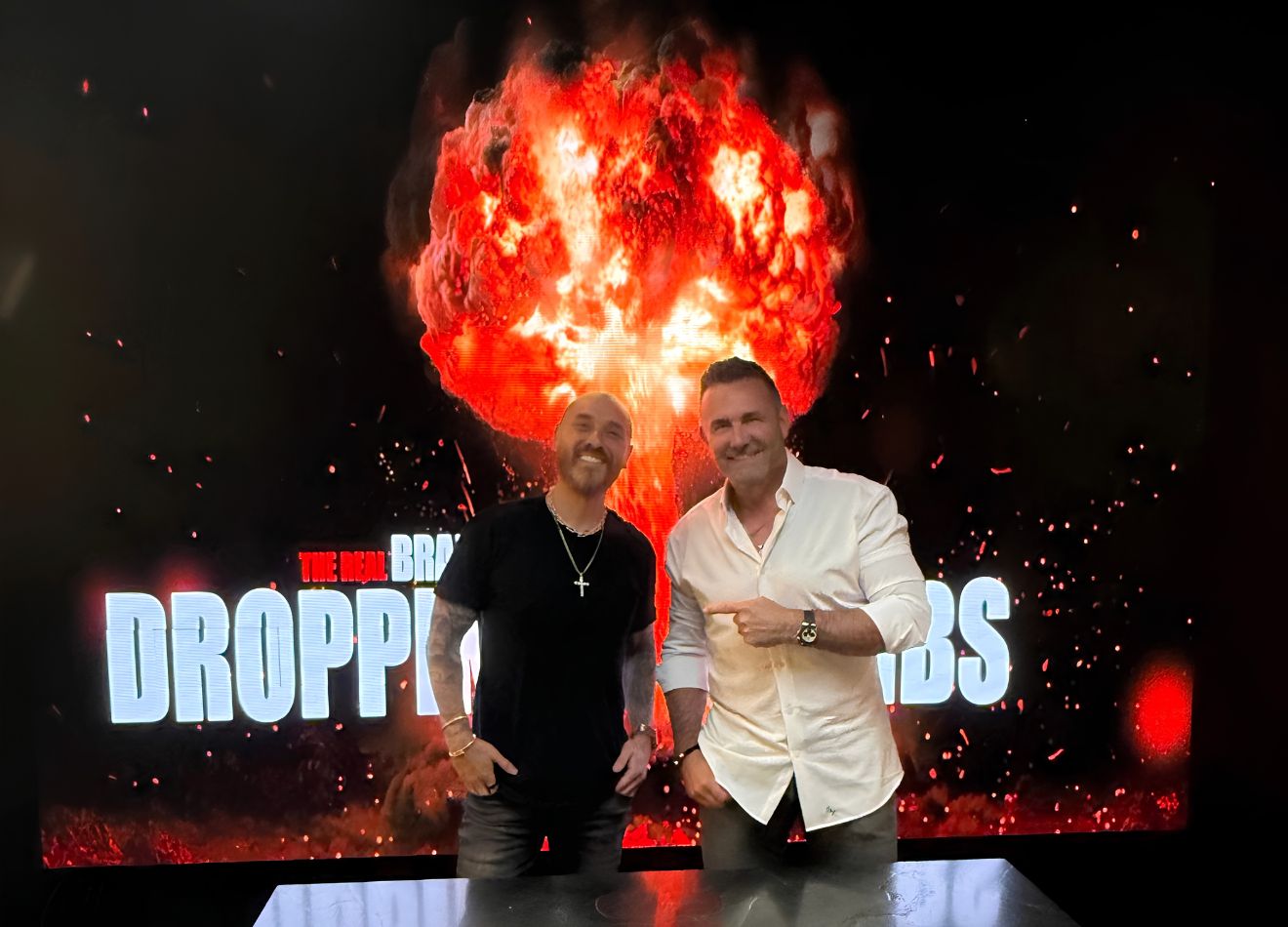
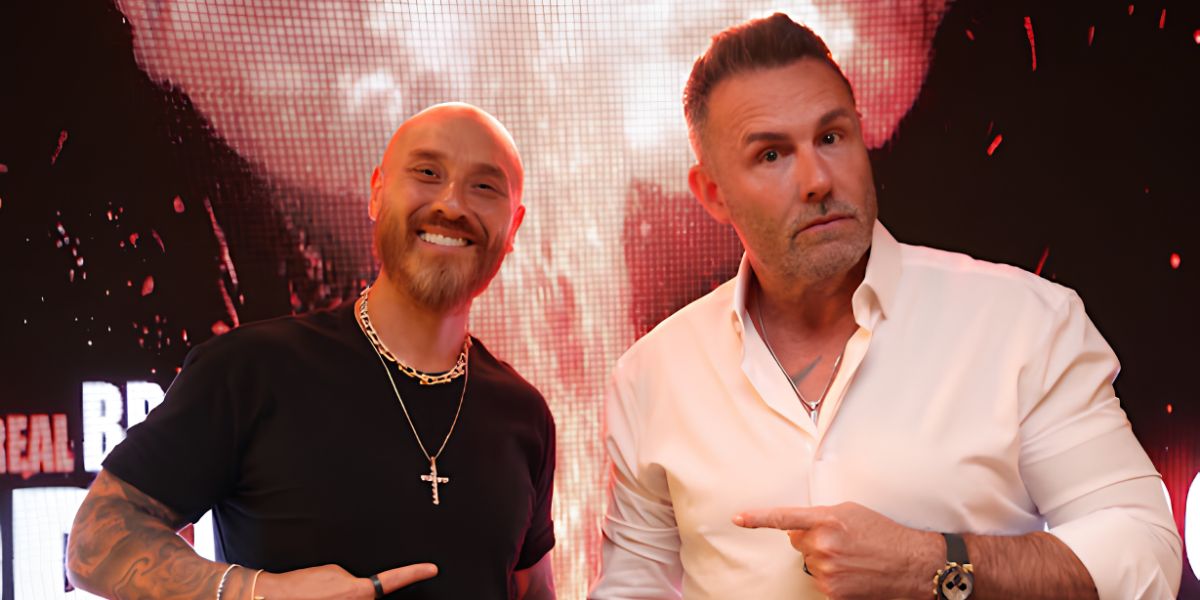
On an episode of Dropping Bombs, hosted by Brad Lea, I expected a familiar arc: diagnosis, treatment, recovery, reflection.
What unfolded instead felt more like a raw, unfiltered exchange between two people trying to make sense of something that refuses to be simplified.
Smilo didn’t open with statistics. He opened with confusion.
“My wife was eight months pregnant,” he said, “and I thought I just pulled something. Shoulder pain. Then lumps. Then nosebleeds. Every answer I got made sense on its own.”
Lea, known for his direct, no-nonsense style, kept pulling atthe edges of the story, not just what happened medically, but what it felt like to live inside it.
The diagnosis itself landed like a rupture: stage 4 metastatic melanoma, widespread disease, and a prognosis that forced conversations most families never want to have. But what stood out in the dialogue wasn’t the severity, it was the navigation.
Smilo described moving between institutions, top cancer centers and leading specialists, where overlapping opinions rarely aligned. Each step forward required reinterpretation of the previous one.
“It felt like business in a way,” he said at one point. “Different experts, different perspectives, all true in their own way, but no one seeing the full picture.”
Lea leaned in at that.
Because beneath the medical language, the story was about decision-making under uncertainty. About information asymmetry. About how outcomes are often shaped not only by treatment, but by what gets discovered in time.
The most pivotal shift came from outside the system entirely, a scientist in Smilo’s network reviewing genomic data that had already been collected but not fully analyzed. That review pointed toward a potential T-cell therapy pathway in Germany.
The treatment that followed was intense, highly personalized, and physically overwhelming. Tumors began to shrink rapidly, but the immune response triggered neurological inflammation and temporary memory loss so severe that identity itself became fragmented.
For most, that would be the headline.
For Smilo, it wasn’t.
The recurring theme throughout the episode was restraint in interpretation. No promises. No absolutes. Just lived experience filtered through uncertainty.
And when the conversation turned toward meaning, Smilo returned to the same point again:
“I don’t think my story is about luck. I think it’s about access to information most people never get in time.”
What emerged was not a medical conclusion, but a lingering question:
What happens when two people with identical diagnoses do not have access to the same information?
That question ultimately shaped The Smilo Foundation, not as a reaction to illness, but as a response to fragmentation.
And in typical Lea fashion, the conversation ended not with resolution, but with reflection.
“l’ve interviewed thousands of people, and Mike’s story genuinely stayed with me. What impressed me most wasn’t just that he beat extraordinary odds. It was that he refused to stop searching for answers. He challenged assumptions, refused to accept the diagnoses, explored every option, asked very good questions and became his own advocate. That’s a lesson that extends far beyond cancer, and it’s exactly why I believe the work Smilo is doing has the potential to help so many people and their families.”
– Brad Lea, Dropping Bombs Podcast