

A predictable routine can help your autistic child feel safer, calmer, and more ready for the day. The goal isn’t to create a strict schedule that controls every minute. It’s to build a warm, flexible structure that supports emotional regulation, sensory needs, and growing independence.
If you’re looking for local support with routine-building, behavior planning, or parent guidance, ABA therapy Riverton may be a helpful place to start.
Why Routines Help Autistic Children Feel More Secure
Autistic children often process sensory information, transitions, and uncertainty differently. When the brain has to constantly guess what comes next, the nervous system may stay on high alert. That can show up as:
• Anxiety
• Meltdowns
• Shutdowns
• Refusal
• Clinginess
• Trouble sleeping
• Difficulty moving from one activity to another
Predictable routines reduce that guessing. They give your child a mental map of the day, which can support nervous system stability and emotional regulation.
Start With One Routine, Not the Whole Day
Trying to overhaul the entire day can overwhelm everyone. Pick one daily moment that feels stressful and start there.
Good first routines include:
• Morning wake-up
• Getting dressed
• Leaving for school
• Mealtime
• Homework
• Bath time
• Bedtime
Keep it simple:
• Choose 3 to 5 steps
• Use the same order each day
• Add visuals if your child responds well to them
• Practice when everyone is calm
• Celebrate small wins
For example, a bedtime routine might be:
1. Pajamas
2. Brush teeth
3. Choose one book
4. Lights dim
5. Sleep music
Use Visual Supports Your Child Can Actually Use

Visual supports are not just decorations on the fridge. They work best when they are clear, accessible, and matched to your child’s communication style.
Helpful options include:
• Picture schedules
• First/Then boards
• Written checklists
• Object cues, such as holding shoes before leaving
• Timer apps
• Color-coded charts
• Transition cue cards
A First/Then board can be especially useful for tricky transitions:
• First: Put on shoes
• Then: Play with blocks
Picture schedules can help with longer routines:
• Wake up
• Bathroom
• Clothes
• Breakfast
• Backpack
• Car
Build the Routine With Your Child, Not Just for Your Child
A neurodiversity-affirming routine respects your child’s preferences, body signals, and autonomy. Structure should help your child feel supported, not forced into compliance.
Invite input in simple ways:
• “Do you want pajamas before teeth or teeth before pajamas?”
• “Which picture should we use for bath time?”
• “Do you want the blue timer or the sand timer?”
• “Should music play during cleanup?”
• “What helps your body feel ready for school?”
You can also offer choices within limits:
• Two breakfast options
• Two shirts
• Two calming activities
• Two homework spots
This keeps the routine predictable while still giving your child a sense of control.
Adapt Routines for ADHD, Pda, and Sensory Needs

Many autistic children also have ADHD, sensory processing differences, anxiety, or a PDA profile, often described as a strong need for autonomy and difficulty with demands. A routine that works beautifully for one child may feel impossible for another.
Try these adjustments:
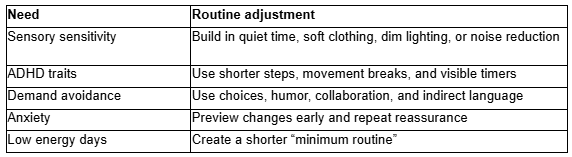
Instead of saying, “You have to get dressed now,” you might try:
• “Which part should we do first?”
• “Your clothes are ready when your body is ready.”
• “Should we race the timer or go slow today?”
Support Routines Through Big Life Changes
Routines need to grow with your child. Puberty, school changes, new siblings, moving homes, and developmental milestones can all shake up what used to work.
During transitions:
• Preview changes with pictures or social stories
• Visit new places ahead of time when possible
• Keep one familiar routine stable
• Add more downtime
• Expect temporary regression
• Update visuals to match your child’s age
• Include your child in planning
A teenager may not want a cartoon picture schedule anymore, and that’s fair. A phone checklist, calendar app, or private written plan may feel more respectful.
Common Mistakes to Avoid
• Changing too much at once: Add one new step at a time.
• Using visuals only after a meltdown starts: Practice them during calm moments.
• Making the routine too rigid: Leave room for sensory needs and bad days.
• Focusing only on compliance: Ask whether the routine helps your child feel safe.
• Forgetting caregiver stress: A routine should support the whole household.
Take Care of Yourself While Building Routines
Caregiver stress is real. Routine-building takes patience, especially when sleep, school pressure, or meltdowns are already draining your energy.
Try to make it easier on yourself:
• Prep visuals once and reuse them
• Keep routines short
• Use the same phrases each day
• Ask therapists, teachers, or family members to follow the same plan
• Take breaks when you feel yourself escalating
• Notice progress, even when it’s tiny
Positive reinforcement can help, but it doesn’t have to mean stickers or prizes. Warm attention, praise, shared play, or a preferred calming activity can all reinforce success.
A Welcoming Routine Feels Safe, Not Strict
The best routine is predictable enough to lower anxiety and flexible enough to respect your child’s needs. Start small, use visual supports, invite your child’s input, and adjust as they grow.
You’re not aiming for a perfect schedule. You’re building a daily rhythm that helps your child feel understood, prepared, and more at home in their own world.
Disclaimer: This article is intended for general informational and editorial purposes only. It does not provide medical, psychological, behavioral, developmental, therapeutic, educational, or professional advice, and it should not be relied upon as a substitute for guidance from qualified professionals. Autism support needs, routines, sensory strategies, visual supports, ABA therapy, emotional regulation approaches, ADHD, PDA-related needs, and behavior planning can vary widely based on each child’s individual profile, health history, communication style, environment, and family circumstances. Parents and caregivers should consult a licensed pediatrician, developmental specialist, psychologist, Board Certified Behavior Analyst, occupational therapist, speech-language pathologist, educator, or other qualified professional before beginning or changing any therapy, routine, or intervention plan.