
Transaction volume in Hawaii hotels is thin. Lender interest is not, and the divergence between the two is the more useful signal for anyone financing an acquisition or a maturity this year.
By one count discussed at a New York hotel conference in June, more than fifteen hundred lenders are currently active in hotel debt. The composition has shifted as much as the number. Family offices seeking diversification, newly raised funds, and distressed-focused capital have all entered a space that a decade ago was dominated by a much shorter list of banks and CMBS conduits.
What Competition Does To Pricing
Hotel lenders compete primarily on spread. The base is typically SOFR or a comparable published rate, and the negotiation runs on what gets added on top – a point and a half, two points, wherever the appetite for a particular asset happens to sit.
That last qualifier is where the competition actually shows up. Appetite is not a fixed institutional position. It moves with a lender’s current allocation, its recent losses, and how badly it wants a deal in a given month.
“They’ll change their position day to day, month to month,” says Mark D. Bratton, CCIM, of The Bratton Team at Colliers International Hawaii. A lender that passed in the spring may price aggressively in the autumn, on the same asset, for reasons that have nothing to do with the asset.
The practical implication is that a single-source quote systematically understates what is available. Borrowers who take one bank’s terms as the market price are, in most cases, accepting a number that reflects that institution’s position rather than the market’s.
A Recent Test Of The Spread
The financing on PACIFIC 19 Kona in Kailua-Kona offers a reasonably clean read on how wide that gap can be.
Nine Brains, a Santa Monica-based hospitality investment firm, had held the property under a leasehold position since the start of the decade, spending on the order of ten million dollars repositioning and rebranding the former Kona Seaside Hotel before exercising its right to acquire the fee. That created a defined financing requirement on a repositioned 150-room asset with an operating record attached – the kind of profile a local banker would ordinarily quote in isolation.
Rather than run it locally, the debt was taken to a broader market through Colliers’ New York capital markets practice, which the firm built out roughly three years ago and which is led by Mark Owens, who grew up in Hawaii. Roughly forty lenders took a hard look at the first mortgage.
Bratton describes the resulting terms as significantly better than anticipated. The specific improvement is not public, but the mechanism is straightforward: the process converted a bilateral negotiation into a priced auction. The closing itself is a matter of record; the financing behind it is where the difference was made.
Loan Structure As A Risk Variable
The other lesson of the current market has less to do with pricing than with what happens when a loan comes under stress, and that depends heavily on which type of lender wrote it.
CMBS loans are bond-backed and typically carry no personal guarantee. The borrower’s downside is capped at their equity. That protection has a cost on the other side: these loans are inflexible by design, and there is limited scope to negotiate when performance deteriorates. A local bank lends less cheaply, in many cases, but it will pick up the phone.
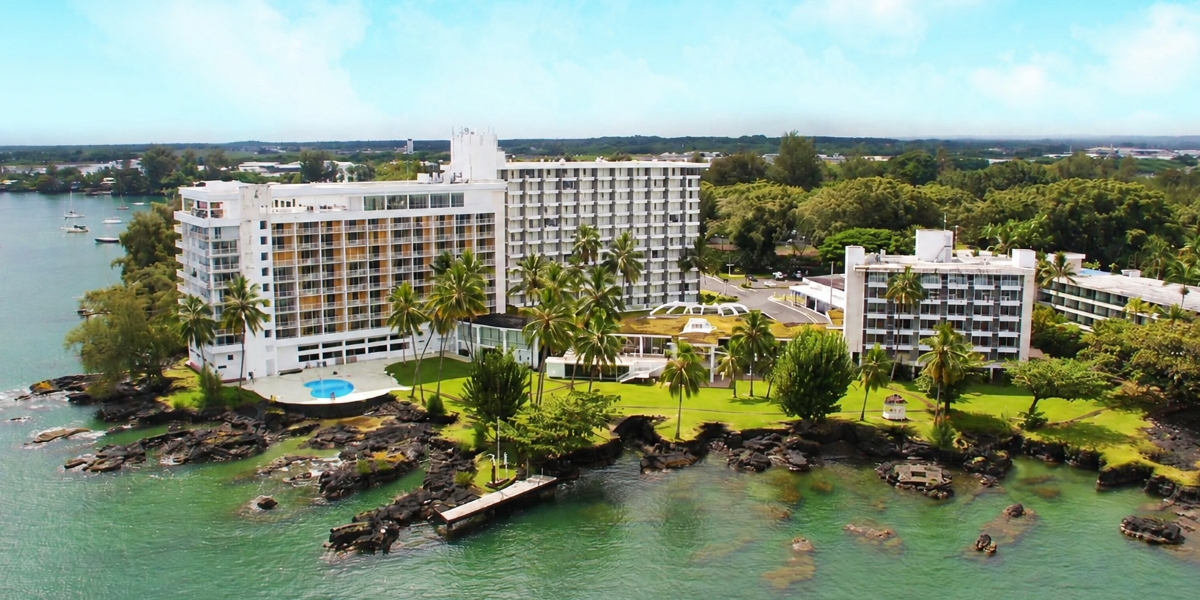
Three Hawaii properties illustrate the range of outcomes. The Grand Naniloa Hotel Hilo, a DoubleTree by Hilton, struggled through the pandemic recovery carrying meaningful debt and has since seen its lender take control. The Hyatt Regency Waikiki Beach Resort & Spa sits on watch lists with a large loan maturing this autumn, into a market that has moved since the loan was written. The Hilton Hawaiian Village Waikiki Beach Resort also carries a substantial maturity this year – but its owner, Park Hotels & Resorts, holds modest leverage on the asset and has publicly signaled a defined repayment path, which makes it a timing question rather than a solvency one.
The variable separating those three is not asset quality. It is the combination of leverage level and lender flexibility at the moment the maturity arrives.
Underwriting Income That Hasn’t Normalized
The harder financing problem in the current market is the asset whose income has not stabilized. Underwriting to a trailing twelve months understates it. Underwriting to a projection requires the lender to accept a forecast.
The item that carries the most weight in resolving that is the sponsor. What has this operator repositioned before, and what happened? Trinity Investments, a Honolulu-based firm operating globally, is the reference case Bratton points to. The Westin Maui Resort & Spa, Kāʻanapali is the local illustration: acquired in 2017 by a joint venture including Trinity, then taken through a multi-year renovation and repositioning that ran directly across the pandemic. Executed enough times that record means lenders and equity partners are underwriting the sponsor rather than the pro forma.
Two further questions follow. Branding is one: whether the asset takes a major flag, or whether an independent identity serves it better, as with PACIFIC 19 Kona. The other is the nature of the capital plan – whether the investment is transformational or cosmetic, and whether the projected income assumes the former while the budget funds the latter.
Distinguishing Temporary From Permanent
Depressed net income is a buying opportunity or a value trap depending on a judgment that lenders and sponsors have to make in parallel.
Currency-driven demand shortfalls sit in the temporary column, even where the horizon is six or seven years rather than one or two. Reputational damage to a destination with intact physical assets similarly tends to resolve. Operator failure is the most reversible category of all – an owner with fifty hotels and one small property in Waikiki is dependent on a single manager, and managers get sick, get distracted, or stop trying. That is a fixable problem with a new operator.
What sits in the permanent column is a structural change in why demand existed at all. The distinction matters because it determines whether a lender is being asked to underwrite patience or to underwrite hope.
The Other Side Of The Discipline
Not every position gets defended. An office building currently under contract in Honolulu is being sold by owners who have concluded after fifteen years that recovering their equity is not realistic, and who have gone to their lender to say so. Their instruction to the brokerage was to secure the best available price and let them move on.
Institutional capital reaches the same conclusion on a different timescale. Blackstone recently sold a large Hawaii apartment complex held for roughly eight years at a loss of around forty million dollars, having acquired it at approximately a three and a half percent cap rate and exited at 5.2 percent. The write-down is immaterial to a firm of that size. The reasoning is not: at a certain point, the capital is better deployed elsewhere, and the decision to stop defending a position becomes the disciplined one.
For borrowers facing maturities into a market with fifteen hundred active lenders, both halves of that picture apply. The capital is available, and it is competing. What determines the terms is whether the borrower approaches it as a market or as a relationship – and, increasingly, whether they can show a lender current local performance data rather than a national average.
About the Expert: Mark D. Bratton (R), CCIM, leads The Bratton Team at Colliers International Hawaii in Honolulu, specializing in hotel, resort, and commercial investment sales, including debt and equity placement.
The Bratton Team is a Hawaii commercial real estate and investment sales group, exclusively contracted to Colliers International HI, LLC. Led by Mark D. Bratton (R) CCIM and Mike Perkins (S), the team has advised buyers and sellers across all Hawaii asset classes for 40 years.
Disclaimer: This article is intended for informational purposes only and does not constitute financial, investment, lending, or real estate advice. Readers should consult with qualified financial, legal, and real estate professionals before making decisions regarding property acquisitions, financing, or investments. Market conditions, lending terms, and individual circumstances vary.