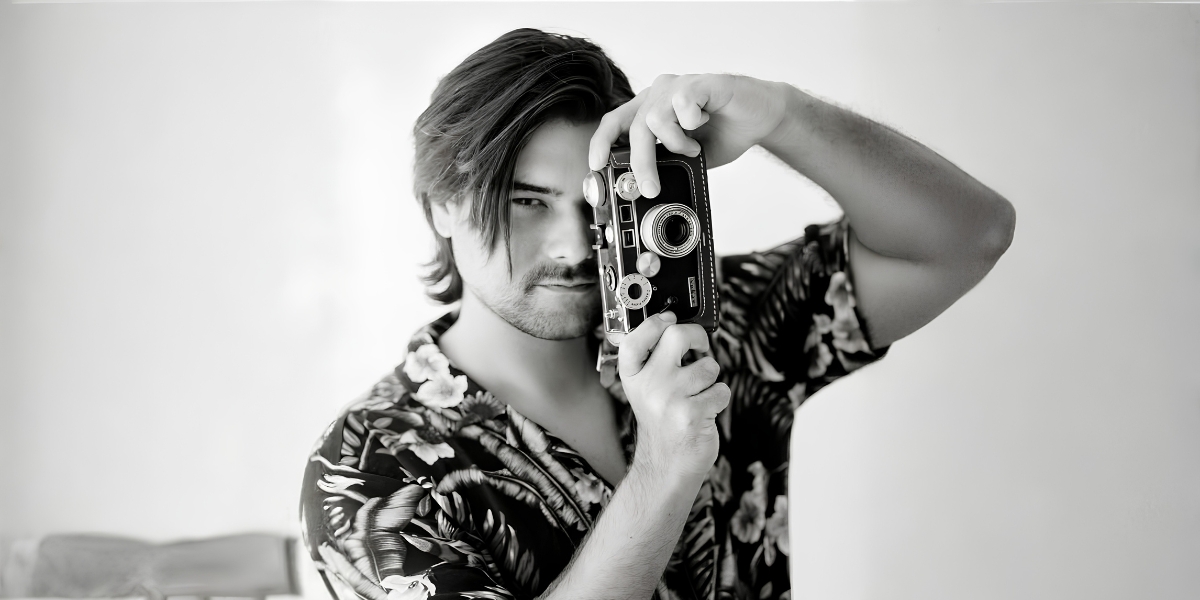

For many photographers, the work ends when the shutter closes. For Adam Montgomery, that is closer to the halfway point. The Los Angeles fashion and lifestyle photographer is also a photo retoucher, and treating the two disciplines as a single craft has become one of the defining features of his work.
It is a less common combination than it might seem. Plenty of photographers shoot well and then outsource their editing, and plenty of retouchers polish images they had no hand in capturing. Montgomery does both, which means the person deciding how a final image should feel is the same person who chose the light, the angle, and the moment that made it. That continuity gives his work a consistency that is difficult to fake, and it is a large part of why brands and designers return to him for content that has to look like it belongs together.
The craft begins long before anyone picks up a camera. Montgomery works closely with clients to understand what they are trying to achieve, then helps shape the shoot around that vision. In practice, that can mean location scouting to find a setting that matches the
mood of a campaign, or collaborating on styling so the wardrobe, the setting, and the concept pull in the same direction. These early choices are quietly decisive. A well planned shoot leaves far less to fix later, and it gives the eventual retouching a clear purpose rather than a rescue mission.
On set, his stated priority is capturing authentic moments, a phrase that carries real weight in fashion and lifestyle work. The genre is full of images that look immaculate and lifeless, technically perfect but emotionally flat. Montgomery’s approach treats the session as a search for the frames that feel genuine, the expression that lands, the gesture that reads as real. Getting those moments is partly a matter of technical control and partly a matter of atmosphere, of making a subject comfortable enough to stop performing and simply be present.
Then comes the part of the process that most clients never see. Retouching, done thoughtfully, is not about erasing a person or manufacturing a fantasy. In Montgomery’s hands it functions more as refinement, the careful work of balancing color, cleaning distractions, and ensuring a set of images shares a coherent tone. For commercial clients, that consistency is not a luxury. A brand running a campaign across a website, a lookbook, and a social feed needs every image to feel like part of the same family, and a retoucher who also shot the frames knows exactly what the material can support.
Handling both stages also solves a problem that plagues many productions: the gap between intention and delivery. When a photographer shoots and a separate editor finishes, something is often lost in translation. The mood discussed on set gets softened,
or a stylistic choice gets flattened by an editor working without context. Because Montgomery carries a project from concept through capture to final edit, the vision defined at the start survives all the way to the files a client actually uses. That end-to-end ownership is efficient, but more importantly it is faithful.
His toolkit extends beyond still images as well. Alongside photography and retouching, Montgomery lists videography, video editing, and graphic design among his skills, a range that reflects how blurred the lines between creative disciplines have become. A modern brand shoot rarely stops at photographs; it often needs short video, motion content for social platforms, and design-ready assets. A creator fluent across those formats can deliver a full package from a single session, which is increasingly what clients expect and increasingly hard to find in one person.
That versatility, though, rests on the same foundation as everything else in his work: attention. Whether he is framing a shot, grading color, or cutting a short clip, the throughline is a photographer’s habit of looking closely and deciding deliberately. The technology changes, the deliverables multiply, but the underlying craft is recognizably continuous.
For clients, the appeal of that integrated approach is straightforward. They get images shaped by one consistent sensibility from first idea to final export, rather than a handoff chain where quality can leak out at every seam. In a field where visual consistency increasingly determines whether a brand looks credible, that is a meaningful advantage, and it is one Montgomery has built by refusing to treat the photograph and the edit as separate jobs.
Examples of that finished work are available through his portfolio at adammont.com.