
By: Natalie Johnson
Foster youth often cannot access their own birth certificates. Seniors get manipulated into granting blanket account access to people they should never have trusted. Disaster survivors lose their homes and their records simultaneously, then spend months trying to reconstruct both. These are the daily realities for the populations that existing technology fails to serve.
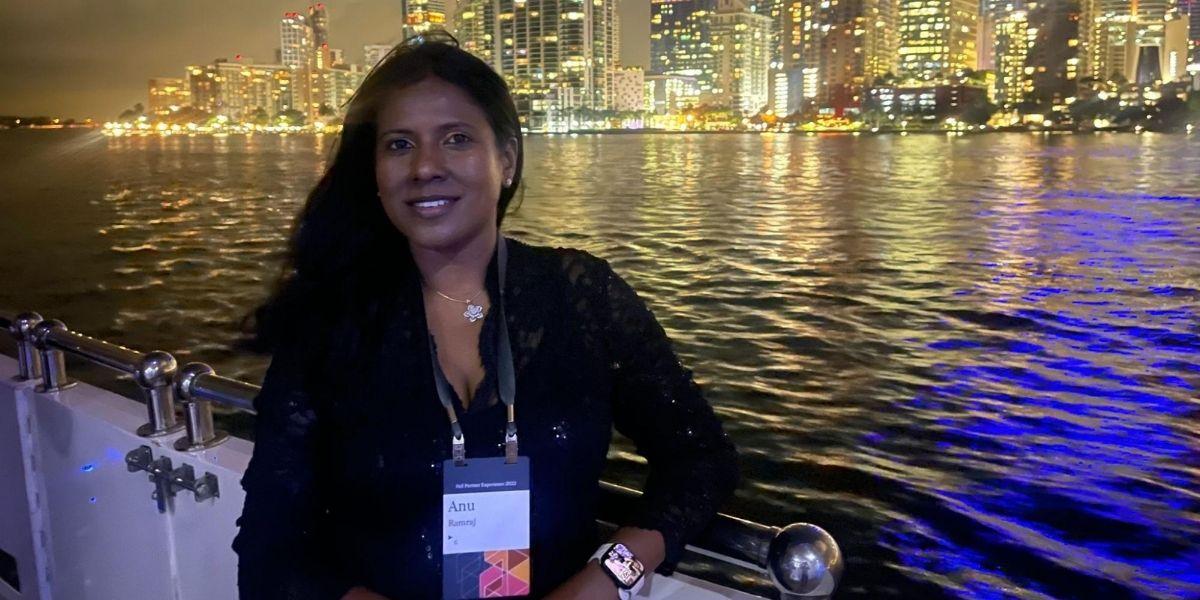
Anu Ramraj spent decades helping major corporations use technology for business transformation before turning that expertise toward a different problem entirely. The result is Vaultzy Inc, a life platform built around an AI agent codenamed Walter, designed to help foster youth, seniors, disaster survivors, and everyday families manage scattered records and access the benefits to which they are entitled. “It’s almost like everybody being able to afford a personal assistant now,” Ramraj reflects, “that’s constantly looking out for them and watching out for them.”
Measure Impact, Not Activity
The difference between serving the underserved and marketing to them comes down to what gets measured. Downloads, institutional partnerships, and platform growth metrics indicate how large an organization is becoming. They say nothing about whether the people it claims to serve are better off.
Ramraj built Vaultzy’s accountability framework around a separate set of questions entirely: ‘How many families were helped with emergency preparedness in fire-prone or flood-prone areas?’ ‘How many received timely reminders about expiring passports or driver’s licenses?’ ‘How many seniors were successfully set up with delegates who had appropriate, trusted access to their information?’ “It is about the impact and measuring that impact and holding ourselves to that standard,” Ramraj states.
Organizations that optimize for downloads will build for downloads. Organizations that optimize for families will help build for families. The chosen metric determines the product built, and for populations that have historically been treated as an afterthought, that choice is a design decision with real consequences.
Storage Was Never the Solution
Prior attempts to solve the document access problem for underserved populations stopped at consolidation. Getting scattered records into one place is a necessary first step. It is not a solution. What actually prevents foster youth from accessing birth certificates, seniors from navigating benefit applications, and disaster survivors from reconstructing their identity is not primarily a storage problem; it is an intelligence and a trust problem.
Ramraj’s design thinking framework, developed through Stanford Graduate School of Business’s LEAD program, reframed the problem as multidimensional from the start:
• Layer one was consolidation: bringing records together from government agencies, schools, hospitals, financial institutions, and legal teams.
• Layer two was AI-powered document intelligence: that understands where a person is in their life and helps them navigate what comes next.
• Layer three was blockchain-backed notarization: that allows institutions to verify document authenticity, a capability that matters urgently in 2026, when convincing fraudulent documents can be generated in minutes.
“I can today go generate a document that says I am XYZ within minutes,” Ramraj acknowledges. “That looks very, very authentic. So how do you actually build trust in documentation?” The answer required combining all three layers into a complete solution rather than treating any one of them as sufficient.
Design for the Most Vulnerable or the Platform Fails Everyone
The digital divide shapes every design decision at Vaultzy. Simple interfaces, multilingual support through Vaultzy’s agent technology, security built directly into the user experience so that less tech-savvy individuals cannot inadvertently compromise their documents, and a strict commitment to never selling user data; these are not features. They are foundational principles that determine whether the platform actually reaches the people for whom it was built.
Technology that requires digital fluency to operate safely is not accessible technology. A gateway to public services that the most vulnerable cannot navigate is not a gateway at all. The organizations building for underserved populations that get this right treat accessibility as a design constraint from day one, not an accommodation added afterward, when the product is already built for someone else.
Follow Anu Ramraj on LinkedIn or visit Vaultzy Inc for more insights into inclusive AI design, responsible technology, and building products that serve populations that existing systems consistently overlook.