
Most founders entering a crowded market build a sharper version of what already exists and go looking for shares. A smaller number try to build the thing the market will eventually be measured by, then wait for everyone else to adopt it.
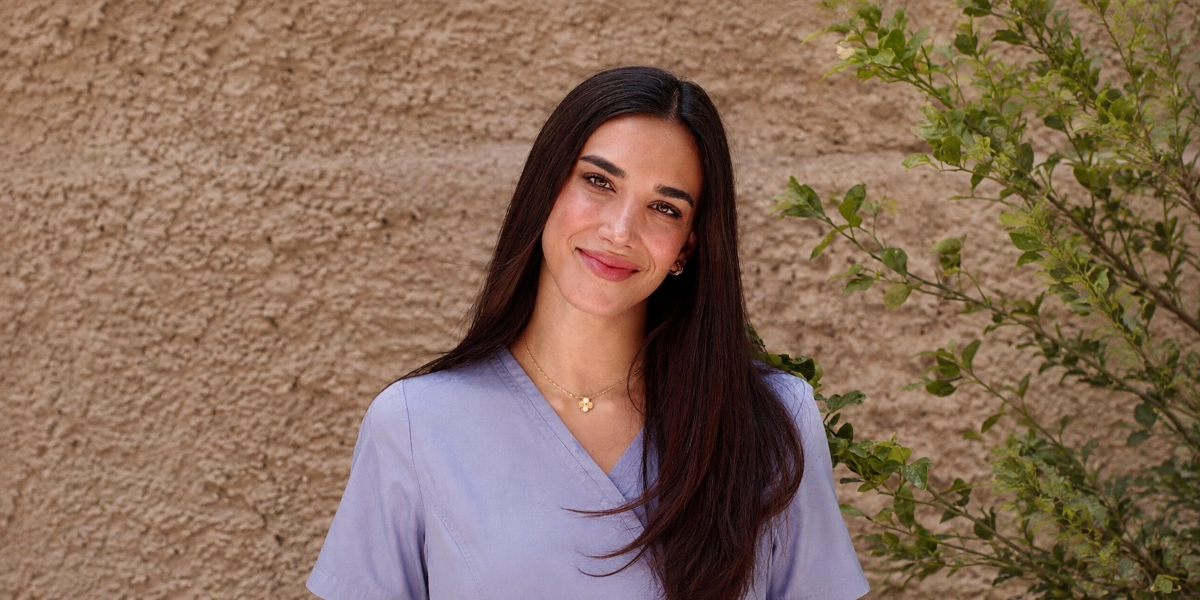
Dr. Korina Alevrogianni took the second route. She is a 29-year-old plastic surgeon based in Athens, and the consumer app her company launches this September is not the business she is trying to build. It is the door into one.
The App Is a Wedge, Not the Business
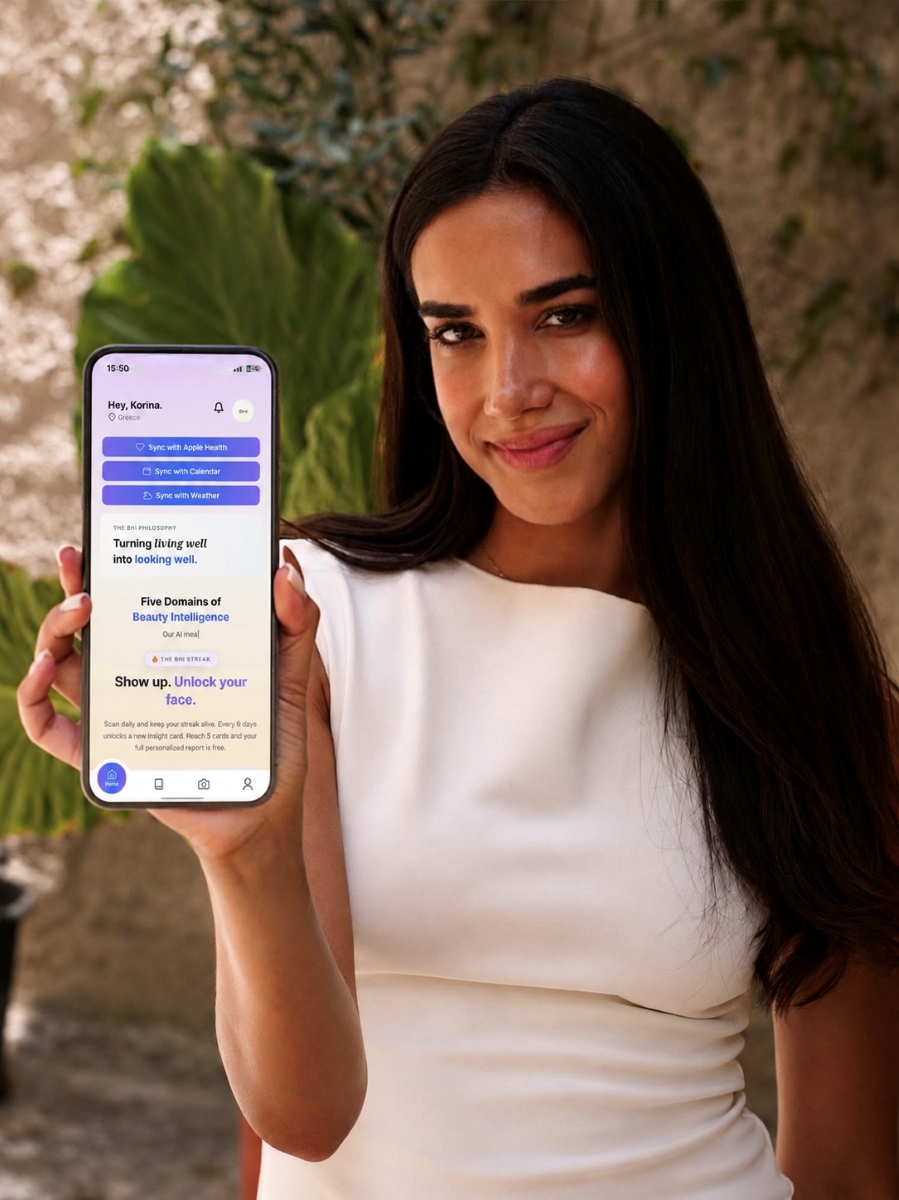
The Beauty Health Index (BHI) runs on a 60-second smartphone scan that reads the face across five domains, covering structure, skin quality, expression, regenerative performance and lifestyle. Those break down into 40 evidence-based measurements that combine into a single score, tracked against a user’s own previous scans rather than against anyone else.
That is the product consumers will meet. The company’s real thesis sits underneath it.
Alevrogianni wants the score to work as licensing infrastructure. The intended adopters are dermatology and plastic surgery clinics tracking patient outcomes, skincare and wellness brands substantiating what their products actually do, and eventually longevity programs and insurers that need a consistent way to measure facial health. Her reference points are SPF ratings and credit scores. Both started as one organization’s idea and ended up as a layer entire industries were obliged to build on.
In that model the app does two jobs at once. It generates data, and it makes the score familiar enough that any professional adopting it is speaking a language their customers already recognize. The revenue that matters arrives later, from the standard rather than the subscription.
Why the Professional Market Is the Real Prize
The commercial logic becomes obvious once you know what aesthetic medicine currently lacks.
The industry is worth hundreds of billions of dollars and has no shared measure of results. Dermatologists grade skin by eye using subjective scales. Surgeons assess proportion in isolation. Outcomes get judged against before-and-after photographs taken on different days under different lighting. Alevrogianni hit this in her own practice, where patients asked whether a treatment had worked and she had no objective answer to give them.
That absence is the market gap. A clinic that can show a trend line has evidence rather than reassurance. A brand that can demonstrate measurable change has substantiation rather than a claim. The company says the platform will connect to an affiliated network of clinics where a member’s report can be shared ahead of an appointment, so the consultation starts from data.
There is a pattern here worth noting for anyone building in a saturated category. The strongest position is often not a better consumer product. It is ownership of the measurement everyone else eventually needs.
Publishing the Science First Was a Deliberate Trade
The decision that best explains how Alevrogianni operates came before there was anything to sell.
She published the framework with surgeon Dr. Spero Theodorou in the peer-reviewed medical journal Cureus, where it is indexed on PubMed. She is also explicit that this is a proposed framework built from a structured review of existing research, with validation studies still underway to test reliability and clinical applicability.
Worth being honest about what that choice costs. Peer review is slow. Every month spent on it is a month of revenue not booked and runway consumed, in a category where competitors ship first and reverse-engineer credibility later. Any board would ask about the tradeoff.
It only makes sense against the size of the prize. A standard cannot be advertised into existence. It has to survive scrutiny from the professionals who would have to adopt it, and those professionals read journals rather than press releases. The scanning system is patent pending, co-invented with the company’s chief technology officer. Credibility and intellectual property are the two things a standard has to own outright, and both were being assembled before launch.
She Recruited Authority She Did Not Yet Have
The other decision worth studying is how she staffed around her own gaps, and it is the most portable lesson in her approach.
As a first-time founder at 29, Alevrogianni built a leadership bench more senior than herself and gave it genuine authority rather than advisory titles. Her executive chairman founded a Manhattan surgical practice and previously served as chief medical officer of a Nasdaq-listed aesthetics technology company. Her vice president of medical affairs is a board-certified plastic surgeon practicing in Beverly Hills, trained at NYU Langone with a fellowship at USC. The advisory board carries venture and operating experience behind it.
Plenty of founders protect their authority, particularly early ones and particularly those already being underestimated. Alevrogianni went the other way and borrowed more of it. Her reasoning was structural rather than personal. A standard needs institutional weight, and no individual generates that alone regardless of how good the underlying science is. The people who would have to adopt her framework are surgeons and clinic operators, and those people assess a company by who is willing to attach their name to it.
The transferable point is that credibility is an asset you accumulate on purpose. It is not a byproduct of traction, and founders who wait for traction to produce it usually wait a long time.
The Dependency She Has to Manage
The model carries an obvious sequencing risk, and it is the thing worth watching over the next eighteen months.
The licensing thesis rests on the consumer app performing well enough to generate both the dataset and the public familiarity that make the standard credible. If adoption is thin, the professional argument weakens considerably. September is the test of the wedge, not of the whole strategy, but the whole strategy depends on it.

The Athlete Who Noticed the Measure Was Missing
None of this represents a departure from how Alevrogianni has always worked. Before medicine she was one of Greece’s most decorated young rhythmic gymnasts, winning the Greek national title more than 30 times and taking two bronze medals at the 2013 World School Championships in Brazil.
Elite sport runs on standardized measurement. Everyone is scored the same way, which is what makes improvement visible and comparable. When she moved into aesthetic medicine and found a field with no equivalent, the gap was obvious to her in a way it evidently had not been to the people already working in it.
Standards usually get built by whoever cannot stop noticing that one is missing.
The Beauty Health Index (BHI) opens to consumers this September, with a waitlist live at beautyhealthindex.com. Dr. Alevrogianni is documenting the build. The app arrives first. The standard is the longer project.