
By: Natalie Johnson
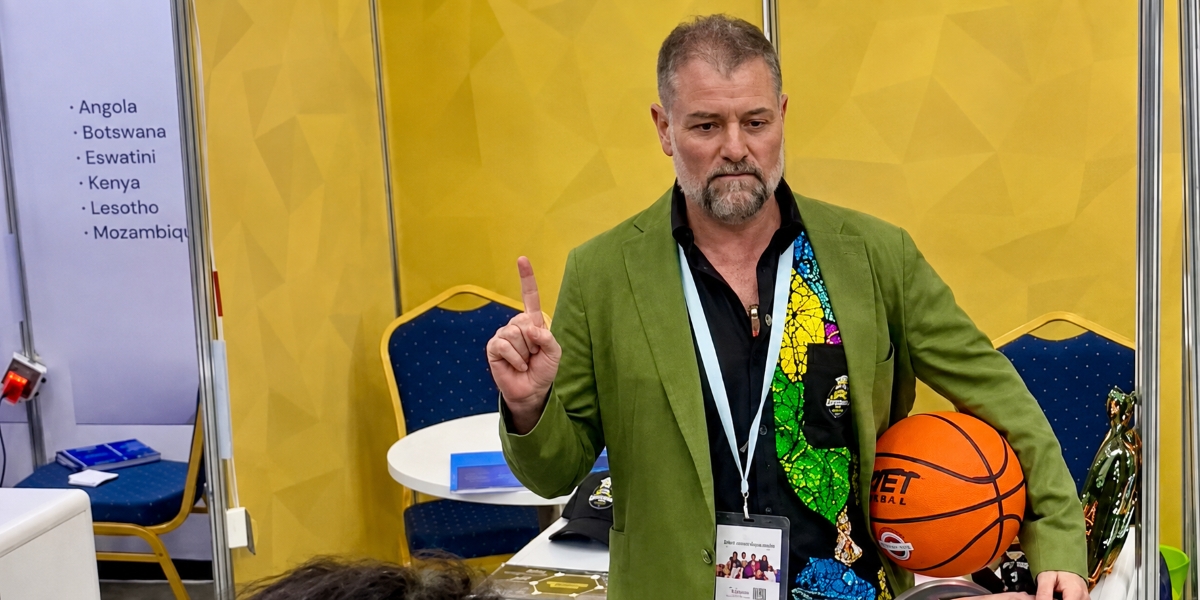
Governments spend fortunes on global influence and get very little attention for the money. Lobbying firms, embassies, formal representation, all of it aimed at power brokers in national capitals, and none of it puts a country in front of anyone. Michael W Nicholson spent his diplomatic career inside that machinery, managing large-scale development programs, while watching the same constraint defeat it repeatedly. His alternative is basketball.
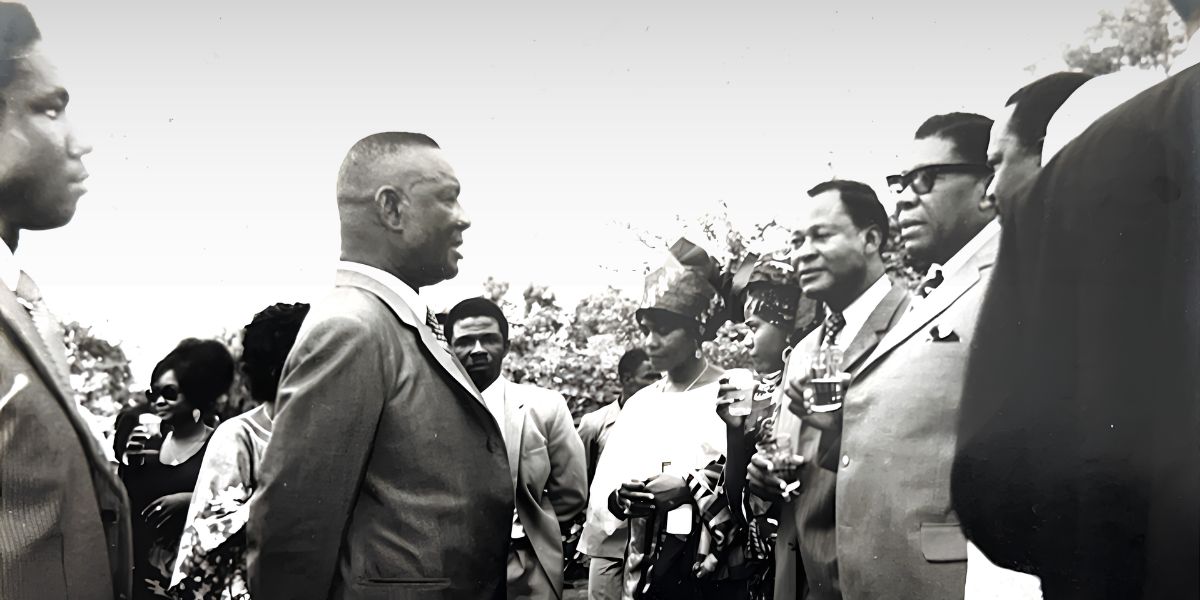
“We were working government to government instead of people to people,” he says. Aid at that scale requires negotiation between states. This means the domestic politics of both countries often come into play before a dollar moves. Sport can bypass that process entirely.
Attention Is the Cheapest Thing a Country Can Buy
Nicholson calls sport the least-cost entry into global visibility. It reaches televisions and phones directly, and the 2026 FIFA World Cup demonstrated the scale, with everything Lionel Messi did watched worldwide. He frames this as Economic Statecraft rather than promotion. A country that nurtures domestic players into global arenas earns more sustained attention than one funding representation in foreign capitals, and it earns that attention from the public rather than from officials.
The Pathway Runs Both Directions
Attention converts into investment because observers can now trace it backward. Nicholson calls it the pathway: a player breaks out, then scouts, media, and academies follow the trail to the source. He offers three cases.
- Democratic Republic of Congo: A player at the University of Kentucky led him to research Lubumbashi, a mining town near the Zambian border he had known little about despite years working in African development.
- Republic of the Congo: This year’s number one NBA draft pick is the American-born son of a father from the Republic of the Congo, directing global attention to a geography previously overlooked.
- South Sudan: Independent for less than two decades, the country reached the Olympic basketball tournament for the first time at Paris 2024 and won its opening game against Puerto Rico. The interest that followed revealed that many of its players came through refugee camps.
In each case, the visibility arrives at the destination and travels home, carrying capital and curiosity to places that had no other route onto an investor’s radar.
Building the System Rather Than Chasing the Pick
“We’re not playing the lottery figuratively or literally,” Nicholson says, using the term for the top NBA and WNBA draft selections. African heritage featured prominently among this year’s lottery selections, and plenty of investors are hunting for the next breakout name. Instead, his work targets the economic ecosystem underneath:
- A pipeline economy supplies academies, camps, facilities, coaching, sport science, and data, all of which produce real jobs.
- An events economy grows around hosted games, tourism, media rights, and streaming.
- A credibility economy sits above both. This is where a country that routinely produces high-level players generates the expectation that more are coming.
That expectation changes the investment case. A single breakout player draws attention, but a country with visible infrastructure behind that player offers something closer to a forecast. Development finance institutions and private equity firms are already funding that infrastructure.
What completes the loop is domestic resource mobilization, which Nicholson describes as capital raised inside the country rather than brought in from outside. It depends on the athlete becoming a hero at home. That local standing makes domestic investors and institutions willing to put their own money behind the game.
Money Made Beside the Court
Asked about the valuations now being floated for African teams, Nicholson declines to judge the numbers and points at the comparison instead. NBA expansion bids in Europe have reportedly topped a billion dollars. Although Europe now supplies many of the league’s top players, several NBA MVPs (most valuable players) are also of African heritage. Identical talent, and a valuation gap of that size separated by a single sea.
“In Africa you don’t make money on the court, you make money because of the court,” he says. A stadium cannot be filled at $150 a ticket when middle-class purchasing power will not support it. Revenue comes from the sidelines, through tourism, restaurants, merchandising, and hospitality around the tournament. More revenue funds better players, raises franchise value, and funds better players again.
The Gap Between Capital and Talent
The cities positioned to absorb investment (Johannesburg, Cairo, Nairobi, and Lagos) are not the places producing the best players, and no NBA franchise is likely to be arriving in Juba or Lubumbashi anytime soon. That gap is the argument for building infrastructure rather than scouting for prospects. A system that connects the source to the market does not require both to sit in the same city. Little of this is simply entertainment in Nicholson’s account. Sport in emerging markets develops youth, strengthens communities, and builds national economic capacity, and a community backing a team finds a cohesion that little else produces.
The larger point concerns who gets to be seen. A country can spend decades funding representation in foreign capitals and remain unknown to the people who live there. One player in an NBA uniform can change that quickly, and the attention arrives with a trail leading home.
The instruments are already available, and Nicholson believes ministries and investors should fund academies, facilities, and leagues with the seriousness they currently reserve for embassies. More on Michael W Nicholson and his work in sport and economic development is available on his website and LinkedIn profile.