
Inherited property tends to arrive at a bad time. Someone has died, the estate is unsettled, and a real asset worth several hundred thousand dollars is now sitting there generating expenses and requiring decisions from people who did not ask for the job.
The instinct is to move fast and get it off the list. That instinct is usually wrong. Not because speed is bad, but because the decisions come in a specific order, and taking them out of order is what costs families money.
Start With Authority, Not Valuation
Before the question of what the property is worth comes the question of who is legally able to sell it. Some Florida homes pass directly to a surviving owner or named beneficiary based on how the title was held. Others become estate assets and require probate before ownership can transfer.
Probate has a reputation for freezing everything for a year or more. That is often overstated. Depending on the circumstances, the court may authorize the Personal Representative to sell the property while the estate is still open. Every estate is structured differently, so a short conversation with a probate attorney early on is worth more than months of guessing.
Carrying Costs Start Immediately
An empty house is not a paused asset. Property taxes accrue. Insurance has to stay in force. Utilities often need to remain connected. Landscaping continues, and HOA dues do not stop for a death in the family.
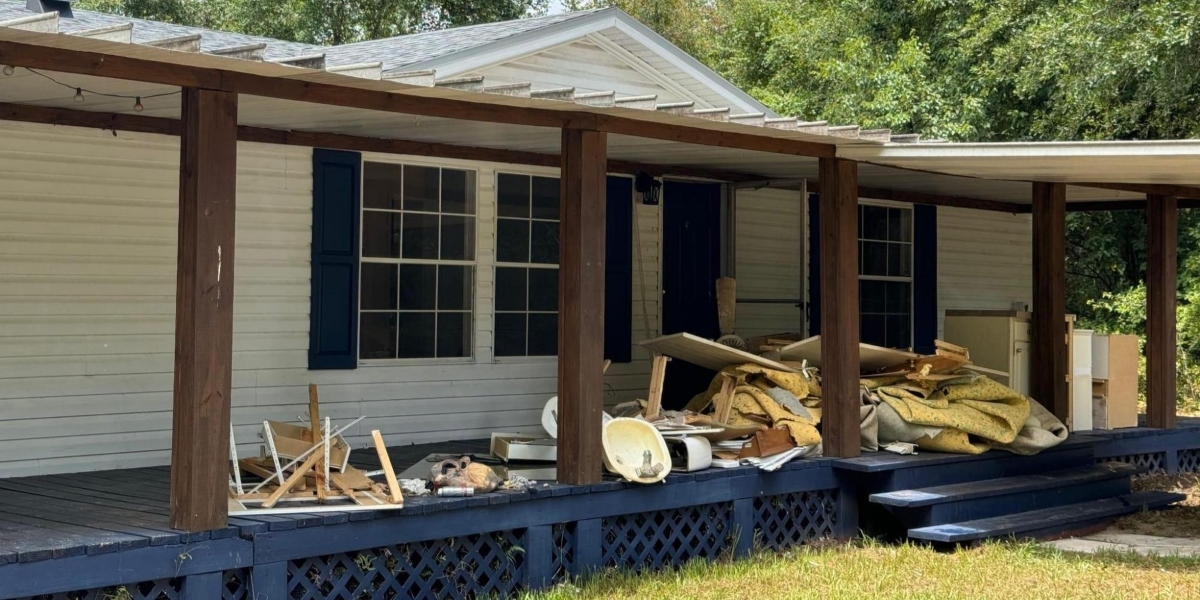
Florida adds a physical risk on top of the financial one. Vacant homes are more prone to moisture intrusion, mold, pests, and unaddressed storm damage. Many carriers also restrict or void coverage once a property has been vacant past a set number of days, which is a detail families discover at the worst possible moment.
The practical point: every month of indecision has a number attached to it. Knowing that number tends to sharpen the conversation.
Renovation Is a Capital Decision, Not a Default
Walk into an older family home, and the list writes itself. Dated kitchen. Original bathrooms. Roof nearing the end of its life. It does not follow that any of it should be replaced before sale.
Part of the buyer pool wants a finished house. Another part specifically wants something to update themselves and will pay for the opportunity. The only way to know which side of that line the property falls on is to establish current as‑is value first, then compare it against actual sale prices for renovated comparables in the same neighborhood.
Sometimes the renovation returns more than it costs. Sometimes it converts estate cash into a slightly higher sale price and a lower net. Run it as a return‑on‑capital question rather than an aesthetic one.
Co-Heirs Are, Functionally, Business Partners
Multiple heirs means multiple people with a claim on the same asset and no operating agreement between them. One wants to keep it. One wants it sold this month. One is convinced repairs are mandatory. These are not really disagreements about the house. They are disagreements happening without shared information.
Most of it resolves once everyone is looking at the same three things: current market value, monthly carrying cost, and realistic net proceeds under each option. Disputes that feel personal are frequently just an information gap, and they get expensive when they are allowed to run.
Clearing the Contents Is a Separate Project

Families consistently underestimate this one. Decades of furniture, files, photographs, clothing, and tools have to be sorted by people who are also grieving. Some of it has sentimental value, some has resale value, and most has neither.
Compressing it into a single weekend rarely works. Some families go room by room over several weeks. Others bring in an estate sale company or a professional clean‑out service and treat it as a line item. Either approach is defensible. What matters is scheduling it as its own workstream instead of assuming it happens alongside the sale.
Confirm What Is Attached to the Title
An inherited house is not necessarily a debt‑free one. Outstanding mortgage balances are common and do not block a sale, but they do determine what actually reaches the heirs at closing.
Pull a payoff statement early. Check for delinquent property taxes, code enforcement liens, and unpaid HOA balances at the same time. Every one of these is manageable when found in week two and disruptive when found three days before closing.
The Tax Position Is Usually Better Than Expected
The common fear is a large tax bill on sale. Florida has no state inheritance tax. Inherited real property also generally receives a step‑up in basis, meaning the basis resets to fair market value as of the date of death rather than what the decedent originally paid.
For a home held for thirty years, that difference is substantial and frequently eliminates most of the anticipated capital gains exposure. It is still worth confirming with a CPA, because the specifics vary by how title was held and how the estate is structured.
Match the Sale Method to the Asset
A well‑maintained home in a desirable area generally performs best listed on the open market. A property that has been vacant for years, needs significant repair, or sits four hours from the responsible heir is a different situation, and there convenience carries real economic weight.
A traditional listing tends to produce the highest gross offer while requiring repairs, cleaning, staging, inspections, and time on market. An as‑is sale trades some of that gross for speed and a much shorter list of family obligations. Neither is inherently correct. Owners weighing that tradeoff can read more about selling an inherited house in Florida before committing to an approach.
Sequence the Decisions
The families who come out of this well are not the fastest ones. They are the ones who take the steps in order: confirm legal authority to sell, establish current value, quantify the monthly carrying cost, identify liens and payoffs, get the tax question answered, and only then choose a sale method.
That sequence takes a few weeks. It reduces the risk of the kind of surprise that can cost tens of thousands of dollars and turn an already difficult period into a longer one.