
By: Sofia Marretta
For many women, bras are a prison. They spend all day waiting to come home and unclasp. The frustration with the garment is so universal that it often goes unspoken. That is, until Body by Julia founder Julia Haart spoke up.
“Bras are torturously uncomfortable,” Haart says. “Even the most comfortable bra is still something that you put on your body with hooks and snaps that is supposed to have a utilitarian function.”
Determined to take matters into her own hands, Haart set out to create a line made by women, for women, understanding their true needs. Consumers want comfort, even if that isn’t what the higher-ups want to call it (Editors have long warned her against using the word “comfort” in a luxury context).
“It’s a dirty word in the fashion world,” she said. Haart rejects that advice. She sees Body by Julia as an opportunity to prove that sexiness doesn’t have to be painful.
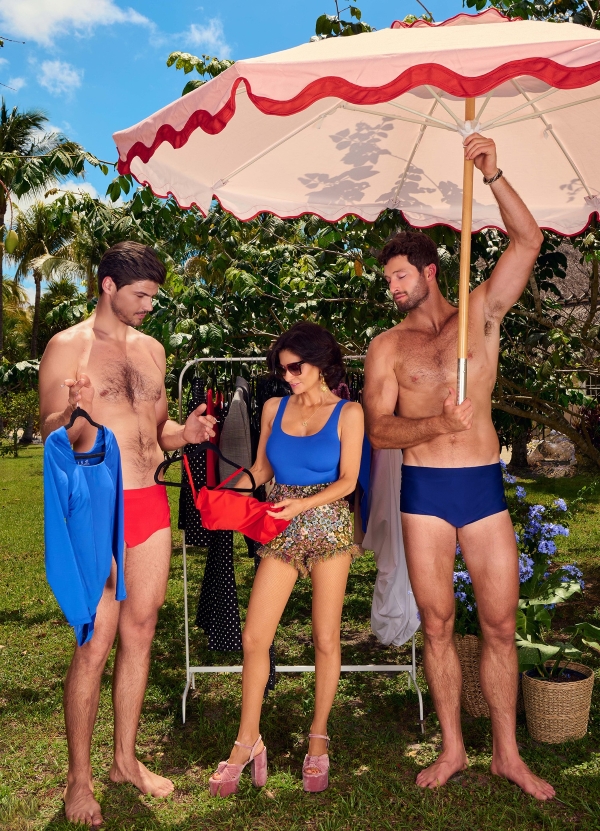
The line brings to the market a hybrid bra, shapewear, and ready-to-wear garment that turns tanks, T-shirts, and bodysuits into built-in support systems. The shirt’s structure supports the bust, and the shaping keeps the garment in place. There are no hooks, no back straps, no digging, and no visible bra lines.
Central to making comfortable garments is ensuring they fit properly. “I am a double zero,” Haart says. “I am a skinny person, but I’m a double D. I’ve been a double D my whole life.” Finding clothing with these proportions is a challenge, as most major retailers assume that body size and breast size move together.
Body by Julia breaks this standard by providing customers with customizable sizing. When shopping, they not only select their dress size from an inclusive range of XS to XXXL but also their cup size. A customer could choose, for example, a large tank with a B cup, or an extra-small top with a fuller cup. This ensures that the garments are wearable for everybody.
Haart has truly thought of every detail, creating something that serves her audience. “I want every woman to be able to afford this,” she says, adding that the team reworked the product repeatedly to bring the cost down. “What you would normally spend $150 on, you’re getting for $88. And most importantly, you are not suffering.”
Customers online are raving about the line, calling the Shaping Tank Top their “favorite tank!” and praising the garment’s ease of wear. Overall, they have dubbed the collection “a worthwhile investment for anyone looking for versatile, comfortable, and high-performing apparel.”
This success has been found in person, too. At a recent Entreprenista event in Palm Beach, Haart nearly sold out of her on-site stock. “We sold 117 pieces,” she says. “Almost everyone who bought came back and bought multiple colors, multiple styles.”
Haart’s awareness of consumer desire is nothing new. As creative director of La Perla, she developed the “freedom panty,” using stretch silk threads in lace. Before that, with her shoe brand, she created “Cloud 9 technology,” changing heel architecture to better distribute pressure across the foot. She is skilled at using innovation to address real concerns.
“I’m going to make women’s clothing wearable,” Haart says. “While still being sexy, while still being luxury, while still looking wonderful.”
For a woman whose life has been defined by escape, the mission feels personal. At 42, she left the Ultra-Orthodox Jewish community she was raised in, changed her name, and decided it was time to let go of any confinements. Her Netflix series, My Unorthodox Life, made her a global symbol of persistence, and she is using that platform to make waves for women everywhere.
Haart’s story can also be found on the page. Her memoir, BRAZEN, chronicles her rise from conformity to her first Paris Fashion Week and becoming co-owner and CEO of Elite World Group. Her personal story has become a broader message about freedom, reinvention, and self-determination.
This history is why she takes such issue with the state of women’s clothing. Every day, women are forced to decide between how they want to look and how they want to feel, because no one has cared enough to change things. “We can send people to hotels on the moon, we’re talking about populating Mars, but we can’t make comfortable clothes for women. I mean, it’s insane,” she says.
Julia Haart isn’t just redesigning the bra. She is challenging the idea that fashion is a sacrifice. For her, it should allow women to live the way they want to. If Haart succeeds, the most revolutionary part of her designs won’t be the way they look, but how they make women feel: supported, confident, and finally comfortable in their own clothes.