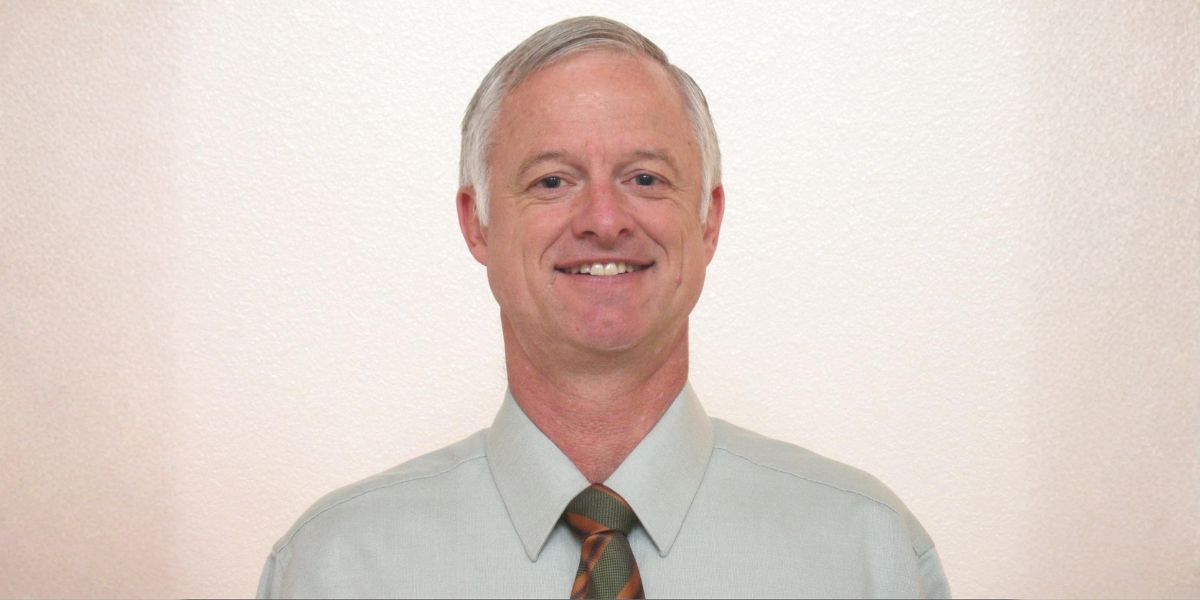

By: Natalie Johnson
For most of recorded history, the world’s most famous diamonds have existed behind glass. You could study them. You could stand close enough to a museum case to see the light move through them. What you could not do was own something recreated with the same level of accuracy that went into understanding them.
Scott Sucher has spent fifty years building the record that changes that.
“Talk is cheap,” he says. “I let my record speak for itself.”
That record is not modest. Sucher is the author or co-author of six peer-reviewed research articles on historic diamonds, including a seventeen-page study of the Koh-i-Noor that GIA expanded from its standard length because the findings rewrote what was known.
His replicas have been displayed in museums worldwide and he’s been featured by the Discovery Channel. Major jewelry houses and institutions like Yale University have sought him out, each finding him the same way: through the work, not the promotion.
He built all of it quietly, from a retired Air Force career and a research philosophy he describes without hesitation.
“I say what I mean and I mean what I say,” he says. “I believe in substance, not fluff, not shadow.”
The story starts earlier than most people know. Sucher was eight years old when a neighbor’s gem and fossil collection first turned his attention toward the ground and everything it held. A few years later, the Lizzadro Museum of Lapidary Arts opened twenty minutes from his house with a display of famous diamond replicas in its downstairs gallery. A kid looking at all those cut gemstones in quartz went home convinced he could make his own.
His first cutting machine was the motor pulled from a record player, with four-inch plywood discs and sandpaper attached. He learned opal and petoskey stone. He traded a prized opal for a faceting machine. When Cubic Zirconia came to market, he started working through published diagrams of the world’s most famous diamonds, cutting replicas one stone at a time.
After five stones, he realized the published diagrams were wrong. He started his own research, and everything that followed came from that moment.
The Air Force years required him to set the work aside, but not entirely. While his fellow crewmembers went out after missions, Sucher went to libraries. When he retired, he began writing articles for Lapidary Journal and built a website structured like a research paper, dense with citations and documented findings rather than anything resembling a sales pitch.
“Just about any museum curator on the planet who deals with diamonds knows me,” he says, “because of the website or because of the articles.”
The call that changed the trajectory came in 2004. He and his wife Karen were driving through the mountains in Arizona when her phone rang. She answered, spoke for about ten seconds and told him to pull over. In twenty-five years of marriage she had never said anything like it. The caller was a producer from the Discovery Channel asking for help with a documentary on the Hope Diamond.
The stone had not been removed from its setting but six times since the early twentieth century. The Smithsonian unset it for Sucher.
“I told Karen I’d ride this pony till it drops dead of exhaustion,” he says. “I figured it would take about eighteen months. Boy, was I wrong.”
The documentary came out in 2005. Between 2005 and 2010, Sucher was author or co-author on six peer-reviewed papers on historic diamonds. A Gems and Gemology study of the Koh-i-Noor ran seventeen pages because the material required it. The inquiries kept arriving and every one of them traced back to the same source: a body of documented, verifiable work that made him impossible to dismiss.
For nearly fifty years, every replica Sucher produced used Cubic Zirconia. That has changed.
Lab-grown diamond technology has reached the point where the most famous stones in history can now be recreated in the same material the originals were made from. Sucher has just completed the proof. The Hortensia, a roughly twenty-carat recreation of one of the celebrated stones from the French Crown Jewels, is the first full-size historic diamond replica ever produced in actual lab-grown diamond.
“Everybody I talk to says you’ve just unlocked Pandora’s box,” he says. “You can run with this as far as you want.”
The category barely exists in public yet. No one else holds the fifty-year documented record required to claim it credibly. Sucher enters not as someone inspired by famous diamonds, but as someone who has spent more time studying and recreating them than nearly anyone alive, who has now matched that research to the material that makes the work definitive.
To learn more about Scott Sucher and Museum Diamonds, visit museumdiamonds.com.